
Synapsid Fossils For Sale | Genuine Fossils
Synapsid Fossils For Sale – Ancient Relatives of Mammals
Synapsid Fossils For Sale offer collectors and students an important look at vertebrate evolution. Synapsids belong to the evolutionary lineage that includes modern mammals and their extinct relatives. They first appeared during the Late Carboniferous Period, more than 300 million years ago. Therefore, synapsid fossils help scientists trace many features that eventually developed in mammals.
What Are Synapsid Fossils?
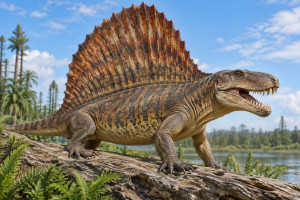
Early synapsids generally had one temporal opening on each side of the skull behind the eye. This opening provided space for larger jaw muscles. In addition, many early species developed strong jaws and specialized teeth. Famous examples include Dimetrodon and Edaphosaurus. Although people sometimes mistake these animals for dinosaurs, they lived millions of years before the first dinosaurs appeared.
Therapsids and the Rise of Mammal-Like Synapsids
Later, therapsids became a major group of synapsids. They developed increasingly mammal-like features, including changes to the skull, limbs, jaws, and teeth. Eventually, a group of therapsids called cynodonts evolved even more advanced characteristics. Their fossils document important steps toward the mammalian body plan.
Why Synapsid Fossils Are Scientifically Important
Moreover, synapsids occupied many ecological roles. Some species ate plants, while others hunted animals. Large predators lived alongside small insect-eating forms. As a result, Synapsid Fossils For Sale can represent animals from many different ancient environments and ecological niches.
Collecting Synapsid Fossils
Synapsid fossils occur on several continents, especially in rocks from the Permian and Triassic periods. Today, paleontologists study their skulls, teeth, bones, and trackways. Together, these discoveries show that mammal evolution involved a long series of changes spanning hundreds of millions of years. For collectors interested in prehistoric vertebrates, Synapsid Fossils For Sale provide a direct connection to the ancient lineage that eventually produced mammals.
Showing 1–50 of 201 results
-
Sold out!
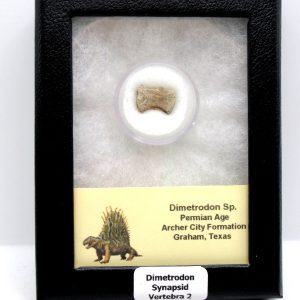
Dimetrodon Synapsid Vertebra #2
$45.00 -

Edaphosaurus Permian Age Synapsid Bone for Sale from Texas #2 – .44″
$15.00 -
Sold out!

Edaphosaurus Permian Age Synapsid Bone for Sale from Texas #3 – ..55″
$15.00 -
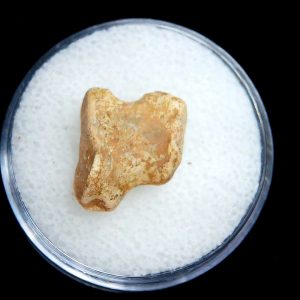
Edaphosaurus Permian Age Synapsid Bone for Sale from Texas #4 – .51″
$15.00 -
Sold out!

Thrausmosaurus Permian Synapsid #22
$20.00 -

Thrausmosaurus Permian Synapsid #24
$65.00 -

Thrausmosaurus Permian Synapsid #25
$35.00 -
Sold out!

Permian Casea Claw #2
$295.00 -
Sold out!

Dimetrodon Synapsid Tooth #4
$215.00 -
Sold out!

Edaphosaurus Claw #1
$325.00 -
Sold out!

Edaphosaurus Vertebrae #4
$45.00 -

Mycterosaurus longiceps Jaw Section #1
$35.00 -

Mycterosaurus longiceps Jaw Section #3
$35.00 -

Mycterosaurus longiceps Jaw Section #4
$45.00 -
Sold out!

Mycterosaurus longiceps Jaw Section #5
$45.00 -

Mycterosaurus longiceps Vertebrae #1
$25.00 -
Sold out!

Mycterosaurus longiceps Vertebrae #3
$25.00 -

Mycterosaurus longiceps Vertebrae #4
$45.00 -

Mycterosaurus longiceps Vertebrae #5
$45.00 -

Mycterosaurus longiceps Vertebrae #6
$55.00 -

Mycterosaurus longiceps Vertebrae #8
$65.00 -

Mycterosaurus longiceps Vertebrae #11
$55.00 -

Mycterosaurus longiceps Vertebrae #12
$55.00 -

Mycterosaurus longiceps Vertebrae #13
$75.00 -

Mycterosaurus longiceps Vertebrae #14
$75.00 -

Mycterosaurus longiceps Vertebrae #15
$75.00 -

Mycterosaurus longiceps Vertebrae #16
$75.00 -

Mycterosaurus longiceps Vertebrae #17
$125.00 -

Mycterosaurus longiceps Vertebrae #18
$25.00 -

Mycterosaurus longiceps Vertebrae #19
$25.00 -

Mycterosaurus longiceps Vertebrae #20
$25.00 -

Mycterosaurus longiceps Vertebrae #21
$25.00 -

Mycterosaurus longiceps | Claw #1
$50.00 -

Mycterosaurus longiceps | Claw #2
$150.00 -

Mycterosaurus longiceps | Claw #3
$125.00 -

Mycterosaurus longiceps | Vertebrae #23
$25.00 -

Mycterosaurus longiceps | Vertebrae #24
$25.00 -

Mycterosaurus longiceps | Vertebrae #25
$25.00 -

Mycterosaurus longiceps | Vertebrae #26
$25.00 -

Mycterosaurus longiceps | Vertebrae #27
$25.00 -

Mycterosaurus longiceps | Vertebrae #28
$25.00 -

Mycterosaurus longiceps | Vertebrae #29
$25.00 -

Mycterosaurus longiceps | Vertebrae #30
$25.00 -

Mycterosaurus longiceps | Vertebrae #31
$25.00 -

Mycterosaurus longiceps | Vertebrae #32
$25.00 -

Mycterosaurus longiceps | Vertebrae #33
$25.00 -

Mycterosaurus longiceps | Vertebrae #34
$25.00 -

Mycterosaurus longiceps | Vertebrae #35
$25.00 -

Mycterosaurus longiceps | Vertebrae #36
$25.00 -

Mycterosaurus longiceps | Vertebrae #37
$25.00
- Buy Fossils
- Fossils for Sale
- Large Selection
- Great Prices and Great Selection
- Authenticity Guaranteed
- Satisfaction Guaranteed
- Your TRUSTED SOURCE SINCE 1997!
- Many more videos are available on our YouTube Channel.
Synapsid Fossils For Sale: The Evolutionary Lineage Leading to Mammals
Synapsid Fossils For Sale offer collectors, educators, and paleontology enthusiasts a direct connection to one of the most important evolutionary lineages in vertebrate history. Synapsids are amniote vertebrates that include modern mammals and their extinct relatives. Their fossil record documents major changes in skull structure, teeth, jaws, limbs, breathing, and metabolism from the Late Carboniferous through the Mesozoic Era.
Because synapsids preserve many stages in the transition toward mammalian anatomy, paleontologists use these fossils to study how early terrestrial vertebrates gradually developed more mammal-like features.
What Are Synapsids?
Synapsids are identified by a single temporal opening, or fenestra, in the skull behind each eye socket. This opening provided additional space for larger jaw muscles and helped improve biting efficiency.
Importantly, synapsids are not dinosaurs. They represent the evolutionary branch that ultimately produced mammals. Early synapsids appeared about 320 million years ago during the Late Carboniferous and diversified greatly during the Permian and Triassic periods.
Defining Characteristics of Fossil Synapsids
Cranial Anatomy
- One temporal opening behind each eye
- Increasingly powerful jaw musculature
- Progressive differentiation of teeth, known as heterodonty
- Gradual enlargement of the dentary bone in the lower jaw
Postcranial Adaptations
- Gradual change from sprawling toward more upright limb posture
- Improved locomotion in advanced synapsids
- Changes in the vertebral column and rib cage
- Greater specialization for active terrestrial lifestyles
Physiological Trends
Advanced synapsids also show evidence of important physiological changes. For example, many therapsids developed a secondary palate that separated breathing from feeding. Bone histology and other evidence also suggest that metabolic rates increased in several advanced synapsid groups.
Major Groups Represented by Synapsid Fossils For Sale
Early Synapsids
Early synapsids were once commonly called “pelycosaurs,” although scientists now recognize that this term does not describe a single natural evolutionary group. These animals became widespread during the Late Carboniferous and Early Permian.
One of the best-known early synapsids is Dimetrodon. Although it is often mistaken for a dinosaur, Dimetrodon lived tens of millions of years before the first dinosaurs appeared.
Early synapsids included both carnivorous and herbivorous forms. Some species developed elongated neural spines that supported large sails or ridges along the back.
Therapsids: More Advanced Synapsids
Therapsids appeared during the Permian Period and developed increasingly mammal-like anatomical features. Major therapsid groups included biarmosuchians, dinocephalians, anomodonts, gorgonopsians, and cynodonts.
Many therapsids show improved limb posture, more specialized teeth, reduced numbers of skull bones, and stronger jaw systems. These changes provide important evidence for the gradual evolution of mammalian anatomy.
Cynodonts and the Origin of Mammals
Cynodonts are among the closest non-mammalian relatives of true mammals. Their fossils preserve several advanced features associated with the mammalian lineage.
- Well-developed secondary palates
- Complex postcanine teeth
- Advanced jaw mechanics
- Increasing dominance of the dentary bone
- Changes that contributed to the later evolution of the mammalian middle ear
By the Late Triassic and Early Jurassic, mammaliaforms had evolved from within the cynodont lineage.
Where Are Fossil Synapsids Found?
Synapsid Fossils For Sale may originate from several important fossil-producing regions around the world. Major synapsid fossil deposits occur in:
- South Africa, especially the Karoo Basin
- Russia
- North America
- China
- South America
The synapsid fossil record begins in the Late Carboniferous and continues into the Mesozoic. While many non-mammalian synapsid groups eventually disappeared, mammals survived and diversified into the enormous variety of species living today.
Why Are Synapsid Fossils Scientifically Important?
Evidence for Mammalian Evolution
Synapsid fossils preserve one of the most detailed evolutionary transitions known from the vertebrate fossil record. Rather than showing a sudden transformation, these fossils document a long sequence of anatomical changes that eventually produced mammalian characteristics.
Scientists can trace changes in jaw structure, tooth specialization, skull anatomy, locomotion, respiration, and hearing through successive synapsid groups.
Jaw-to-Ear Bone Evolution
One of the most remarkable changes documented by synapsid fossils involves the evolution of the mammalian middle ear. Bones that originally formed part of the jaw joint in early synapsids gradually became reduced and eventually contributed to the tiny hearing bones of mammals.
Permian-Triassic Survival and Extinction
Therapsid fossils also help researchers study the Permian-Triassic mass extinction about 252 million years ago. This event was the most severe known mass extinction in Earth history. Synapsid survival and recovery patterns provide valuable evidence about ecological collapse, resilience, and evolutionary radiation after major environmental crises.
How Scientists Study Fossil Synapsids
Modern paleontology uses advanced technology to investigate synapsid fossils without damaging valuable specimens. Researchers may use:
- High-resolution CT scanning
- Bone histology
- Stable isotope analysis
- Digital three-dimensional reconstruction
- Biomechanical modeling
These methods help scientists examine internal skull structures, growth patterns, feeding mechanics, metabolism, and other biological features that may not be visible from the outside of a fossil.
Collecting Synapsid Fossils
Collectors interested in Synapsid Fossils For Sale may encounter teeth, bones, vertebrae, jaw fragments, skull material, footprints, and other remains from early synapsids, therapsids, and cynodont relatives. Because scientific identification depends heavily on anatomy, geological age, and locality, documented specimens are especially valuable for education and collecting.
Whenever possible, collectors should look for fossils with clear identification, locality information, geological age, and authenticity documentation. Properly identified synapsid fossils can provide a fascinating connection to the evolutionary history that eventually produced mammals.
Synapsid Fossils For Sale at Prehistoric Fossils
Prehistoric Fossils offers genuine fossils for collectors, educators, museums, and natural history enthusiasts. Our Synapsid Fossils For Sale may include scientifically interesting specimens representing important stages in vertebrate evolution. Each available specimen should be reviewed individually for species identification, locality, geological age, preservation, and accompanying documentation.
Synapsid fossils are especially valuable because they help tell the long evolutionary story from early amniotes to increasingly mammal-like therapsids, cynodonts, mammaliaforms, and eventually modern mammals.