
Brachiopod Fossils For Sale | Genuine Brachiopod Fossils
Brachiopod Fossils For Sale – Ancient Life from Prehistoric Seas
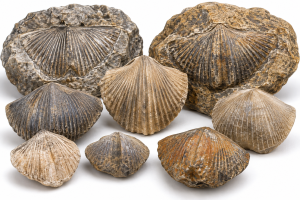
Brachiopod Fossils For Sale offer collectors and students an important record of life in Earth’s ancient oceans. These marine animals first appeared more than 500 million years ago during the Cambrian Period. Although they may look like clams, brachiopods belong to a completely different group of animals. In fact, most brachiopods have an upper and lower shell rather than the left and right shells typical of bivalves.
Brachiopod Fossils from the Paleozoic Era
During the Paleozoic Era, brachiopods became extremely common in shallow seas. As a result, brachiopod fossils occur in many marine rocks around the world. They attached themselves to the seafloor or other firm surfaces, while some rested freely on sediment. Like modern brachiopods, ancient species used a specialized feeding organ called a lophophore to collect tiny food particles from seawater.
How Paleontologists Identify Brachiopod Fossils
Moreover, brachiopod shells often preserve fine ribs, growth lines, folds, and other details. Therefore, paleontologists can use these features to identify many fossil species. Some species also help scientists compare the ages of rock layers and reconstruct ancient marine environments.
Brachiopod Evolution and Mass Extinctions
However, brachiopods suffered major losses during several mass extinction events, especially at the end of the Permian Period. Nevertheless, they survived, and living species still inhabit oceans today. Consequently, fossil brachiopods provide valuable evidence about ancient marine ecosystems, evolution, extinction, and more than half a billion years of Earth history.
Collecting Brachiopod Fossils For Sale
Today, Brachiopod Fossils For Sale remain popular with fossil collectors, educators, and natural history enthusiasts. Their varied shell shapes, detailed ornamentation, and long geological history make them excellent specimens for studying and displaying prehistoric marine life.
Brachiopod Fossils For Sale
Showing all 43 results
-
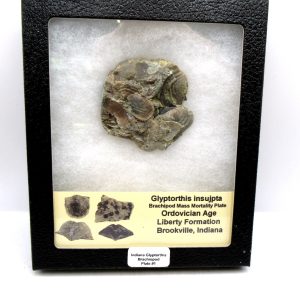
Glyptorthis Ordovician Brachiopod Fossils for Sale – Indiana #1 (2.24″)
$20.00 -
Sold out!
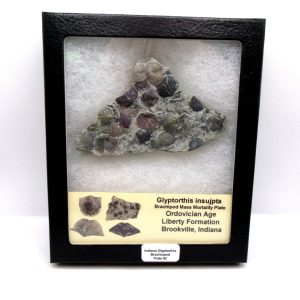
Glyptorthis Ordovician Brachiopod Fossils for Sale – Indiana #2 (3.92″)
$30.00 -
Sold out!

Glyptorthis Ordovician Brachiopod Fossils for Sale – Indiana #5 (3.45″)
$30.00 -
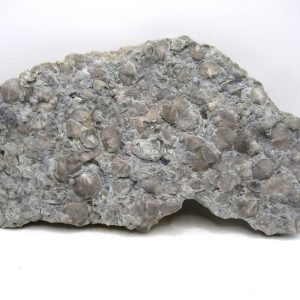
Glyptorthis Ordovician Brachiopod Fossils for Sale – Indiana #7 (8.11″)
$75.00 -

Stringocephalus Brachiopod | Burma #1
$15.00 -

Stringocephalus Brachiopod | Burma #10
$15.00 -

Stringocephalus Brachiopod | Burma #11
$15.00 -

Stringocephalus Brachiopod | Burma #12
$15.00 -

Stringocephalus Brachiopod | Burma #13
$15.00 -
Sold out!

Stringocephalus Brachiopod | Burma #14
$15.00 -

Stringocephalus Brachiopod | Burma #15
$15.00 -

Stringocephalus Brachiopod | Burma #16
$15.00 -

Stringocephalus Brachiopod | Burma #17
$15.00 -
Sold out!

Stringocephalus Brachiopod | Burma #19
$15.00 -

Stringocephalus Brachiopod | Burma #2
$15.00 -

Stringocephalus Brachiopod | Burma #20
$15.00 -

Stringocephalus Brachiopod | Burma #21
$15.00 -

Stringocephalus Brachiopod | Burma #22
$15.00 -

Stringocephalus Brachiopod | Burma #23
$15.00 -

Stringocephalus Brachiopod | Burma #24
$15.00 -

Stringocephalus Brachiopod | Burma #3
$15.00 -

Stringocephalus Brachiopod | Burma #4
$15.00 -

Stringocephalus Brachiopod | Burma #5
$15.00 -

Stringocephalus Brachiopod | Burma #6
$15.00 -

Stringocephalus Brachiopod | Burma #7
$15.00 -

Stringocephalus Brachiopod | Burma #8
$15.00 -

Stringocephalus Brachiopod | Burma #9
$15.00 -
Sold out!

Arthyris New York Brachiopod #2
$7.50 -
Sold out!

Russian Cyrtospirifer Brachiopod #10
$15.00 -
Sold out!

Russian Cyrtospirifer Brachiopod #13
$15.00 -

Russian Cyrtospirifer Brachiopod #32
$15.00 -

Russian Cyrtospirifer Brachiopod #34
$15.00 -

Russian Cyrtospirifer Brachiopod #37
$15.00 -

Russian Cyrtospirifer Brachiopod #5
$15.00 -
Sold out!

Sylvania Ohio Pyritized Brachiopod #10
$30.00 -
Sold out!

Sylvania Ohio Pyritized Brachiopod #13
$30.00 -

Sylvania Ohio Pyritized Brachiopod #18
$30.00 -

Sylvania Ohio Pyritized Brachiopod #21
$30.00 -

Sylvania Ohio Pyritized Brachiopod #22
$30.00 -

Sylvania Ohio Pyritized Brachiopod #24
$30.00 -

Sylvania Ohio Pyritized Brachiopod #4
$30.00 -

Sylvania Ohio Pyritized Brachiopod #9
$30.00 -
Sold out!

England Brachiopod #1
$7.50
- Buy Fossils
- Fossils for Sale
- Large Selection
- Great Prices and Great Selection
- Authenticity Guaranteed
- Satisfaction Guaranteed
- Your TRUSTED SOURCE for over 25 years!
- Many more videos are available on our YouTube Channel.
Brachiopod Fossils For Sale – Identification, Evolution, and Paleoenvironment Significance
Brachiopod Fossils For Sale give collectors and students an excellent opportunity to study one of the most abundant and scientifically important groups in the Paleozoic fossil record. Brachiopods may resemble clams at first glance; however, they belong to a separate phylum with an evolutionary history extending back more than 500 million years. Because of their widespread distribution and long fossil record, brachiopods remain valuable for biostratigraphy, paleoecology, fossil identification, and the reconstruction of ancient marine environments.
This guide explains what brachiopods are, how to identify brachiopod fossils, where they occur, how they evolved, and why they remain important to paleontologists and fossil collectors.
What Are Brachiopods?
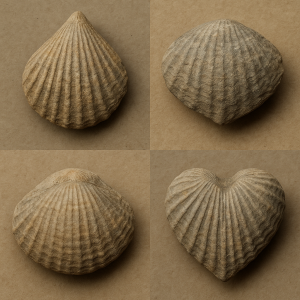
Brachiopods belong to the phylum Brachiopoda. They are marine, shelled invertebrates with two valves positioned dorsally and ventrally. In contrast, bivalve mollusks such as clams have left and right valves. Therefore, the basic shell arrangement provides one of the most useful ways to distinguish brachiopods from bivalves.
Key Biological Traits of Brachiopods
- Lophophore: A specialized feeding structure that filters suspended food particles from seawater.
- Sessile lifestyle: Many brachiopods attached themselves to the seafloor using a fleshy stalk called a pedicle.
- Shell symmetry: In many brachiopods, each valve is approximately symmetrical along its own midline.
- Marine habitat: Brachiopods are exclusively marine animals.
Evolution and Geological History of Brachiopod Fossils
Brachiopods became especially successful during the Paleozoic Era. Consequently, their fossils occur abundantly in marine rocks from many parts of the world.
Cambrian Brachiopods
Early brachiopods appeared during the Cambrian Period. During this time, several major brachiopod lineages developed as marine ecosystems became more complex. Their shells and feeding strategies diversified as they adapted to different seafloor environments.
Ordovician Through Devonian Brachiopods
During the Ordovician, Silurian, and Devonian periods, brachiopods became extremely diverse and abundant. For this reason, these periods produced many of the classic brachiopod fossils collected today. Numerous species occupied shallow continental seas, carbonate platforms, reefs, and other marine habitats.
Carboniferous and Permian Brachiopods
Brachiopods continued to flourish throughout much of the Carboniferous and Permian periods. However, the Permian-Triassic mass extinction approximately 252 million years ago eliminated many major brachiopod groups. This extinction represents the most severe known mass extinction in Earth’s history.
Mesozoic and Cenozoic Brachiopods
After the Permian extinction, brachiopods never regained their former ecological dominance. Meanwhile, bivalve mollusks expanded into many marine habitats. Nevertheless, brachiopods survived, and living species still inhabit modern oceans today.
How to Identify Brachiopod Fossils
Collectors searching for Brachiopod Fossils For Sale can often identify specimens by studying shell symmetry, shape, ornamentation, and the pedicle opening. However, some species require closer examination by a specialist.
1. Brachiopod Shell Symmetry
- Brachiopods: Each valve is commonly symmetrical along its own central line.
- Bivalves: Symmetry usually occurs between the left and right valves rather than within each individual valve.
2. Pedicle Foramen
Many brachiopods have an opening near the hinge area where the pedicle extended from the shell. When preserved, this feature can provide an important identification clue.
3. Shell Shape and Ornamentation
Brachiopod fossils display many different shell patterns. Common features include:
- Strong radial ribs
- Concentric growth lines
- Wing-like shell extensions
- A central sulcus or groove
- A raised fold
- Spines in certain groups
4. Internal Brachiopod Structures
Internal structures can also help paleontologists identify brachiopods. These features may include brachidia, dental plates, muscle scars, and other internal supports. However, collectors usually see these structures only when a specimen is broken, naturally weathered, or specially prepared.
Common Types of Brachiopod Fossils For Sale
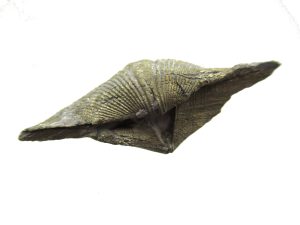
Spiriferid Brachiopods
Spiriferids are especially common in many Devonian deposits. They often display wide, wing-shaped shells with prominent ribs and a strong central fold and sulcus. As a result, many spiriferids are easy for collectors to recognize.
Strophomenid Brachiopods
Strophomenids commonly have broad, flattened, or concavo-convex shells. Many species occur in Ordovician and Silurian marine rocks. Their unusual shell form makes them distinctive among Paleozoic brachiopods.
Orthid Brachiopods
Orthids include many classic ribbed Paleozoic forms. Because numerous species had relatively restricted geological ranges, some orthids have proved useful in biostratigraphic studies.
Productid Brachiopods
Productids became especially important during the Carboniferous and Permian periods. Many species developed thick shells and prominent spines that helped stabilize them on soft seafloor sediments.
Where Are Brachiopod Fossils Found?
Brachiopod Fossils For Sale
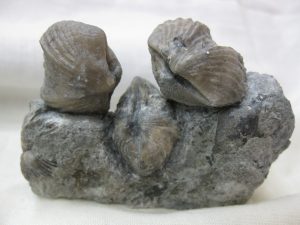
Brachiopod fossils occur worldwide, especially in Paleozoic marine sedimentary rocks. Because brachiopods lived entirely in marine environments, their fossils often indicate that a rock layer formed beneath an ancient sea.
Rock Types Containing Brachiopod Fossils
- Limestone
- Shale
- Dolostone
- Siltstone
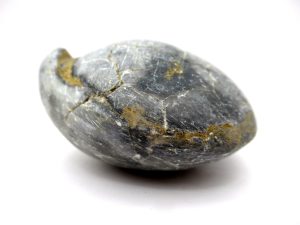
Important Brachiopod Fossil Regions
- Midwestern United States: Ohio, Indiana, Iowa, Kentucky, and surrounding states contain extensive Ordovician through Devonian marine deposits.
- United Kingdom: Paleozoic rocks in several regions preserve diverse brachiopod faunas.
- Canada: Ontario and other regions contain extensive Paleozoic marine strata.
- Australia: New South Wales, Victoria, and other areas preserve important Paleozoic fossil deposits.
- Russia and China: Both countries contain extensive Paleozoic sequences with numerous brachiopod species.
Why Brachiopod Fossils Matter in Paleontology
Brachiopods are more than attractive collectible fossils. Their diversity, abundance, and worldwide distribution make them important tools for understanding Earth’s geological and biological history.
Brachiopod Fossils and Biostratigraphy
Many brachiopod species changed through geological time and occurred across broad geographic areas. Therefore, paleontologists can use certain species and fossil assemblages to correlate and help determine the relative age of sedimentary rock layers.
Brachiopod Fossils as Paleoenvironment Indicators
Different brachiopod communities occupied different marine settings. Consequently, fossil assemblages can provide clues about water depth, substrate type, water energy, oxygen levels, and other environmental conditions.
For example, some strophomenids favored relatively quiet marine settings, while many productids flourished on Paleozoic continental shelves. Lingulid brachiopods commonly lived on soft substrates and could tolerate environmental conditions that excluded many other brachiopods.
Brachiopod Fossils and Evolution
The long brachiopod fossil record allows paleontologists to study changes in shell form, ecological adaptations, extinction, survival, and recovery. In addition, their history documents major biological changes associated with several mass extinction events.
Climate and Ancient Sea-Level Studies
Changes in brachiopod distribution and diversity can also help researchers interpret ancient ocean conditions. When combined with sedimentology, geochemistry, and other fossils, brachiopods contribute valuable evidence for reconstructing changes in climate, sea level, and marine ecosystems.
Buy Brachiopod Fossils For Sale from Prehistoric Fossils with Confidence
At Prehistoric Fossils, we offer genuine Brachiopod Fossils For Sale for collectors, educators, students, museums, and natural history enthusiasts. Each fossil represents a real piece of Earth’s ancient marine history and provides a direct connection to oceans that existed millions of years ago.
When available, our fossil specimens include identification and locality information to help collectors understand what they are purchasing. Whether you are building a fossil collection, creating an educational display, or searching for an unusual natural history gift, brachiopod fossils offer scientific value, attractive shell forms, and an extraordinary record of prehistoric life.
Brachiopod Fossils For Sale