
Trace Fossils For Sale | Dinosaur Tracks, Trilobite Tracks & Ichnofossils
Trace Fossils For Sale – Evidence of Ancient Animal Activity
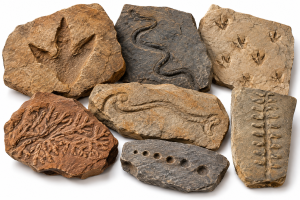
Trace Fossils For Sale give collectors, educators, and fossil enthusiasts a unique look at how ancient organisms lived, moved, fed, and interacted with their surroundings. Unlike body fossils, which preserve parts of an organism such as bones, teeth, or shells, trace fossils record biological activity. Therefore, they can reveal prehistoric behavior that body fossils alone may not preserve.
What Are Trace Fossils?
Common Trace Fossils For Sale include footprints, trackways, burrows, trails, feeding marks, borings, and coprolites. Paleontologists often call trace fossils ichnofossils. In addition, scientists frequently classify them by their shape, structure, and formation because the exact organism that produced a trace may remain unknown.
Footprints and trackways provide especially valuable information about movement. For example, dinosaur tracks may help researchers estimate walking direction, stride length, and sometimes speed. Moreover, groups of footprints can reveal how animals traveled across an ancient landscape.
What Can Trace Fossils Tell Us?
Burrows provide another important source of evidence. Ancient animals created tunnels while searching for food, hiding from predators, or living within sediment. Consequently, fossil burrows can help scientists reconstruct ancient seafloors, shorelines, river systems, and other environments.
Coprolites, or fossilized feces, can also preserve valuable evidence. For instance, some contain fragments of bone, plant material, scales, or other remains. As a result, these fossils may provide clues about an animal’s diet and feeding behavior.
Why Collect Trace Fossils?
Trace Fossils For Sale may also include bite marks, feeding traces, borings, and other signs of interactions between prehistoric organisms. Although identifying the exact trace maker can sometimes be difficult, these fossils preserve direct evidence of ancient behavior.
Therefore, genuine Trace Fossils For Sale provide a fascinating window into prehistoric ecosystems. Together with body fossils and geological evidence, trace fossils help scientists and collectors better understand how ancient organisms lived millions of years ago.
Showing all 35 results
-
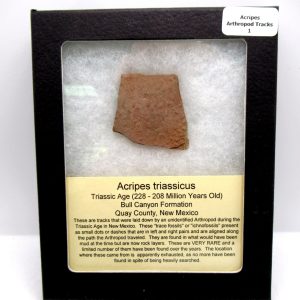
Acripes triassicus Arthropod Track Fossils for Sale 1
$40.00 -
Sold out!
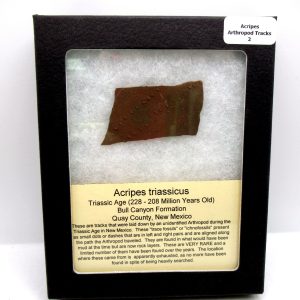
Acripes triassicus Arthropod Track Fossils for Sale 2
$40.00 -
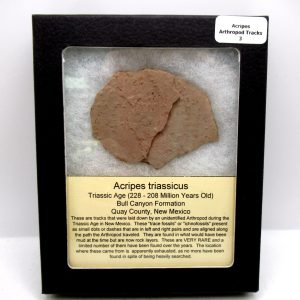
Acripes triassicus Arthropod Track Fossils for Sale 3
$40.00 -
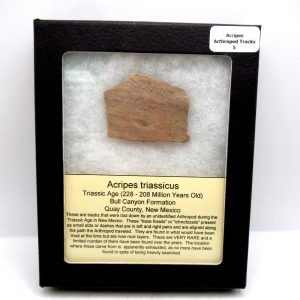
Acripes triassicus Arthropod Track Fossils for Sale 5
$40.00 -
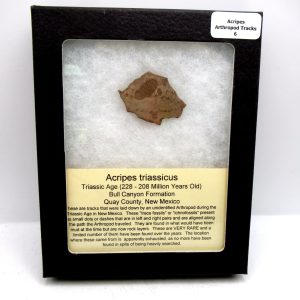
Acripes triassicus Arthropod Track Fossils for Sale 6
$35.00 -
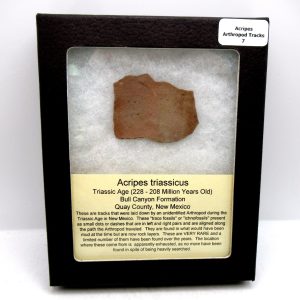
Acripes triassicus Arthropod Track Fossils for Sale 7
$40.00 -

Acripes triassicus Arthropod Track Fossils for Sale 8
$55.00 -
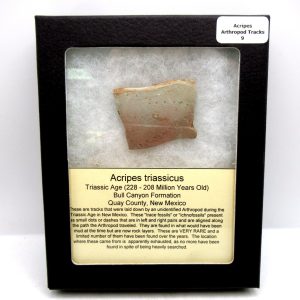
Acripes triassicus Arthropod Track Fossils for Sale 9
$50.00 -

Trilobite Track Fossils For Sale | Genuine Trilobite Trace Fossils #50
$65.00 -

Trilobite Track Fossils For Sale | Genuine Trilobite Trace Fossils #51
$65.00 -
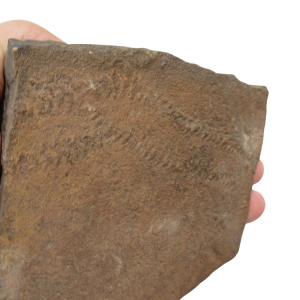
Trilobite Track Fossils For Sale | Genuine Trilobite Trace Fossils #52
$65.00 -
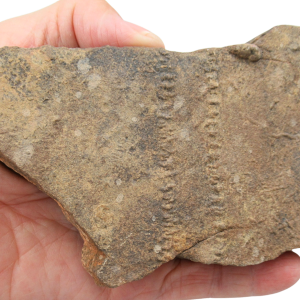
Trilobite Track Fossils For Sale | Genuine Trilobite Trace Fossils #53
$65.00 -

Trilobite Track Fossils For Sale | Genuine Trilobite Trace Fossils #54
$65.00 -
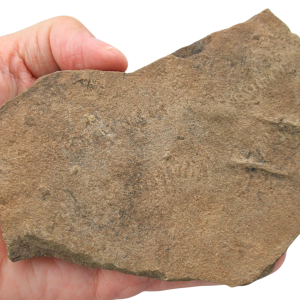
Trilobite Track Fossils For Sale | Genuine Trilobite Trace Fossils #55
$65.00 -
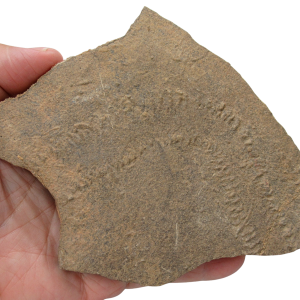
Trilobite Track Fossils For Sale | Genuine Trilobite Trace Fossils #56
$65.00 -

Trilobite Track Fossils For Sale | Genuine Trilobite Trace Fossils #57
$65.00 -

Trilobite Track Fossils For Sale | Genuine Trilobite Trace Fossils #58
$65.00 -
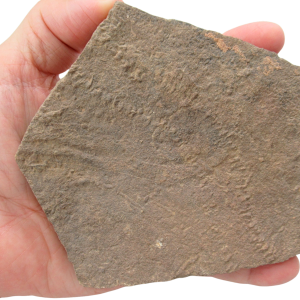
Trilobite Track Fossils For Sale | Genuine Trilobite Trace Fossils #59
$65.00 -

Trilobite Track Fossils For Sale | Genuine Trilobite Trace Fossils #60
$65.00 -

Trilobite Track Fossils For Sale | Genuine Trilobite Trace Fossils #61
$65.00 -

Trilobite Track Fossils For Sale | Genuine Trilobite Trace Fossils #62
$65.00 -

Grallator Dinosaur Track France #14
$295.00 -
Sold out!

Grallator Dinosaur Track France #16
$295.00 -
Sold out!
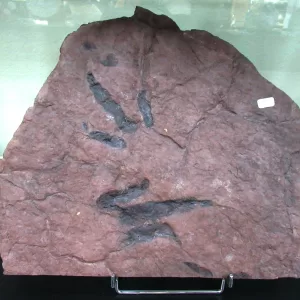
New Jersey Grallator Dinosaur Track #2
$950.00 -

Pseudobradypus Tetrapod Tracks #3
$55.00 -
Sold out!

Pseudobradypus Tetrapod Tracks #5
$175.00 -

Trilobite Tracks (Cruziana) #24
$45.00 -

Trilobite Tracks (Cruziana) #42
$65.00 -

Trilobite Tracks (Cruziana) #43
$55.00 -
Sold out!
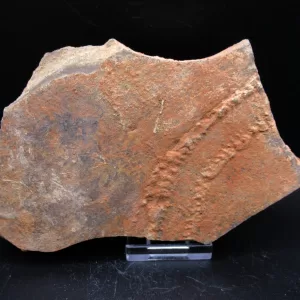
Trilobite Tracks (Cruziana) #29
$65.00 -
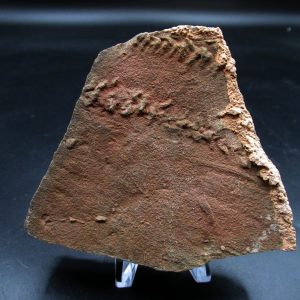
Trilobite Tracks (Cruziana) #44
$25.00 -
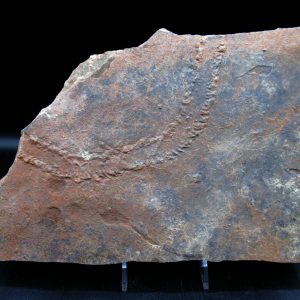
Trilobite Tracks (Cruziana) #48
$195.00 -

Trilobite Tracks (Cruziana) #6
$40.00 -

Trilobite Tracks (Cruziana) #7
$55.00 -

Trilobite Tracks (Cruziana) #8
$55.00
- Buy Fossils
- Fossils for Sale
- Large Selection
- Great Prices and Great Selection
- Authenticity Guaranteed
- Satisfaction Guaranteed
- Your TRUSTED SOURCE SINCE 1997!
- Many more videos are available on our YouTube Channel.
Trace Fossils For Sale – Scientific Evidence of Ancient Life and Behavior
Trace Fossils For Sale offer collectors, educators, and students a unique way to study the behavior of ancient organisms. Also called ichnofossils, trace fossils preserve evidence of biological activity rather than the physical remains of an organism. Footprints, trackways, burrows, feeding marks, borings, and coprolites can reveal how prehistoric animals moved, fed, interacted, and lived within their environments.
Unlike bones, shells, or teeth, trace fossils record behavior rather than anatomy. Therefore, they provide paleontologists with information that body fossils often cannot preserve. In many cases, trace fossils may even be present where no body remains survive.
What Are Trace Fossils?
Trace fossils, or ichnofossils, are geological records of biological activity preserved mainly within sedimentary rocks. Instead of preserving the organism itself, these fossils preserve something the organism did during its lifetime.
Scientists study trace fossils through ichnology, a field that overlaps paleontology, geology, and sedimentology. Because similar organisms can create different traces and unrelated organisms can sometimes create similar traces, paleontologists usually classify trace fossils by ichnotaxa rather than by the biological species that produced them.
Common Types of Trace Fossils
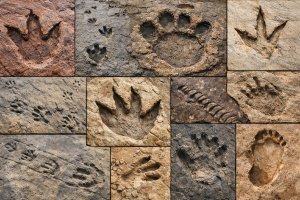
- Tracks and trackways – footprints and trails left by animals such as dinosaurs, reptiles, mammals, and invertebrates.
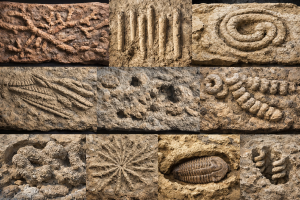
- Burrows and tunnels – structures created by worms, crustaceans, mollusks, and other organisms living or moving through sediment.
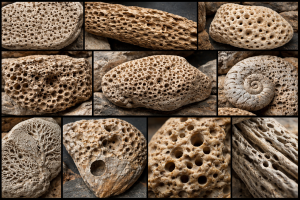
- Borings – holes produced when organisms penetrate shells, wood, hardgrounds, or rock.
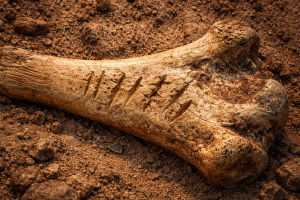
- Feeding traces – grazing marks, bite impressions, drill holes, and other evidence of feeding activity.
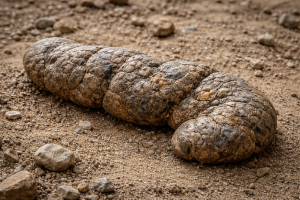
- Coprolites – fossilized fecal material that can preserve evidence of ancient diets and food chains.
Scientific Importance of Trace Fossils
Trace Fossils For Sale are valued by collectors because they preserve evidence of ancient behavior. Scientifically, these fossils help researchers reconstruct how organisms interacted with their surroundings millions of years ago.
Evidence of Ancient Behavior
Trace fossils can provide direct evidence of activities that body fossils usually cannot record. For example, footprints can reveal movement, while burrows may show how an organism lived within sediment. Feeding marks can also provide evidence of predator-prey relationships.
- Locomotion patterns
- Feeding strategies
- Predator-prey interactions
- Burrowing behavior
- Resting behavior
- Possible group movement or repeated travel routes
However, scientists must interpret these traces carefully. For example, a group of footprints moving in the same direction may suggest group movement, but the trackway alone does not always prove complex social behavior.
Reconstructing Ancient Environments
Because many trace fossils formed directly within ancient sediments, they can provide valuable clues about past environments. As a result, paleontologists and sedimentologists often use them to interpret conditions that existed when the sediment was deposited.
- Marine versus terrestrial environments
- Oxygen levels within sediment
- Water depth and energy conditions
- Substrate consistency
- Rates of sediment deposition
For example, extensive burrowing may indicate that organisms lived within oxygenated sediment. In addition, certain trace-fossil associations can help scientists recognize environments ranging from deep marine settings to shorelines, tidal flats, rivers, lakes, and deserts.
Trace Fossils vs. Body Fossils
| Feature | Trace Fossils | Body Fossils |
|---|---|---|
| Preserve behavior | Yes | Usually no |
| Preserve anatomy | Usually no | Yes |
| Often preserved where formed | Yes | May be transported before burial |
| Usually identify exact species | Rarely | Often more precisely |
Body fossils preserve actual parts of organisms, such as bones, shells, leaves, teeth, or exoskeletons. In contrast, trace fossils preserve the activity of an organism. Consequently, both fossil types provide different but complementary information about ancient life.
Geological Distribution and Preservation of Trace Fossils
Trace fossils extend far back into Precambrian time and become increasingly diverse near the end of the Ediacaran Period and during the Cambrian Period. Their fossil record continues throughout the Phanerozoic and into the present because living organisms continue to create footprints, burrows, trails, and other traces today.
Preservation depends on several conditions, including:
- Rapid burial
- Limited erosion
- Suitable sediment consistency
- Low disturbance after the trace forms
- Early cementation or mineralization in some settings
Important Trace Fossil Settings
- Cambrian shallow-marine deposits
- Paleozoic marine sediments
- Coal-swamp and floodplain deposits
- Mesozoic dinosaur tracksites
- Ancient lake and river sediments
- Coastal and tidal environments
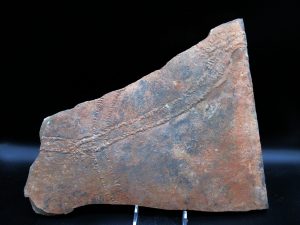
One well-known trace fossil is Cruziana, a distinctive bilobed trail commonly associated with the activity of trilobites and other arthropods. Such fossils can provide information about both movement and feeding behavior on ancient seafloors.
Trace Fossils and Early Animal Evolution
Trace fossils play an important role in studies of early animal evolution because behavioral evidence can sometimes appear in the geological record even when body fossils remain rare. Therefore, ichnofossils help scientists examine the development of movement, burrowing, feeding, and sediment disturbance during the transition from the Ediacaran into the Cambrian.
- Early animal movement
- Increasingly complex burrowing
- Bioturbation of marine sediments
- Changing feeding strategies
- Expansion of ecological interactions
This evidence is especially important when scientists study the ecological changes associated with the Cambrian Explosion, a major interval in the diversification of animal life.

Common Misconceptions About Trace Fossils
Are Trace Fossils Less Important Than Bones?
No. Trace fossils often preserve behavioral and environmental information that bones and shells cannot provide. Therefore, they are an essential part of paleontological research.
Can Trace Fossils Identify an Exact Species?
Usually not. Because several organisms may create similar traces, paleontologists generally avoid assigning a trace fossil directly to a specific biological species unless strong supporting evidence exists.
Are Trace Fossils Only Found on Land?
No. Many trace fossils formed in marine environments. Burrows, trails, feeding structures, and borings are especially common within sedimentary rocks deposited in ancient seas.
Collecting Trace Fossils For Sale
Trace Fossils For Sale appeal to collectors because every specimen represents evidence of ancient activity. A dinosaur footprint records movement across prehistoric sediment, while a burrow preserves evidence of an organism living beneath an ancient seafloor. Likewise, coprolites can provide clues about prehistoric diets and food webs.
When evaluating trace fossils, collectors should consider the specimen’s geological formation, locality, age, preservation, and available identification information. Reliable provenance adds educational and scientific value because the geological context helps explain how and when the trace formed.
Why Trace Fossils Matter
Trace fossils provide a dynamic record of prehistoric life. While body fossils reveal what ancient organisms looked like, ichnofossils can help reveal what those organisms did. As a result, scientists use trace fossils to reconstruct movement, feeding behavior, ecosystems, sediment conditions, and important stages in animal evolution.
For collectors and educators, genuine Trace Fossils For Sale provide a tangible connection to ancient behavior preserved in stone. Each footprint, burrow, feeding trace, or coprolite tells part of a much larger story about life on Earth.
Buy Trace Fossils from Prehistoric Fossils with confidence. Your Trusted Source Since 1997. Authenticity Guaranteed.