
Lunar Meteorites For Sale | Genuine Moon Meteorites
Lunar Meteorites Fossils For Sale – Genuine Rocks from the Moon
Lunar Meteorites Fossils For Sale give collectors, educators, and space enthusiasts a rare opportunity to own genuine material from the Moon. Unlike lunar samples collected during the Apollo missions, lunar meteorites reached Earth naturally. Therefore, each specimen provides a direct connection to our closest planetary neighbor.
How Lunar Meteorites Reach Earth
Large asteroids and meteoroids sometimes strike the Moon at very high speeds. Because the Moon has almost no atmosphere, incoming objects can reach the surface with tremendous force. As a result, powerful impacts may blast pieces of lunar rock into space.
Some fragments escape the Moon’s gravity and travel through the solar system. Eventually, a small number cross Earth’s orbit and enter our atmosphere. If a fragment survives atmospheric entry and reaches the ground, it becomes a lunar meteorite.
How Scientists Identify Lunar Meteorites
Scientists cannot identify lunar meteorites by appearance alone. Instead, laboratories examine their minerals, chemistry, texture, and other characteristics. Researchers then compare these results with known lunar samples collected from the Moon.
For example, lunar meteorites may include basalt formed by ancient volcanic activity or breccias made from broken and fused rock fragments. In addition, many specimens preserve evidence of the Moon’s long history of asteroid impacts.
Why Lunar Meteorites Are Important
Lunar Meteorites Fossils For Sale are especially interesting because lunar meteorites can originate from areas never visited by astronauts. Therefore, they help scientists study a wider range of the Moon’s surface.
Moreover, these remarkable rocks provide information about lunar volcanism, impact history, and crust formation. For collectors, genuine lunar meteorites offer an extraordinary opportunity to own authentic extraterrestrial material while learning about the geological history of the Moon.
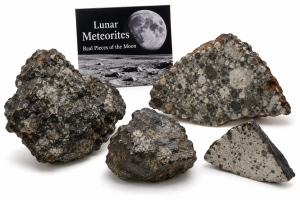
Showing all 18 results
-
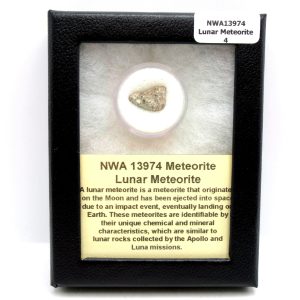
Lunar Meteorite NWA13974 Meteorites for Sale
$75.00 -
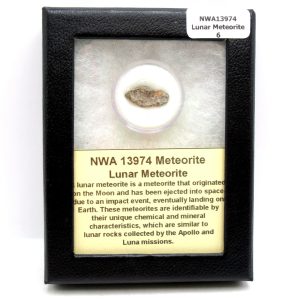
Lunar Meteorite NWA13974 Meteorites for Sale
$75.00 -
Sold out!
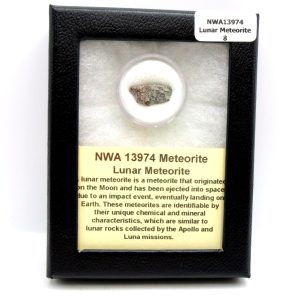
Lunar Meteorite NWA13974 Meteorites for Sale
$75.00 -

Lunar Moon Rock For Sale | Genuine Lunar Meteorites #13 (NWA11273)
$65.00 -

Lunar Moon Rock For Sale | Genuine Lunar Meteorites #14 (NWA11273)
$65.00 -

Lunar Moon Rock For Sale | Genuine Lunar Meteorites #15 (NWA11273)
$65.00 -

Lunar Moon Rock For Sale | Genuine Lunar Meteorites #16 (NWA11273)
$65.00 -

Lunar Moon Rock For Sale | Genuine Lunar Meteorites #17 (NWA11273)
$65.00 -

Lunar Moon Rock For Sale | Genuine Lunar Meteorites #18 (NWA11273)
$65.00 -

Lunar Moon Rock For Sale | Genuine Lunar Meteorites #19 (NWA11273)
$65.00 -

Lunar Moon Rock For Sale | Genuine Lunar Meteorites #20 (NWA11273)
$65.00 -

Lunar Moon Rock For Sale | Genuine Lunar Meteorites #21 (NWA11273)
$65.00 -

Lunar Moon Rock For Sale | Genuine Lunar Meteorites #22 (NWA11273)
$65.00 -

Lunar Moon Rock For Sale | Genuine Lunar Meteorites #23 (NWA11273)
$65.00 -

Lunar Moon Rock For Sale | Genuine Lunar Meteorites #24 (NWA11273)
$65.00 -

Moon Rock Lunar Meteorite Frame #4
$65.00 -
Sold out!

Moon Rock Lunar Meteorite Frame #8
$65.00 -

Moon Rock Lunar Meteorite Frame #9
$65.00
- Buy Meteorites
- Meteorites for Sale
- Large Selection
- Great Prices and Great Selection
- Authenticity Guaranteed
- Satisfaction Guaranteed
- Your TRUSTED SOURCE SINCE 1997!
- Many more videos are available on our YouTube Channel.
Lunar Meteorites For Sale – Genuine Rocks from the Moon
Lunar Meteorites For Sale offer collectors, educators, and natural history enthusiasts an extraordinary opportunity to own genuine material from the Moon. Lunar meteorites are rocks blasted from the lunar surface by powerful impacts. After traveling through space, a small number eventually reach Earth and survive atmospheric entry.
Unlike Apollo Moon rocks, which astronauts deliberately collected at specific landing sites, lunar meteorites reach Earth naturally. Therefore, they can provide scientists with samples from lunar regions far beyond the Apollo collection areas. As a result, these remarkable meteorites help researchers study the Moon’s crust, volcanic history, impact processes, and geological evolution.
What Are Lunar Meteorites?
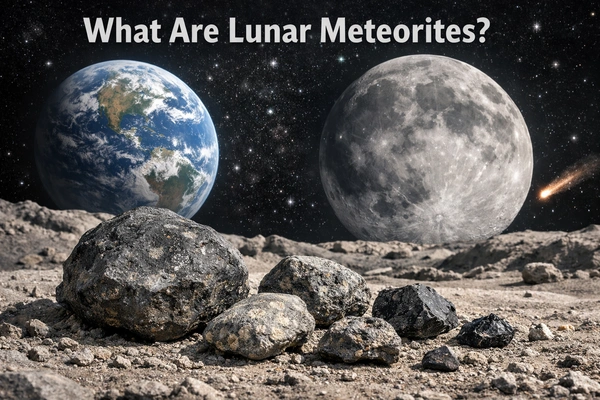 Lunar meteorites are fragments of Moon rock naturally delivered to Earth. First, an asteroid or meteoroid strikes the lunar surface with tremendous force. Because the Moon has almost no atmosphere, incoming objects can hit its surface at very high speeds.
Consequently, some impacts fracture, melt, and eject lunar rock. A small fraction of this material can reach the Moon’s escape velocity of about 2.38 kilometers per second. Once free of lunar gravity, fragments may travel through space before some eventually encounter Earth.
Scientists have identified many lunar meteorite finds from locations around the world. Moreover, researchers continue to classify new specimens and determine whether separate finds represent pieces of the same original fall.
How Moon Rocks Travel to Earth
The journey of a lunar meteorite begins with a high-energy impact. Although most impact debris falls back onto the Moon, certain fragments receive enough energy to escape.
- Impact ejection: A fast-moving object strikes the Moon and fractures the lunar surface.
- Escape from the Moon: Some fragments exceed lunar escape velocity and enter space.
- Travel through space: The fragments may remain in space for long periods before encountering Earth.
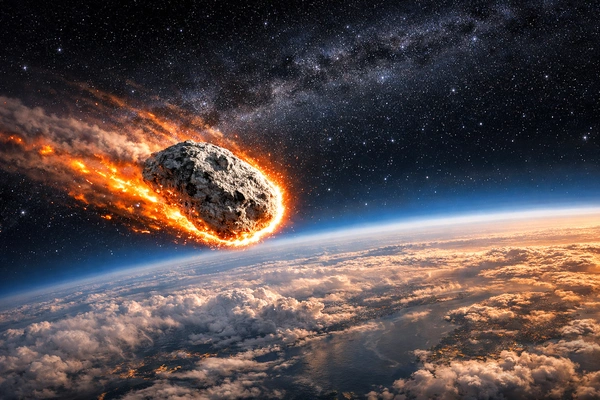
- Atmospheric entry: A lunar meteoroid entering Earth’s atmosphere produces a meteor phenomenon as its exterior heats and ablates.
- Landing: Material that survives the journey and reaches the ground becomes a meteorite.
Where Are Lunar Meteorites Found?
Although lunar meteorites can fall almost anywhere, collectors and researchers commonly recover them in environments where unusual rocks are easier to recognize. In addition, dry or frozen conditions may slow terrestrial weathering.
- Antarctica: Dark meteorites can stand out against ice and snow.
- Northwest Africa and the Sahara: Arid landscapes provide excellent meteorite-searching conditions.
- Oman: Desert regions have produced numerous important lunar meteorite discoveries.
However, the location where a meteorite is found does not reveal where on the Moon it originated. Researchers must instead study its chemistry, minerals, textures, and exposure history.
How Scientists Identify Genuine Lunar Meteorites
Authenticating a lunar meteorite requires laboratory study. Appearance alone cannot reliably prove lunar origin. Therefore, scientists compare several independent characteristics with well-studied lunar material.
Mineralogy and Chemical Composition
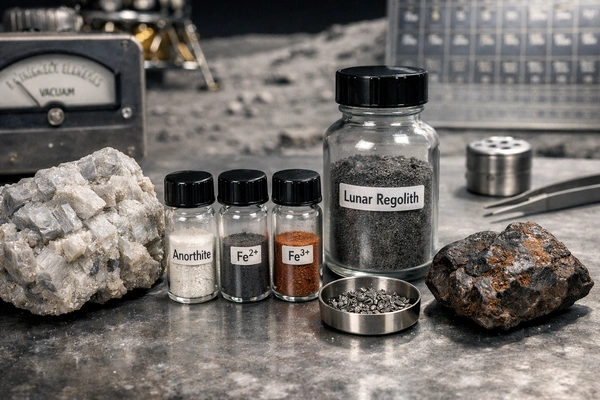 Researchers analyze minerals such as plagioclase, pyroxene, and olivine. In addition, they examine elemental ratios and other chemical characteristics associated with lunar rocks. Many highland specimens contain abundant anorthositic material, while mare meteorites contain basalt produced by ancient lunar volcanism.
Isotopes and Geochemical Evidence
Scientists also study oxygen isotopes and other geochemical signatures. However, no single test normally serves as proof by itself. Instead, researchers combine isotopic data with mineral chemistry, elemental composition, petrography, shock effects, and comparisons with documented lunar samples.
Shock Features and Impact History
Because the Moon has experienced billions of years of impacts, many lunar meteorites contain shock fractures, melt veins, brecciation, or other impact-related features. Consequently, these textures can preserve evidence of ancient collisions on the lunar surface.
Comparison with Returned Moon Samples
Apollo and other returned lunar samples provide essential reference material for lunar science. Therefore, scientists can compare suspected lunar meteorites with known Moon rocks. When several independent lines of evidence agree, researchers can establish a strong scientific case for lunar origin.
Major Types of Lunar Meteorites For Sale and Study
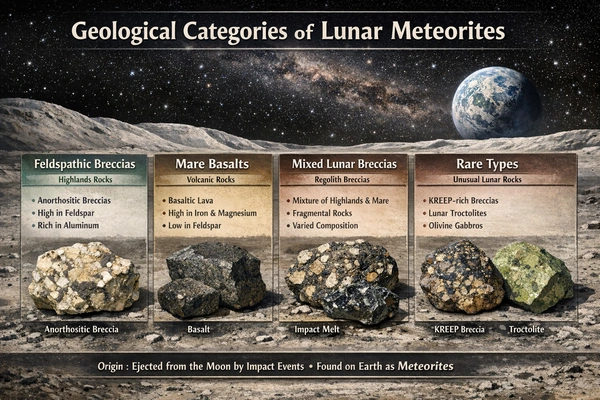 Lunar Meteorites For Sale may represent several major lunar rock types. Because each formed under different geological conditions, these specimens can reveal different parts of the Moon’s history.
Lunar Highlands Meteorites
- Often rich in feldspathic and anorthositic material
- Represent portions of the Moon’s ancient crust
- Help scientists investigate early lunar differentiation
- May contain complex impact breccias
The bright lunar highlands contain some of the Moon’s oldest crust. Therefore, highland meteorites can provide valuable evidence concerning the early development of the lunar surface.
Lunar Mare Basalt Meteorites
- Formed from ancient lunar lava
- Usually darker and richer in iron than highland rocks
- Record episodes of volcanic activity
- Help researchers study the Moon’s thermal history
Lunar maria are the large, dark plains visible from Earth. These areas formed when basaltic lava filled enormous impact basins. As a result, mare basalt meteorites preserve evidence of volcanic processes that operated billions of years ago.
Lunar Breccias
- Contain fragments of different lunar rocks
- Form through repeated impact processes
- May contain mineral and rock fragments from several sources
- Preserve complex records of lunar surface history
Breccias are especially useful because impacts repeatedly broke, mixed, and fused material on the Moon. Thus, a single specimen may preserve evidence from more than one geological event.
Why Lunar Meteorites Are Scientifically Important
Lunar meteorites significantly expand the material available for studying the Moon. Apollo astronauts collected samples from a limited number of locations on the near side. In contrast, lunar meteorites originate from impact-ejected material from locations that generally cannot be linked to a specific Apollo landing site.
Therefore, these natural samples can broaden our understanding of lunar geology. Scientists use them to investigate:
- The formation of the lunar crust
- Ancient volcanic activity
- Lunar impact history
- Surface mixing and breccia formation
- The Moon’s chemical evolution
- Planetary differentiation
Furthermore, researchers can compare lunar meteorites with remotely sensed data and returned lunar samples. Together, these sources create a more complete picture of the Moon’s geological history.
Are Lunar Meteorites Rare?
Yes. Lunar meteorites represent a very small part of the meteorite record. Several events must occur for one to reach a collection. First, an impact must eject material from the Moon with enough speed to escape lunar gravity. Next, the fragment must enter an orbit that eventually intersects Earth. Finally, some material must survive atmospheric entry and then be found and correctly identified.
Consequently, scientifically classified lunar material remains highly sought after by collectors, museums, educators, and researchers.
Lunar Meteorites vs. Apollo Moon Rocks
| Feature | Lunar Meteorites | Apollo Samples |
|---|---|---|
| Collection Method | Naturally delivered to Earth | Collected by astronauts |
| Lunar Source | Usually unknown exact source location | Known Apollo landing sites |
| Availability | Some legally collected specimens can enter private collections | U.S. Apollo samples remain government property |
| Scientific Importance | Expands the diversity of lunar material available for study | Provides samples with precisely documented geological context |
Therefore, lunar meteorites and returned Moon samples complement one another. Apollo specimens provide detailed collection context, while meteorites can introduce lunar material from areas not represented by the Apollo landing sites.
Collecting Lunar Meteorites For Sale
When considering Lunar Meteorites For Sale, provenance and scientific classification are important. Genuine lunar meteorites should be associated with recognized meteorite names or classifications whenever possible. In addition, collectors should keep identification labels and purchase records with each specimen.
Because lunar rocks cannot be authenticated reliably from photographs alone, buyers should obtain specimens from knowledgeable and established meteorite sources. Proper documentation adds educational and scientific value while preserving the history of the specimen.
Own a Genuine Piece of the Moon
Lunar Meteorites For Sale provide a remarkable physical connection to Earth’s closest celestial neighbor. Each genuine specimen began as part of the Moon, escaped after a powerful impact, traveled through space, survived Earth’s atmosphere, and was eventually recovered from the ground.
Moreover, lunar meteorites continue to help scientists study the Moon’s crust, volcanism, impact history, and evolution. Whether purchased for collecting, education, display, or scientific interest, an authentic lunar meteorite represents a genuine piece