
Shipwreck Artifacts For Sale | Authentic Maritime Relics
Shipwreck Artifacts For Sale | Authentic Maritime Relics
Shipwreck Artifacts For Sale offer collectors and history enthusiasts a direct connection to sailors, explorers, merchants, and passengers from the past. When a ship sinks, its cargo, equipment, and personal items may settle on the seafloor. Over time, sediment can cover these objects. As a result, some shipwreck artifacts can survive for hundreds or even thousands of years.
What Are Shipwreck Artifacts?
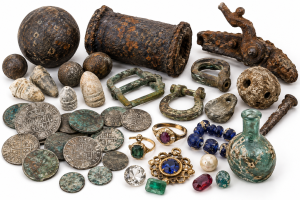
Shipwreck artifacts may include coins, pottery, bottles, tools, navigation equipment, personal belongings, weapons, ammunition, and parts of the vessel itself. In addition, archaeologists may discover trade goods such as ceramics, glass, metal objects, jewelry, and cargo. Each artifact can provide clues about the ship’s age, origin, trade route, crew, and final voyage.
However, seawater can greatly alter recovered objects. Iron often develops thick layers of corrosion, while copper alloys may form green or blue corrosion products. Meanwhile, wood and other organic materials can survive when buried in low-oxygen sediment. Therefore, trained conservators often stabilize recovered artifacts to reduce damage after removal from the water.
Scientific Importance of Shipwreck Artifacts
Maritime archaeologists study shipwreck artifacts together with their location and surrounding wreckage. For example, coins can help establish a possible date range for a wreck. Likewise, cargo can reveal historic trade connections between distant ports. Personal objects may also provide valuable information about daily life aboard historic ships.
Collecting Shipwreck Artifacts For Sale
Most importantly, an artifact’s archaeological context can be as valuable as the object itself. Therefore, careful documentation helps preserve its scientific and historical information. In addition, responsible collectors should consider provenance, documented ownership, conservation history, and all applicable laws before purchasing maritime relics.
Today, properly documented Shipwreck Artifacts For Sale allow collectors, museums, and researchers to preserve tangible pieces of maritime history. As a result, these artifacts can help tell the story of historic trade, exploration, naval activity, and everyday life at sea.
Showing all 49 results
-
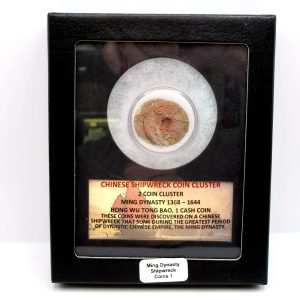
Ming Dynasty Chinese Shipwreck Coin Cluster 1
$55.00 -
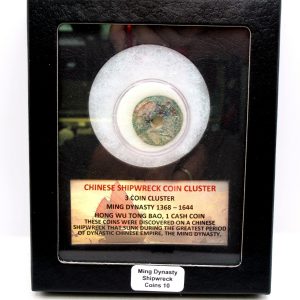
Ming Dynasty Chinese Shipwreck Coin Cluster 10
$65.00 -
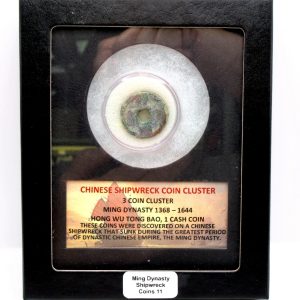
Ming Dynasty Chinese Shipwreck Coin Cluster 11
$65.00 -
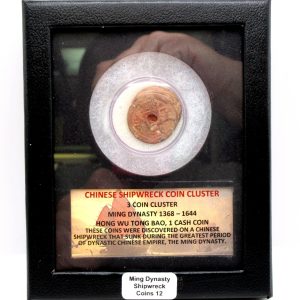
Ming Dynasty Chinese Shipwreck Coin Cluster 12
$65.00 -

Ming Dynasty Chinese Shipwreck Coin Cluster 2
$55.00 -
Sold out!

Ming Dynasty Chinese Shipwreck Coin Cluster 3
$55.00 -

Ming Dynasty Chinese Shipwreck Coin Cluster 4
$55.00 -
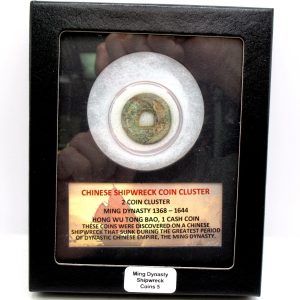
Ming Dynasty Chinese Shipwreck Coin Cluster 5
$55.00 -
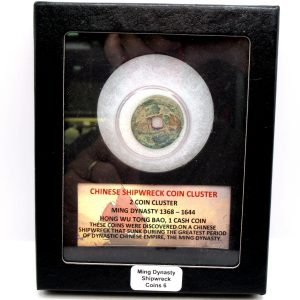
Ming Dynasty Chinese Shipwreck Coin Cluster 6
$55.00 -
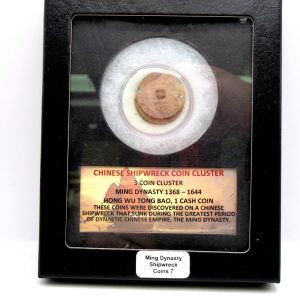
Ming Dynasty Chinese Shipwreck Coin Cluster 7
$65.00 -
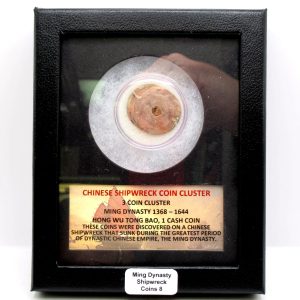
Ming Dynasty Chinese Shipwreck Coin Cluster 8
$65.00 -
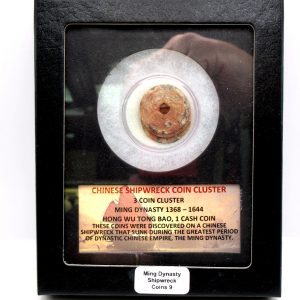
Ming Dynasty Chinese Shipwreck Coin Cluster 9
$65.00 -
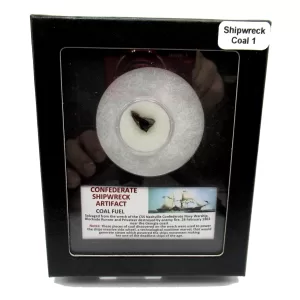
Shipwreck Artifacts for Sale | Coal #1
$28.89 -
Shipwreck Artifacts for Sale | Coal #10
$28.89 -
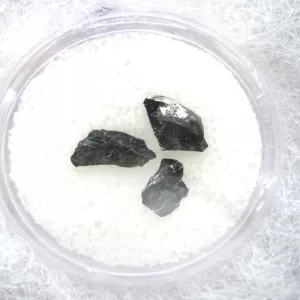
Shipwreck Artifacts for Sale | Coal #12
$28.89 -
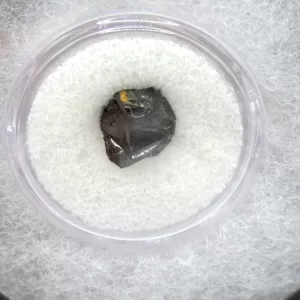
Shipwreck Artifacts for Sale | Coal #2
$28.89 -
Sold out!
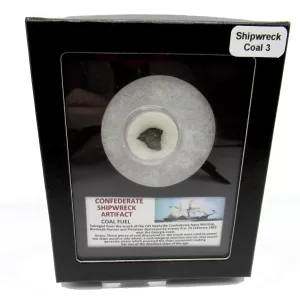
Shipwreck Artifacts for Sale | Coal #3
$28.89 -
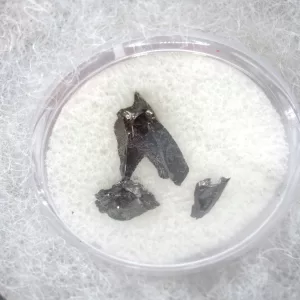
Shipwreck Artifacts for Sale | Coal #4
$28.89 -
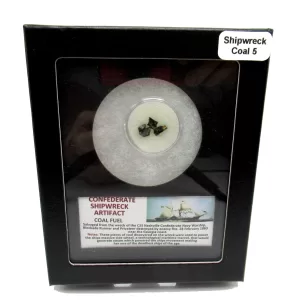
Shipwreck Artifacts for Sale | Coal #5
$28.89 -
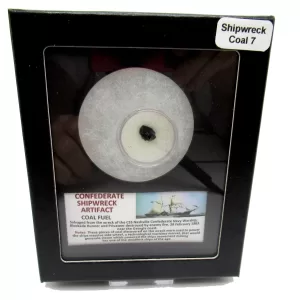
Shipwreck Artifacts for Sale | Coal #7
$28.89 -
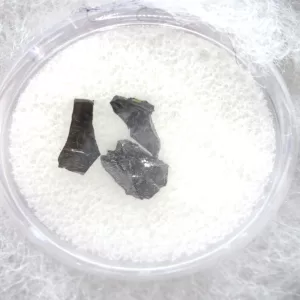
Shipwreck Artifacts for Sale | Coal #8
$28.89 -
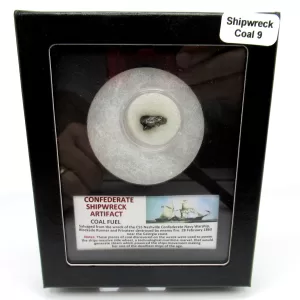
Shipwreck Artifacts for Sale | Coal #9
$28.89 -
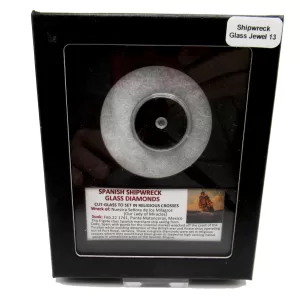
Shipwreck Artifacts for Sale | Jewel #13
$50.00 -
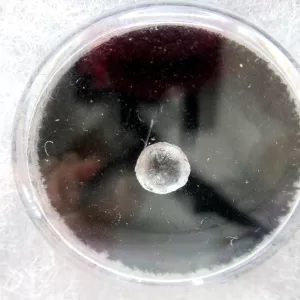
Shipwreck Artifacts for Sale | Jewel #14
$50.00 -
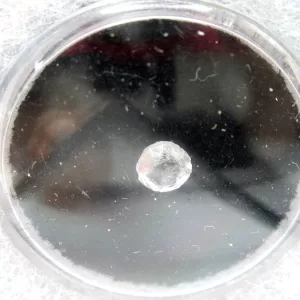
Shipwreck Artifacts for Sale | Jewel #16
$50.00 -
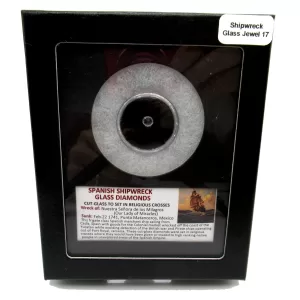
Shipwreck Artifacts for Sale | Jewel #17
$50.00 -
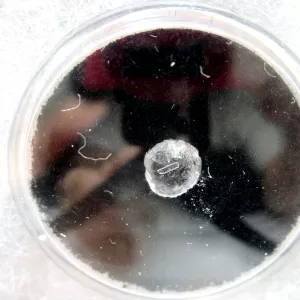
Shipwreck Artifacts for Sale | Jewel #18
$50.00 -
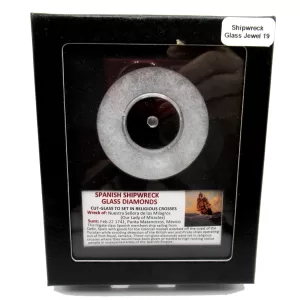
Shipwreck Artifacts for Sale | Jewel #19
$50.00 -
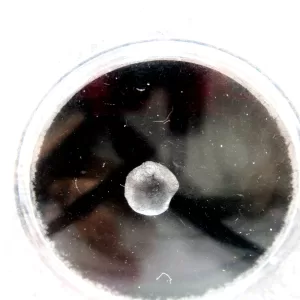
Shipwreck Artifacts for Sale | Jewel #20
$50.00 -
Sold out!
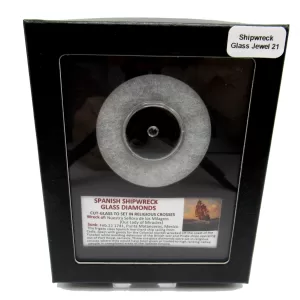
Shipwreck Artifacts for Sale | Jewel #21
$50.00 -
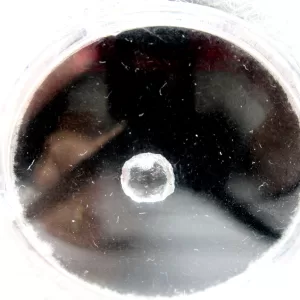
Shipwreck Artifacts for Sale | Jewel #24
$50.00 -
Sold out!
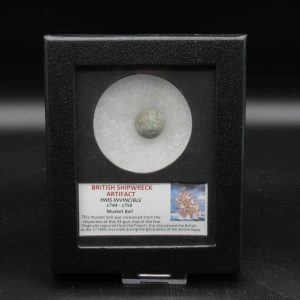
Shipwreck Artifacts | Musket Ball #13
$45.00 -
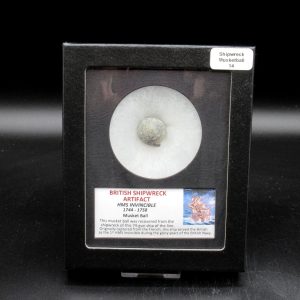
Shipwreck Artifacts | Musket Ball #14
$45.00 -
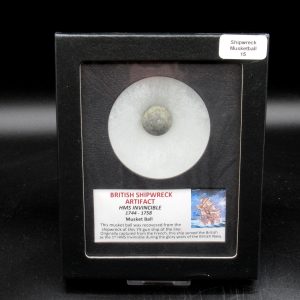
Shipwreck Artifacts | Musket Ball #15
$45.00 -
Sold out!
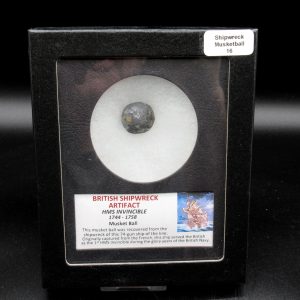
Shipwreck Artifacts | Musket Ball #16
$45.00 -
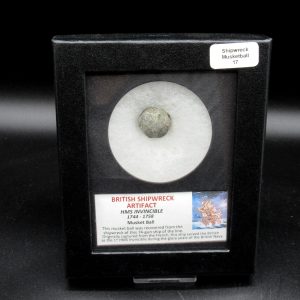
Shipwreck Artifacts | Musket Ball #17
$45.00 -
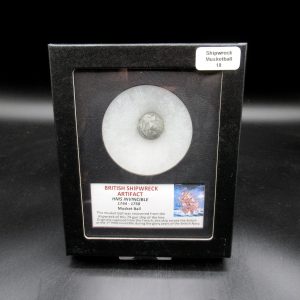
Shipwreck Artifacts | Musket Ball #18
$45.00 -
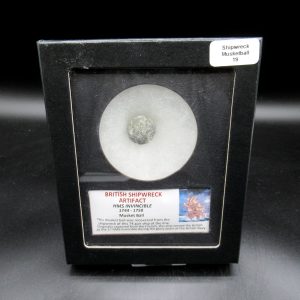
Shipwreck Artifacts | Musket Ball #19
$45.00 -
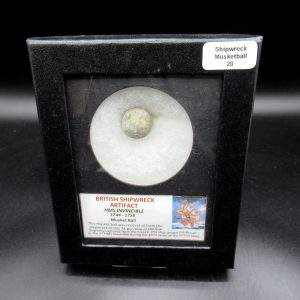
Shipwreck Artifacts | Musket Ball #20
$45.00 -
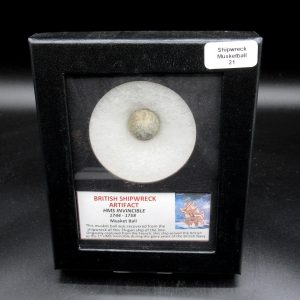
Shipwreck Artifacts | Musket Ball #21
$45.00 -
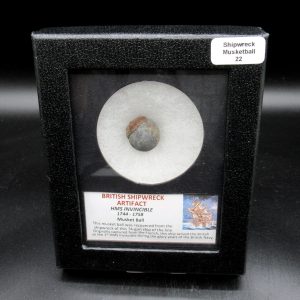
Shipwreck Artifacts | Musket Ball #22
$45.00 -
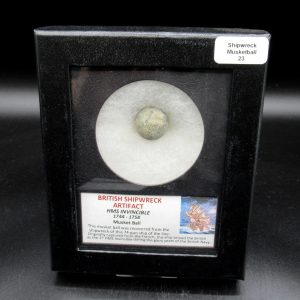
Shipwreck Artifacts | Musket Ball #23
$45.00 -
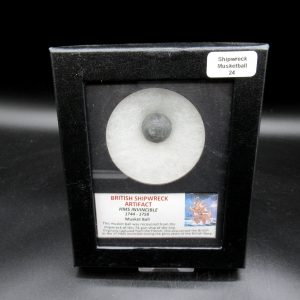
Shipwreck Artifacts | Musket Ball #24
$45.00 -
Shipwreck Artifacts | Musket Ball #25
$45.00 -
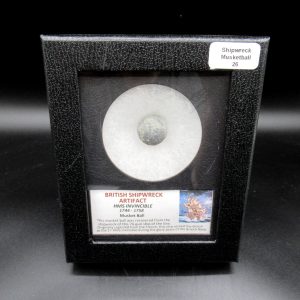
Shipwreck Artifacts | Musket Ball #26
$45.00 -
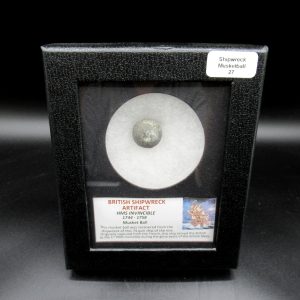
Shipwreck Artifacts | Musket Ball #27
$45.00 -
Sold out!
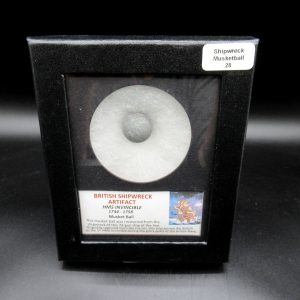
Shipwreck Artifacts | Musket Ball #28
$45.00 -
Sold out!
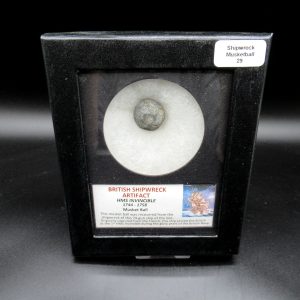
Shipwreck Artifacts | Musket Ball #29
$45.00 -
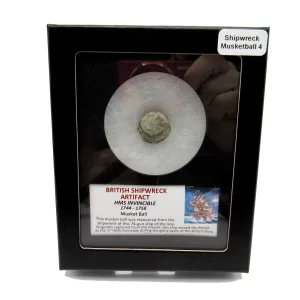
Shipwreck Artifacts | Musket Ball #4
$45.00
- Buy Shipwreck Artifacts
- Shipwreck Artifacts for Sale
- Large Selection
- Great Prices and Great Selection
- Authenticity Guaranteed
- Satisfaction Guaranteed
- Your TRUSTED SOURCE SINCE 1997!
- Many more videos are available on our YouTube Channel.
Shipwreck Artifacts For Sale | Authentic Maritime History and Archaeology
Shipwreck Artifacts For Sale offer collectors, educators, and history enthusiasts a direct connection to centuries of maritime travel, trade, exploration, and naval activity. These historic objects can include coins, ceramics, tools, navigational equipment, ship fittings, personal belongings, and cargo recovered from documented maritime settings.
Maritime archaeologists study shipwreck artifacts because they provide physical evidence of ship construction, international commerce, warfare, technology, and everyday life at sea. Therefore, properly documented artifacts can add valuable historical context that written records alone may not provide.
Shipwreck Artifacts and Maritime Archaeology
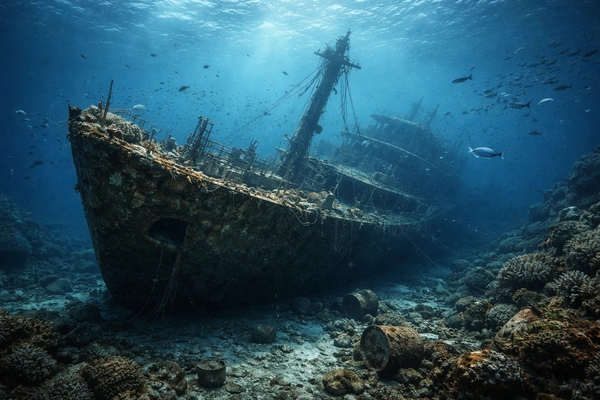 Shipwreck sites often act as archaeological time capsules beneath oceans, seas, rivers, and lakes. However, preservation conditions vary greatly. Low oxygen, cold temperatures, deep burial, or protective sediments may preserve some materials for centuries. In contrast, saltwater can rapidly corrode iron and other metals.
Because shipwreck sites can preserve groups of objects from a single historical event, researchers can study them as connected archaeological assemblages. As a result, shipwrecks may reveal details about trade routes, shipboard life, cargo, military activity, and historic seafaring technology.
Scientific Classification of Shipwreck Artifacts
Researchers classify maritime artifacts according to their material, function, archaeological context, and relationship to the vessel. Consequently, careful documentation helps scientists determine how an artifact was used and what it can reveal about the people aboard the ship.
Ship Structure, Rigging, and Construction
 Hull timbers, nails, fasteners, ballast stones, fittings, and rigging components reveal historic shipbuilding methods. For example, researchers may study wood species, tool marks, construction joints, and metal fasteners to identify regional shipbuilding traditions.
In addition, dendrochronology can sometimes date wooden timbers by comparing tree-ring patterns. Isotope and chemical studies may also help researchers investigate the geographic origin of certain materials.
Navigational and Operational Instruments
Compasses, astrolabes, sextants, sounding weights, navigational dividers, and other instruments provide evidence of historic seafaring knowledge. Moreover, these objects can show how sailors calculated position, measured water depth, and navigated long-distance routes.
When available as legally documented Shipwreck Artifacts For Sale, small maritime instruments and shipboard tools can provide an especially interesting connection to the history of navigation.
Shipwreck Cargo and Trade Goods
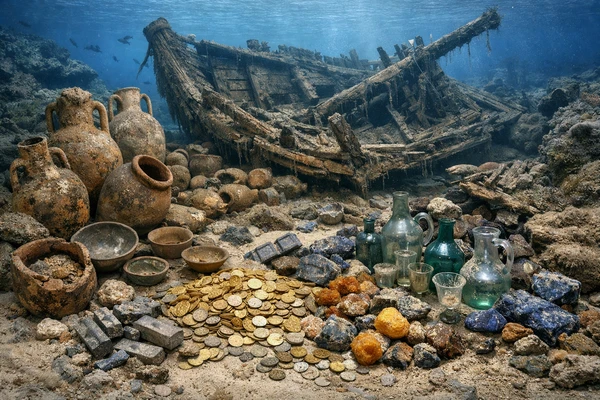 Ceramics, coins, glassware, amphorae, metal goods, raw materials, and other cargo can reveal historic trade connections. For instance, the origin of pottery or coins may help researchers trace commercial networks between ports and regions.
Furthermore, residue analysis can sometimes identify substances once stored inside vessels. Researchers may detect traces of wine, oils, food products, resins, or other transported materials.
Personal and Domestic Shipwreck Artifacts
 Personal objects can provide some of the most direct evidence of daily life aboard historic vessels. These items may include eating utensils, buttons, buckles, tools, weapons, coins, jewelry, and personal equipment.
Because these objects belonged to people living and working at sea, they can help researchers study occupation, social status, military service, and shipboard routines. Therefore, even small artifacts may hold significant historical value when their context is known.
Archaeological Recovery and Documentation
 Modern maritime archaeology emphasizes careful documentation and, when appropriate, preservation of sites in place. Before recovery, archaeologists may map the site, photograph artifacts, record their positions, and study surrounding sediments.
Common research methods include:
- Remotely operated vehicles (ROVs)
- Side-scan sonar
- Multibeam sonar mapping
- Underwater photography
- Photogrammetry and 3D reconstruction
- Controlled excavation grids
- Sediment and material analysis
Most importantly, archaeological context gives an artifact much of its scientific value. Therefore, responsible recovery and accurate documentation are essential.
Conservation of Shipwreck Artifacts
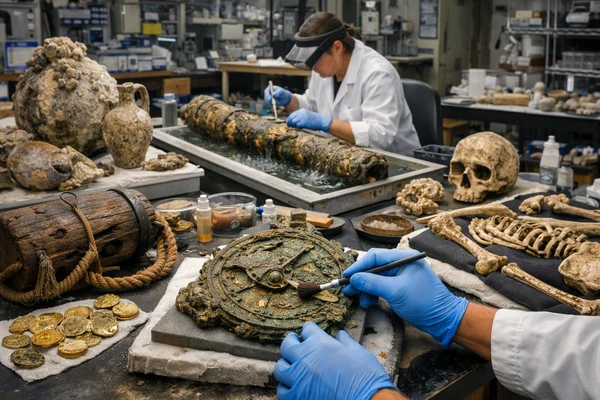 Many submerged artifacts require specialized conservation after recovery. Once removed from water, changes in moisture, oxygen, and salt concentrations can cause rapid deterioration.
Depending on the material, conservation methods may include:
- Desalination to remove harmful salts
- Controlled drying of sensitive materials
- Freeze-drying of suitable organic objects
- Polyethylene glycol treatment for some waterlogged wood
- Electrochemical treatment of certain corroded metals
- Controlled temperature and humidity storage
As a result, proper conservation helps stabilize authentic maritime artifacts for research, education, collecting, and museum display.
Scientific and Educational Value
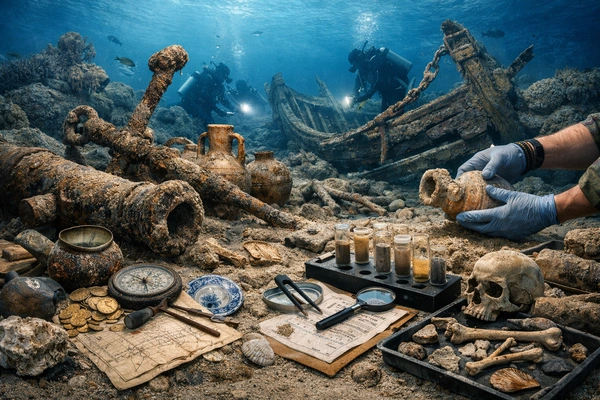 Shipwreck artifacts contribute to several fields of study. For example, researchers use them in maritime history, archaeology, anthropology, materials science, conservation science, and studies of historic trade.
- Maritime archaeology
- Naval and commercial history
- Materials science
- Historical anthropology
- Conservation science
- Cultural heritage studies
In addition, museums and educational institutions use maritime artifacts to explain how people traveled, traded, fought, and lived at sea. Physical artifacts often make maritime history easier to understand because they provide tangible evidence of past human activity.
Buying Shipwreck Artifacts Responsibly
Collectors searching for Shipwreck Artifacts For Sale should consider provenance, identification, condition, and documentation whenever possible. Maritime cultural property can also be subject to national and international laws, ownership agreements, archaeological protections, and salvage regulations. Therefore, responsible collectors should purchase artifacts only from lawful and reputable sources.
Documentation can also increase the educational value of an artifact. Information about the vessel, approximate date, recovery history, artifact type, and geographic origin helps preserve the object’s historical context.
Authentic Shipwreck Artifacts For Sale
Shipwreck artifacts preserve remarkable evidence of humanity’s long relationship with the world’s oceans and waterways. From coins and cargo to ship fittings and personal belongings, these objects can document trade, navigation, warfare, exploration, and daily life at sea.
At Prehistoric Fossils, we understand the importance of accurate identification and historical context. Therefore, our goal is to provide genuine natural history and historical specimens with clear information whenever available.
Buy Shipwreck Artifacts with Confidence. Your Trusted Source Since 1997. Authenticity Guaranteed.