
Jellyfish Fossils For Sale | Genuine Fossil Jellyfish
Jellyfish Fossils For Sale: Rare Traces of Ancient Seas
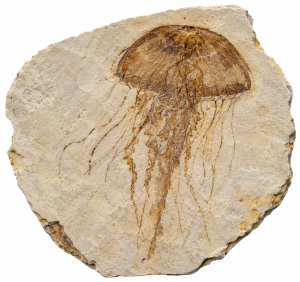
Jellyfish Fossils For Sale provide collectors, educators, and students with rare evidence of soft-bodied animals that lived in ancient oceans. Jellyfish belong to the phylum Cnidaria, a group that also includes corals and sea anemones. Their evolutionary history extends hundreds of millions of years. However, because jellyfish consist mostly of water and lack hard skeletons, they rarely leave fossils behind.
How Jellyfish Fossils Form
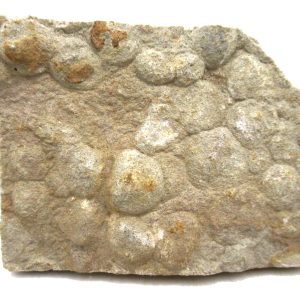
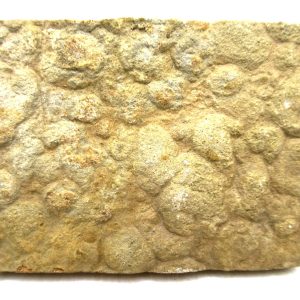
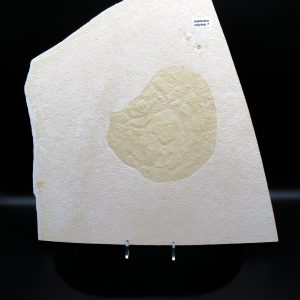
Usually, soft bodies decay quickly after death. Therefore, jellyfish fossils require unusual conditions for preservation. Rapid burial in fine sediment can protect impressions before currents, scavengers, or decay destroy them. As a result, many Jellyfish Fossils For Sale appear as flattened impressions or traces on bedding surfaces rather than complete three-dimensional fossils.
Where Fossil Jellyfish Are Found
Some important fossil deposits preserve possible or confirmed jellyfish remains. For example, Cambrian sites contain medusa-like fossils that help scientists study early marine ecosystems. In addition, younger deposits sometimes preserve circular or bell-shaped impressions linked to jellyfish or similar soft-bodied organisms. However, paleontologists must study these fossils carefully because sedimentary structures and other organisms can produce similar shapes.
What Jellyfish Fossils Tell Scientists
Jellyfish fossils can reveal valuable information about ancient environments. For instance, their preservation may help researchers interpret water conditions, burial events, and sediment movement. Moreover, large groups of impressions can offer clues about ancient shorelines and possible mass-stranding events.
Collecting Jellyfish Fossils
For collectors, genuine Jellyfish Fossils For Sale offer an unusual connection to prehistoric seas. Because preservation remains uncommon, well-documented specimens can hold strong scientific and educational interest. Most importantly, reliable identification should consider the fossil’s anatomy, geological age, rock formation, locality, and scientific research. Together, these details help separate authentic fossil jellyfish from misleading natural markings in sedimentary rock.
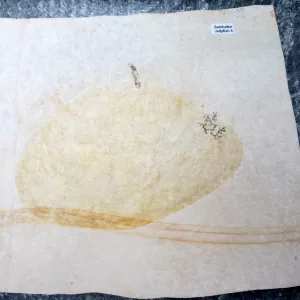
- Buy Fossils
- Fossils for Sale
- Large Selection
- Great Prices and Great Selection
- Authenticity Guaranteed
- Satisfaction Guaranteed
- Your TRUSTED SOURCE SINCE 1997!
- Many more videos are available on our YouTube Channel.
Jellyfish Fossils For Sale: Rare Windows Into Ancient Marine Ecosystems
Jellyfish Fossils For Sale offer collectors, educators, and students an unusual look at some of the most difficult animals to preserve in the fossil record. Because jellyfish have soft, fragile bodies and lack bones or shells, complete fossilization is rare. However, under exceptional conditions, ancient jellyfish can leave impressions, body outlines, and other traces in sedimentary rock.
These fossils help scientists study the history of Cnidaria, ancient marine environments, soft-bodied preservation, and the development of early animal ecosystems. As a result, genuine fossil jellyfish can have both scientific and educational value.
What Are Fossil Jellyfish?
Fossil jellyfish are preserved impressions or remains of ancient medusozoans and other jellyfish-like organisms. Depending on preservation, specimens may show a circular or bell-shaped body, radial symmetry, internal structures, or traces interpreted as tentacles.
Because living jellyfish contain a very high percentage of water, their bodies usually decay rapidly after death. Therefore, fossil preservation requires unusual circumstances, including rapid burial and favorable sediment conditions.
How Do Jellyfish Fossilize?
Several processes can help create fossil jellyfish. First, rapid burial may protect a soft body before scavengers or decay destroy it. Fine sediment can also preserve subtle impressions. In addition, low-oxygen conditions may slow decomposition and reduce disturbance by bottom-dwelling organisms.
In some deposits, early mineral growth may further stabilize soft tissues or surrounding sediment. Consequently, exceptional fossil sites known as Lagerstätten can preserve details that normally disappear from the fossil record.
Fossil Jellyfish and Exceptional Preservation
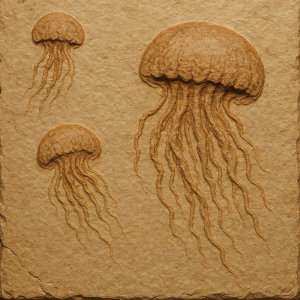 Jellyfish Fossils For Sale may come from geological deposits where soft-bodied organisms experienced unusual preservation. These fossils are especially important because most marine animals without hard shells leave little direct evidence behind.
However, paleontologists carefully evaluate circular impressions because not every disk-shaped fossil represents a jellyfish. Sedimentary structures, microbial features, and other organisms can sometimes create similar shapes.
Geological Age and Evolutionary Importance
Possible jellyfish-like fossils occur in rocks more than 500 million years old. Some Ediacaran fossils show radial body plans and have historically been compared with cnidarians. However, scientists continue to debate the biological relationships of several Ediacaran forms.
More convincing cnidarian and medusozoan fossils occur in younger Paleozoic deposits. Together, these fossils support the conclusion that cnidarians represent an ancient branch of animal evolution.
Ediacaran Jellyfish-Like Fossils
The Ediacaran Period lasted from approximately 635 to 539 million years ago. Fossil communities from this interval contain many unusual soft-bodied organisms. Some display radial symmetry, which led early researchers to interpret them as jellyfish.
Today, researchers take a more cautious approach. Although some Ediacaran organisms may have cnidarian relationships, others probably belonged to extinct groups unlike modern animals.
Cambrian Fossil Jellyfish
The Cambrian Period produced several important soft-bodied fossil deposits. These sites document major changes in animal diversity and marine ecosystems. Fossils interpreted as early medusozoans provide evidence that jellyfish-like cnidarians had already evolved during the early history of complex marine life.
Some Cambrian specimens preserve circular bodies, radial canals, or other anatomical features consistent with medusae.
Jurassic Fossil Jellyfish

Jurassic deposits in Europe have also produced remarkable evidence of jellyfish and other soft-bodied marine organisms. Fine-grained limestone and restricted marine environments sometimes created excellent preservation conditions.
These younger fossils can provide valuable comparisons with modern jellyfish anatomy and behavior.
Important Fossil Jellyfish Localities
Fossil jellyfish and jellyfish-like organisms have been reported from several important paleontological regions. Notable examples include parts of Utah, Wisconsin, Australia, China, Canada, France, and Germany.
Each locality represents a different geological setting. Therefore, scientists study the surrounding sediment, associated fossils, and preservation style before identifying a specimen as a jellyfish.
Utah Fossil Jellyfish
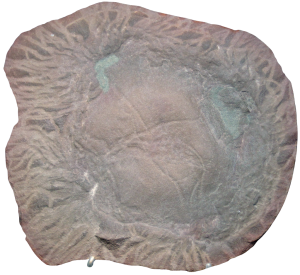
Cambrian rocks in Utah have produced notable medusoid fossils. Some specimens preserve circular outlines and radial structures interpreted as evidence of ancient jellyfish-like animals.
These fossils contribute to research on early marine communities and soft-bodied preservation in Cambrian seas.
Ediacara Hills Fossils
The Ediacara Hills of South Australia preserve one of the world’s most famous late Precambrian fossil assemblages. Many fossils from this region represent soft-bodied organisms unlike most modern animals.
Although some specimens were once widely described as jellyfish, modern research often interprets them more cautiously. Even so, the Ediacaran fossil record remains essential for understanding the early evolution of complex life.
La Voulte-sur-Rhône Fossils
The Jurassic La Voulte-sur-Rhône Lagerstätte in France is famous for exceptional marine preservation. The site contains soft-bodied organisms that rarely fossilize, providing valuable information about ancient marine communities.
Such localities help paleontologists understand how delicate organisms could become preserved and what conditions existed on ancient seafloors.
What Fossil Jellyfish Reveal About Ancient Oceans
Fossil jellyfish can provide information about ancient marine environments, especially when studied with sedimentology and associated fossils. Their preservation may indicate rapid burial, limited scavenging, reduced biological disturbance, or unusual chemical conditions within the sediment.
In addition, jellyfish fossils contribute to broader studies of marine food webs. Like modern jellyfish, ancient medusae likely interacted with plankton, small marine animals, predators, and other members of the ecosystem.
Why Are Fossil Jellyfish So Rare?
Jellyfish have almost no hard skeletal material. After death, waves, currents, scavengers, bacteria, and physical collapse can destroy their bodies quickly. Therefore, only a tiny fraction of ancient jellyfish had the chance to enter the fossil record.
This rarity makes well-preserved specimens especially useful for paleontological research and educational collections.
Jellyfish Fossils For Sale: Frequently Asked Questions
Are Fossil Jellyfish Rare?
Yes. Fossil jellyfish are uncommon because their soft bodies usually decay before burial. Exceptional preservation conditions are required to retain recognizable body outlines or anatomical details.
How Old Are the Oldest Fossil Jellyfish?
Possible jellyfish-like fossils extend back more than 500 million years. However, scientists continue to debate the exact relationships of some of the oldest specimens. More clearly identifiable cnidarian fossils appear in Paleozoic rocks.
Where Are Fossil Jellyfish Found?
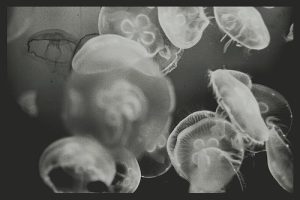 Fossil jellyfish and jellyfish-like fossils have been reported from several regions, including Utah and Wisconsin in the United States, Australia, China, Canada, France, and Germany. Their occurrence depends heavily on unusual preservation environments.
Do Fossil Jellyfish Show Tentacles?
Sometimes. Tentacles are extremely delicate and rarely survive fossilization. However, a small number of exceptionally preserved specimens contain filament-like structures or impressions that researchers interpret as possible tentacles.
Why Collect Jellyfish Fossils?
Jellyfish Fossils For Sale appeal to collectors because they represent organisms that rarely enter the fossil record. They can also serve as educational examples of soft-bodied fossilization, ancient marine ecosystems, and exceptional preservation.
Collectors should purchase specimens from reputable fossil dealers who provide accurate locality, geological age, identification information, and authenticity guarantees whenever possible.
Buy Jellyfish Fossils With Confidence
Prehistoric Fossils offers genuine fossils for collectors, educators, museums, and natural history enthusiasts. Our specimens are selected with attention to identification, geological information, and authenticity.
Buy fossils from Prehistoric Fossils with confidence. Authenticity Guaranteed!