
Fossil Reference Books For Sale | Fossil Identification Guides
Fossil Reference Books For Sale: Essential Guides for Collectors and Students
Fossil Reference Books For Sale provide valuable information for fossil collectors, students, educators, and anyone interested in paleontology. These books help readers identify fossils, understand prehistoric life, and learn about Earth’s long geological history. Moreover, a quality fossil reference book can explain where fossils occur and how scientists classify ancient organisms.
Fossil Reference Books for Fossil Identification
Fossil identification often begins with careful observation. For example, collectors examine a specimen’s shape, structure, texture, and geographic location. Fossil Reference Books For Sale often provide photographs, drawings, descriptions, and identification keys that make comparisons easier. In addition, many guides organize fossils by major groups, including trilobites, ammonites, brachiopods, fossil plants, dinosaurs, mammals, and other prehistoric organisms.
Understanding Geological Age and Fossil Localities
Geological information also plays an important role in fossil identification. Therefore, many fossil reference books include geological time charts and descriptions of important rock formations. These resources help readers understand when an organism lived and what its ancient environment may have looked like. Furthermore, locality information can help narrow an identification because certain fossil species occur within specific formations, ages, or geographic regions.
Learning About Prehistoric Life
Fossil Reference Books For Sale offer much more than specimen identification. For instance, they may explain evolution, anatomy, ancient ecosystems, fossil preservation, and major extinction events. As a result, readers can place individual fossils within a much larger scientific and geological story.
However, paleontology continues to change as researchers make new discoveries and revise classifications. Consequently, collectors should compare older reference books with newer scientific publications and updated sources whenever possible.
Choosing Fossil Reference Books for Your Collection
Overall, fossil reference books remain useful tools for building paleontological knowledge. Whether identifying a fossil, studying geological formations, or learning about Earth’s history, reliable guides help turn an interesting specimen into a meaningful connection with prehistoric life. For collectors and students alike, Fossil Reference Books For Sale can provide an excellent foundation for further study.
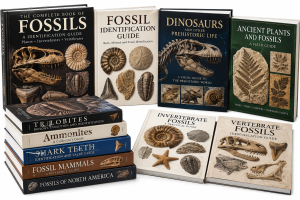
Showing all 10 results
-
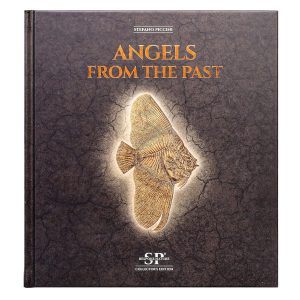
Angels From the Past – A Coffee Table Book by Stefano Piccini
$39.99 -
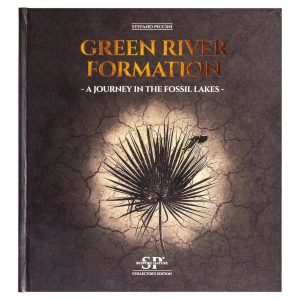
Green River Formation – A Journey in the Fossil Lakes by Stefano Piccini
$49.99 -
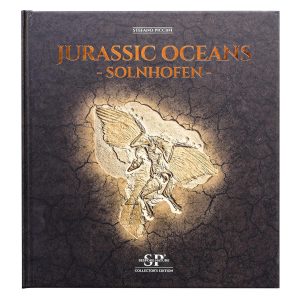
Jurassic Oceans – Solnhofen – A Coffee Table Book by Stefano Piccini
$39.99 -

Mesozoic Fossils I: Triassic & Jurassic Periods Paperback
$29.99 -

Mesozoic Fossils II: The Cretaceous Period Paperback
$29.99 -

Cenozoic Fossils 1: Paleogene
$29.99 -

Cenozoic Fossils II: The Neogene
$29.99 -
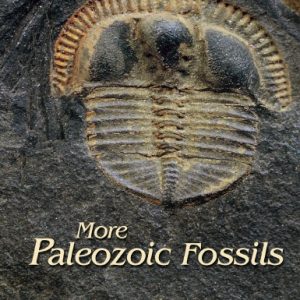
More Paleozoic Fossils
$29.99 -

Paleozoic Fossil Plants
$29.99 -

Paleozoic Fossils
$29.99
Fossil Reference Books For Sale: Essential Guides for Collectors and Students
Fossil Reference Books For Sale provide valuable tools for collectors, students, educators, and anyone interested in paleontology. Although websites offer quick information, well-researched fossil reference books often provide detailed photographs, scientific names, geological ages, identification features, and locality information in one convenient source. Therefore, a good reference library can help collectors identify specimens more accurately and better understand the history of life on Earth.
Why Fossil Reference Books Are Important
Correct fossil identification requires more than matching a specimen to a photograph. First, collectors should examine the fossil’s shape, structure, rock type, geological age, and collecting location. In addition, closely related organisms may look very similar at first glance. Quality Fossil Reference Books For Sale can explain the anatomical features that help distinguish one fossil species or group from another.
Moreover, scientific classifications can change as paleontologists discover new fossils and publish new research. Researchers sometimes revise the relationships, names, or classifications of prehistoric organisms when new evidence becomes available. Consequently, collectors should compare older classic references with newer books, scientific papers, and museum resources when researching difficult specimens.
Identifying Different Types of Fossils
Fossil reference books cover nearly every major fossil group. For example, specialized guides may focus on trilobites, ammonites, brachiopods, corals, echinoids, fossil plants, sharks, dinosaurs, or prehistoric mammals. Other books concentrate on fossils from a particular geological formation, state, country, or time period.
Location-based fossil guides can prove especially useful. Fossil species occur within specific rock formations and geological intervals. Therefore, knowing where a specimen was collected can greatly narrow its possible identification. Likewise, geological maps and formation descriptions can help readers understand the ancient environment in which an organism lived.
Using Fossil Books to Understand Geological Time
Many Fossil Reference Books For Sale include geological time charts. These charts divide Earth’s history into eons, eras, periods, epochs, and ages. As a result, readers can place individual fossils within the much larger history of life on Earth.
For example, trilobites flourished throughout much of the Paleozoic Era. Later, non-avian dinosaurs became major components of many terrestrial ecosystems during the Mesozoic Era. After the end-Cretaceous mass extinction, mammals expanded into many ecological roles during the Cenozoic Era. Therefore, understanding geological time helps collectors recognize how fossils relate to major events in Earth’s biological history.
How to Choose a Good Fossil Reference Book
Before purchasing a fossil reference book, consider the publication date, author qualifications, scientific references, photographs, illustrations, and geographic coverage. In addition, strong reference books explain anatomical terminology rather than simply displaying pictures. This additional information can make identification much easier for beginning and experienced collectors alike.
However, no single reference book can cover every fossil species, locality, or geological formation. For difficult identifications, collectors may need several sources. Scientific journals, museum collections, university resources, and geological surveys can also provide important supporting information.
Building a Reliable Fossil Reference Library
A carefully chosen fossil library can become an important part of any fossil collection. Fossil Reference Books For Sale can help collectors compare specimens, study geological formations, recognize anatomical features, and learn scientific terminology. In addition, reference books provide valuable historical and scientific context that can make individual fossils more meaningful.
Ultimately, a fossil becomes more interesting when you understand the organism, its age, its environment, and its place in evolutionary history. Therefore, fossil reference books do more than assist with identification. They help collectors develop a deeper understanding of paleontology and Earth’s remarkable history of life.