
Mazon Creek Fossils for Sale
Mazon Creek Fossils | The Mazon Creek fossil beds are a conservation lagerstätte found near Morris, in Grundy County, Illinois. The fossils are preserved in ironstone concretions. These concretions were formed approximately 309 million years ago in the mid-Pennsylvanian period. These concretions frequently preserve both hard and soft tissues of animal and plant materials. In addition, many soft-bodied organisms that do not normally fossilize are preserved. See More Fossils for Sale
Buy Fossils from Prehistoric Fossils with Confidence. Your TRUSTED SOURCE since 1997. Authenticity Guaranteed.
Showing 1–50 of 112 results
-

Mazon Creek Cyclus americanus Nodule #1
$25.00 -
Sold out!

Mazon Creek Cyclus americanus Nodule #10
$25.00 -

Mazon Creek Cyclus americanus Nodule #11
$25.00 -

Mazon Creek Cyclus americanus Nodule #12
$25.00 -

Mazon Creek Cyclus americanus Nodule #13
$45.00 -

Mazon Creek Cyclus americanus Nodule #14
$25.00 -

Mazon Creek Cyclus americanus Nodule #15
$45.00 -

Mazon Creek Cyclus americanus Nodule #16
$25.00 -

Mazon Creek Cyclus americanus Nodule #17
$35.00 -

Mazon Creek Cyclus americanus Nodule #18
$45.00 -

Mazon Creek Cyclus americanus Nodule #19
$25.00 -

Mazon Creek Cyclus americanus Nodule #2
$25.00 -

Mazon Creek Cyclus americanus Nodule #20
$45.00 -

Mazon Creek Cyclus americanus Nodule #21
$25.00 -

Mazon Creek Cyclus americanus Nodule #22
$25.00 -

Mazon Creek Cyclus americanus Nodule #23
$45.00 -

Mazon Creek Cyclus americanus Nodule #24
$45.00 -

Mazon Creek Cyclus americanus Nodule #25
$45.00 -

Mazon Creek Cyclus americanus Nodule #26
$25.00 -

Mazon Creek Cyclus americanus Nodule #27
$35.00 -

Mazon Creek Cyclus americanus Nodule #28
$35.00 -

Mazon Creek Cyclus americanus Nodule #29
$45.00 -

Mazon Creek Cyclus americanus Nodule #3
$25.00 -

Mazon Creek Cyclus americanus Nodule #30
$25.00 -

Mazon Creek Cyclus americanus Nodule #4
$25.00 -

Mazon Creek Cyclus americanus Nodule #5
$25.00 -

Mazon Creek Cyclus americanus Nodule #6
$25.00 -

Mazon Creek Cyclus americanus Nodule #7
$25.00 -

Mazon Creek Cyclus americanus Nodule #8
$25.00 -

Mazon Creek Cyclus americanus Nodule #9
$35.00 -

Mazon Creek Cyclus obesus Nodule #32
$45.00 -

Mazon Creek Cyclus obesus Nodule #33
$45.00 -
Sold out!

Mazon Creek Cyclus obesus Nodule #34
$55.00 -

Mazon Creek Cyclus obesus Nodule #35
$35.00 -

Mazon Creek Cyclus obesus Nodule #36
$45.00 -

Mazon Creek Cyclus obesus Nodule #37
$25.00 -
Sold out!

Mazon Creek Pennsylvanian Age Plant Nodule #147
$55.00 -
Sold out!

Mazon Creek Pennsylvanian Age Plant Nodule #158
$45.00 -
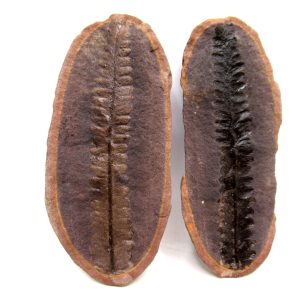
Mazon Creek Pennsylvanian Age Plant Nodule #160
$45.00 -
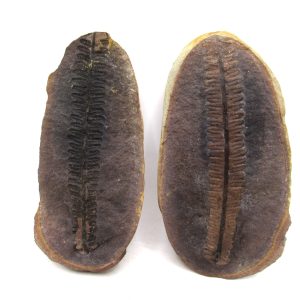
Mazon Creek Pennsylvanian Age Plant Nodule #161
$45.00 -
Sold out!
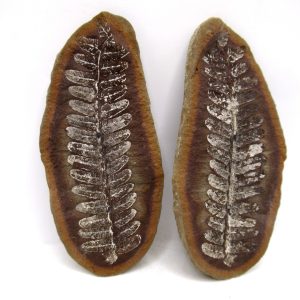
Mazon Creek Pennsylvanian Age Plant Nodule #162
$45.00 -
Sold out!

Mazon Creek Pennsylvanian Age Plant Nodule #163
$20.00 -
Sold out!
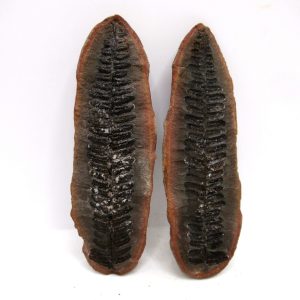
Mazon Creek Pennsylvanian Age Plant Nodule #164
$36.00 -

Mazon Creek Pennsylvanian Age Plant Nodule #165
$35.00 -
Sold out!
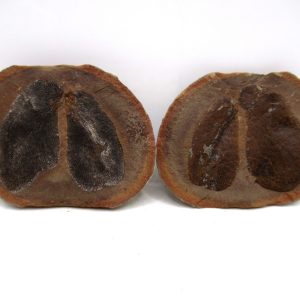
Mazon Creek Pennsylvanian Age Plant Nodule #166
$25.00 -
Sold out!

Mazon Creek Pennsylvanian Age Plant Nodule #167
$35.00 -
Sold out!
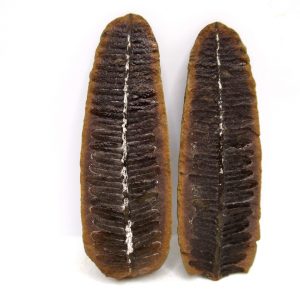
Mazon Creek Pennsylvanian Age Plant Nodule #168
$45.00 -
Sold out!
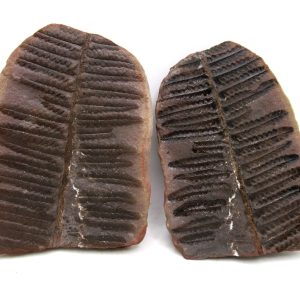
Mazon Creek Pennsylvanian Age Plant Nodule #169
$45.00 -
Sold out!
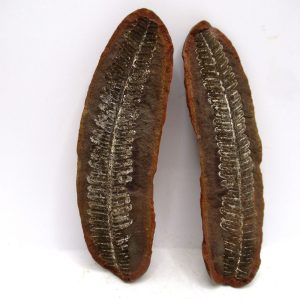
Mazon Creek Pennsylvanian Age Plant Nodule #170
$45.00 -
Sold out!
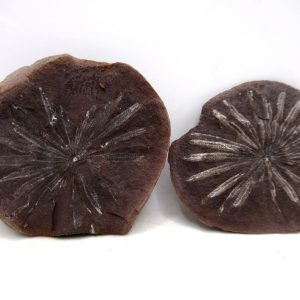
Mazon Creek Pennsylvanian Age Plant Nodule #171
$45.00
- Buy Fossils
- Fossils for Sale
- Large Selection
- Great Prices and Great Selection
- Authenticity Guaranteed
- Satisfaction Guaranteed
- Your TRUSTED SOURCE SINCE 1997!
- Many more videos are available on our YouTube Channel.
Mazon Creek Fossils: A Scientific Window into Carboniferous Life
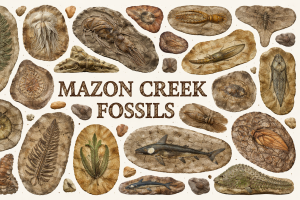
The Mazon Creek fossil assemblage of northeastern Illinois represents one of the most significant Carboniferous Lagerstätten in the world. Preserved primarily within siderite concretions dating to approximately 307 million years ago, Mazon Creek fossils provide unparalleled insight into late Paleozoic ecosystems, including soft-bodied organisms rarely preserved elsewhere.
Introduction to the Mazon Creek Fossil Site
The Mazon Creek fossil beds, located southwest of Chicago in Illinois, are internationally recognized for their exceptional preservation of Carboniferous flora and fauna. Unlike typical fossil deposits dominated by hard parts, Mazon Creek preserves soft tissues, including jellyfish, worms, insects, and early vertebrates.
This makes the site invaluable to:
- Paleontologists
- Evolutionary biologists
- Stratigraphers
- Museum curators
- Serious fossil collectors
Geological and Stratigraphic Context
Age and Formation
- Geological period: Pennsylvanian (Late Carboniferous)
- Age: ~307 million years
- Formation: Francis Creek Shale (Carbondale Formation)
The fossils are preserved in iron carbonate (siderite) concretions, which formed rapidly around decaying organisms, sealing them off from oxygen and physical disruption.
Depositional Environment
Mazon Creek represents a deltaic to near-shore marine system, influenced by fluctuating sea levels. This unique setting allowed the coexistence of:
- Marine organisms
- Freshwater species
- Terrestrial plants and arthropods
The result is a mixed paleoecosystem, rarely captured elsewhere in the fossil record.
Exceptional Preservation (Lagerstätte Status)
Mazon Creek is classified as a Konservat-Lagerstätte, meaning it preserves organisms with extraordinary anatomical detail.
Preservation features include:
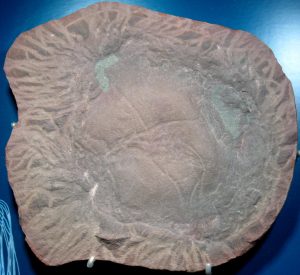
- Soft tissues (muscle, tentacles, internal organs)
- Fine cuticle detail in insects
- Carbonized plant material with cellular structure
Rapid concretion formation prevented scavenging and bacterial decay, a process still studied today in taphonomy research.
Major Fossil Groups Found at Mazon Creek
Mazon Creek Plants (Flora)
Mazon Creek is especially rich in Carboniferous plant fossils, reflecting extensive coal-age swamp forests.
Common plant taxa include:
- Lepidodendron (scale trees)
- Sigillaria
- Calamites
- Ferns and seed ferns (Pteridosperms)
These plants played a direct role in the formation of modern coal deposits.
- Invertebrates
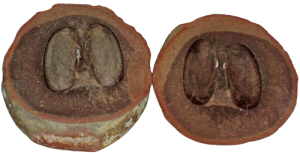
Arthropods
- Early insects (winged and wingless)
- Horseshoe crabs (xiphosurans)
- Eurypterids (sea scorpions)
Soft-Bodied Fauna
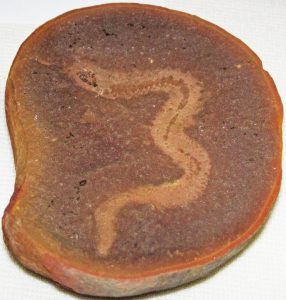
- Jellyfish (medusozoans)
- Annelid worms
- Mollusks
The preservation of jellyfish alone makes Mazon Creek globally significant.
- Vertebrates
Although rarer, vertebrates are scientifically critical.
Notable taxa:
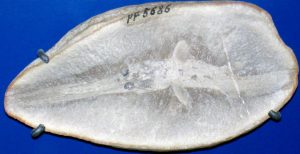
- Early ray-finned fishes
- Amphibians
- Tullimonstrum gregarium (the Tully Monster)
The Tully Monster: Illinois’ State Fossil
The Tully Monster (Tullimonstrum gregarium) is one of the most enigmatic fossils ever discovered.
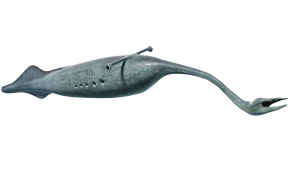
Characteristics:
- Proboscis with claw-like jaws
- Lateral eye stalks
- Segmented body with tail fin
Despite decades of research, its exact classification remains debated, illustrating how Mazon Creek fossils continue to shape scientific discourse.
Scientific Importance and Ongoing Research
Mazon Creek fossils are actively studied in:
- Evolution of early terrestrial ecosystems
- Arthropod and vertebrate origins
- Soft-tissue fossilization processes
- Carboniferous climate reconstruction
Major institutions holding Mazon Creek collections include:
- Field Museum of Natural History
- Smithsonian Institution
- Yale Peabody Museum
Conclusion
The Mazon Creek fossil beds represent one of Earth’s most complete snapshots of Carboniferous life. Their unmatched preservation, ecological diversity, and scientific impact make them essential to understanding the evolutionary history of plants and animals. As research continues, Mazon Creek remains not just a fossil site—but a cornerstone of paleontological science.
Buy Fossils from Prehistoric Fossils with Confidence. Your TRUSTED SOURCE since 1997. Authenticity Guaranteed.