
Mazon Creek Fossils For Sale | Authentic Illinois Fossils
Mazon Creek Fossils For Sale – Fossils from Ancient Illinois
Mazon Creek Fossils For Sale offer collectors and fossil enthusiasts an exceptional look at life during the Pennsylvanian Subperiod of the Carboniferous. About 307–309 million years ago, tropical wetlands and coastal waters covered what is now northeastern Illinois. Today, scientists consider Mazon Creek one of the world’s most important fossil deposits because it preserves an unusually diverse ancient ecosystem.
How Mazon Creek Fossils Formed
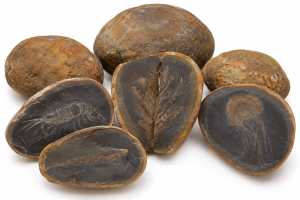
Most Mazon Creek fossils occur inside rounded siderite, or iron carbonate, concretions. First, plants and animals settled into soft sediment. Then, rapid burial protected their remains from decay and disturbance. Chemical processes around the remains helped siderite form. Consequently, the growing concretions created conditions that preserved remarkable biological detail.
Plants and Animals Found at Mazon Creek
Moreover, Mazon Creek Fossils For Sale can represent much more than bones, shells, and teeth. The deposit also contains delicate organisms that rarely enter the fossil record. For example, researchers have found worms, arthropods, insects, fish, and other animals. In addition, abundant plant fossils document the lush vegetation that grew around ancient wetlands and waterways.
Braidwood and Essex Mazon Creek Fossils
Scientists generally recognize two major ecological associations within the Mazon Creek deposit. The Braidwood biota represents freshwater to brackish environments and contains many land plants. In contrast, the Essex biota records marine to brackish conditions and includes many aquatic animals. Therefore, these fossils help scientists compare nearby environments from the same ancient landscape.
The Famous Tully Monster
Perhaps the most famous Mazon Creek animal is Tullimonstrum gregarium, commonly called the Tully Monster. Illinois designated it as the state fossil. Its unusual body has generated decades of scientific study and debate. Because of this, Mazon Creek remains important to both paleontology and the study of unusual fossil organisms.
Why Collect Mazon Creek Fossils?
Mazon Creek Fossils For Sale provide more than attractive collector specimens. They preserve evidence of entire prehistoric communities and help paleontologists reconstruct ancient habitats, food webs, biodiversity, and environmental change in Carboniferous Illinois. As a result, genuine Mazon Creek fossils combine scientific importance, natural history, and strong collector appeal.
No Results Found
The page you requested could not be found. Try refining your search, or use the navigation above to locate the post.
- Buy Fossils
- Fossils for Sale
- Large Selection
- Great Prices and Great Selection
- Authenticity Guaranteed
- Satisfaction Guaranteed
- Your TRUSTED SOURCE SINCE 1997!
- Many more videos are available on our YouTube Channel.
Mazon Creek Fossils For Sale – A Scientific Window into Carboniferous Life
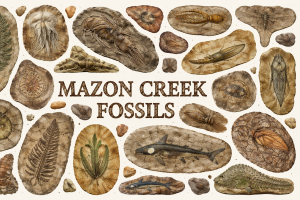 Mazon Creek Fossils For Sale offer collectors, educators, and researchers an opportunity to own specimens from one of the world’s most important Carboniferous fossil deposits. The Mazon Creek fossil assemblage of northeastern Illinois represents an internationally recognized Konservat-Lagerstätte. These fossils occur mainly inside siderite concretions dating to approximately 307 million years ago.
Because Mazon Creek fossils can preserve both hard and soft body parts, they provide exceptional evidence of Pennsylvanian ecosystems. Fossils include plants, insects, worms, jellyfish, fishes, amphibians, arthropods, and the famous Tully Monster. Therefore, scientists continue to use these fossils to study evolution, ecology, fossilization, and Carboniferous environments.
Introduction to Mazon Creek Fossils
The Mazon Creek fossil beds lie southwest of Chicago in northeastern Illinois. Paleontologists recognize the site for extraordinary preservation within iron carbonate concretions. Unlike many fossil deposits that mainly preserve shells, bones, or teeth, Mazon Creek can preserve impressions of delicate organisms and soft tissues.
As a result, Mazon Creek Fossils For Sale are especially attractive to serious fossil collectors who value scientifically important specimens with documented geological context.

Why Mazon Creek Is Scientifically Important
Mazon Creek fossils provide valuable evidence for several fields of scientific study, including:
- Paleontology
- Evolutionary biology
- Stratigraphy
- Taphonomy
- Paleoecology
- Museum research
Geological and Stratigraphic Context
Age and Formation of Mazon Creek Fossils
- Geological Period: Pennsylvanian, Late Carboniferous
- Approximate Age: 307 million years
- Rock Unit: Francis Creek Shale Member of the Carbondale Formation
Mazon Creek fossils commonly occur inside siderite, or iron carbonate, concretions. These concretions formed around organic remains during early burial. Consequently, the growing mineral mass protected many organisms from physical disturbance and helped preserve fine anatomical details.
Depositional Environment
The Mazon Creek region represented a complex deltaic environment influenced by rivers, coastal settings, brackish water, and nearby marine conditions. This changing environment brought together organisms from several habitats.
Therefore, Mazon Creek preserves evidence of:
- Marine organisms
- Freshwater organisms
- Terrestrial plants
- Land-dwelling arthropods
This ecological mixture makes the Mazon Creek fossil record especially useful for reconstructing Pennsylvanian life.
Exceptional Preservation at Mazon Creek
Mazon Creek as a Konservat-Lagerstätte
Mazon Creek is classified as a Konservat-Lagerstätte, a fossil deposit known for exceptional preservation. In addition to durable shells and bones, many concretions preserve outlines and impressions of organisms that normally decay before fossilization.
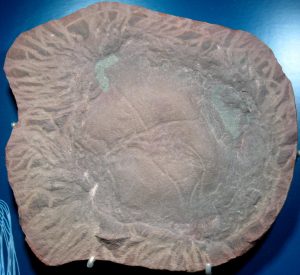 Important preservation features can include:
- Soft-bodied animals
- Delicate appendages
- Fine arthropod cuticle
- Plant structures
- Body outlines rarely preserved elsewhere
Scientists continue to study Mazon Creek concretions to better understand how rapid burial, chemistry, microbial activity, and mineral growth contributed to exceptional fossil preservation.
Major Fossil Groups Found at Mazon Creek
Mazon Creek Plant Fossils
Mazon Creek contains a rich record of Carboniferous vegetation. These fossils document the lush tropical forests and wetland environments that covered large parts of Illinois during the Pennsylvanian Period.
Common plant groups include:
- Lepidodendron and related lycopsids
- Sigillaria
- Calamites and other sphenopsids
- Ferns
- Seed ferns, or pteridosperms
These plants formed part of the extensive coal-age ecosystems that contributed organic material to many Pennsylvanian coal deposits.
Mazon Creek Invertebrate Fossils
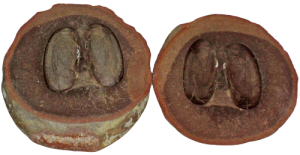
Mazon Creek preserves a diverse collection of invertebrates. Arthropods include insects, horseshoe crab relatives, crustaceans, and other groups.
Common or scientifically important invertebrates include:
- Early insects
- Xiphosurans
- Crustaceans
- Mollusks
- Annelid worms
- Medusozoans commonly described as jellyfish
Soft-Bodied Mazon Creek Fossils
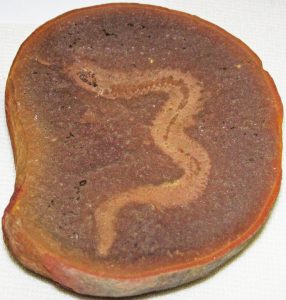 Soft-bodied fossils make Mazon Creek especially significant. Worms, jellyfish-like organisms, and other delicate animals rarely fossilize under normal conditions. However, the unusual chemistry and rapid concretion growth at Mazon Creek preserved impressions of many such organisms.
For collectors seeking Mazon Creek Fossils For Sale, soft-bodied specimens can be especially desirable because they represent organisms that are uncommon in the broader fossil record.
Mazon Creek Vertebrate Fossils
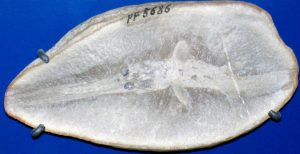 Vertebrate fossils occur less commonly than plants and many invertebrates, but they remain scientifically important. Mazon Creek has produced several groups of fishes and early tetrapods.
Examples include:
- Early ray-finned fishes
- Cartilaginous fishes
- Early tetrapods and amphibian-grade vertebrates
The Tully Monster and Mazon Creek Fossils
Tullimonstrum gregarium
The Tully Monster, Tullimonstrum gregarium, is one of the most famous fossils from Mazon Creek and serves as the official state fossil of Illinois.
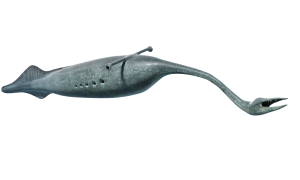
The animal had several unusual anatomical features, including:
- An elongated proboscis ending in a grasping structure
- Eyes positioned on a transverse bar
- An elongated soft body
- A tail fin
Researchers have debated the evolutionary relationships of Tullimonstrum for decades. Although several studies have proposed vertebrate affinities, its precise classification remains a subject of scientific discussion. This continuing debate demonstrates the research value of Mazon Creek fossils.
Scientific Importance of Mazon Creek Fossils
Scientists use Mazon Creek fossils to investigate major questions about Carboniferous life and fossil preservation. Research topics include:
- Evolution of terrestrial ecosystems
- Early vertebrate diversity
- Arthropod evolution
- Soft-tissue preservation
- Pennsylvanian climate and environments
- Ancient food webs
Museum and Research Collections
Major institutions maintain important Mazon Creek collections for scientific study, education, and historical preservation. These include the Field Museum of Natural History and other major research museums in the United States.
Private collectors have also played an important role in the history of Mazon Creek research by discovering, preserving, and documenting specimens that later became available for scientific study.
Collecting Mazon Creek Fossils
Collectors value Mazon Creek fossils for their age, scientific importance, unusual preservation, and wide variety of organisms. Individual concretions may contain plants, animals, or trace fossils, while many concretions contain no identifiable fossil at all.
When considering Mazon Creek Fossils For Sale, buyers should look for clear identification, locality information, specimen condition, and reputable sellers who accurately describe the fossil. Scientific names and classifications can change as new research becomes available, so responsible fossil descriptions should reflect current accepted information whenever possible.
Why Buy Mazon Creek Fossils From Prehistoric Fossils?
Prehistoric Fossils has supplied genuine fossils and natural history specimens since 1997. Our Mazon Creek fossils are selected for collectors, educators, students, and enthusiasts who want authentic specimens with meaningful geological and paleontological context.
When available, our Mazon Creek Fossils For Sale include identification information to help collectors better understand the specimen, its age, and its scientific significance.
Conclusion: Mazon Creek Fossils For Sale
The Mazon Creek fossil beds preserve one of the most detailed records of Pennsylvanian life known from North America. Their remarkable siderite concretions contain plants, arthropods, worms, fishes, soft-bodied organisms, and the famous Tully Monster.
Because of this extraordinary diversity and preservation, Mazon Creek remains essential to paleontological research. At the same time, authentic Mazon Creek Fossils For Sale give collectors an opportunity to own a genuine piece of approximately 307-million-year-old natural history.
Buy Mazon Creek Fossils from Prehistoric Fossils with confidence. Your Trusted Source Since 1997. Authenticity Guaranteed.