
Bivalve Fossils for Sale (prehistoricfossils.com)
Bivalve Fossils for Sale. Bivalves are an aquatic mollusk that has a compressed body enclosed within a hinged shell, such as oysters, clams, mussels, and scallops.
Fossil bivalves were preserved when the sediment that they were buried in was transformed into rock.
Bivalves first appeared during the middle Cambrian Period approx. 500 million years ago.
We offer a diverse group of Fossil Bivalves for sale from Florida to Michigan and Madagascar to Indonesia.
Showing 1–60 of 170 resultsSorted by price: high to low
-
Sold out!
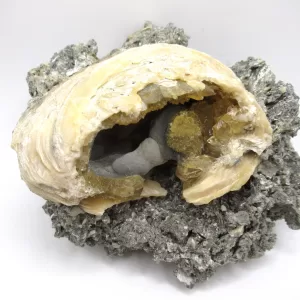
Mercenaria Fossil Clam Rucks Pit, FL #4
$195.00 -
Sold out!
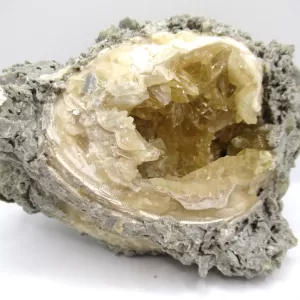
Mercenaria Fossil Clam Rucks Pit, FL #3
$195.00 -
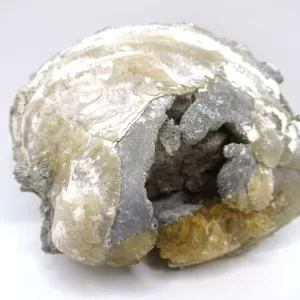
Mercenaria Fossil Clam Rucks Pit, FL #2
$175.00 -
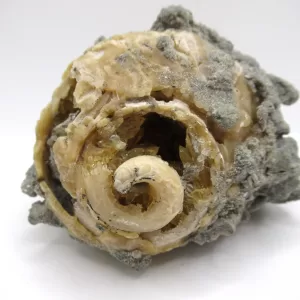
Busycon Fossil Whelk Rucks Pit, FL #5
$150.00 -
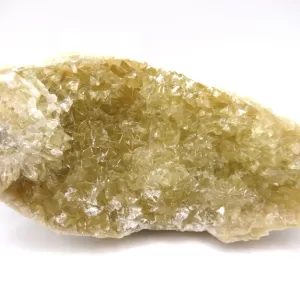
Mercenaria Fossil Clam Rucks Pit, FL #1
$125.00 -

Michigan Bivalve Plate #1
$95.00 -

Trigonia Bivalve – Portugal #26
$45.00 -

Trigonia Bivalve – Portugal #25
$45.00 -

Trigonia Bivalve – Portugal #24
$45.00 -

Trigonia Bivalve – Portugal #22
$45.00 -
Sold out!

Trigonia Bivalve – Portugal #23
$45.00 -

Trigonia Bivalve – Portugal #21
$45.00 -

Trigonia Bivalve – Portugal #20
$45.00 -
Sold out!

Trigonia Bivalve – Portugal #19
$45.00 -
Sold out!

Trigonia Bivalve – Portugal #17
$45.00 -
Sold out!

Trigonia Bivalve – Portugal #18
$45.00 -

Trigonia Bivalve – Portugal #16
$45.00 -

Trigonia Bivalve – Portugal #15
$45.00 -
Sold out!

Trigonia Bivalve – Portugal #13
$45.00 -

Trigonia Bivalve – Portugal #14
$45.00 -

Trigonia Bivalve – Portugal #12
$45.00 -
Sold out!

Trigonia Bivalve – Portugal #11
$45.00 -
Sold out!

Trigonia Bivalve – Portugal #10
$45.00 -

Trigonia Bivalve – Portugal #9
$45.00 -

Trigonia Bivalve – Portugal #7
$45.00 -

Trigonia Bivalve – Portugal #8
$45.00 -
Sold out!

Trigonia Bivalve – Portugal #6
$45.00 -

Portugal Trigonia #5
$45.00 -

Portugal Trigonia #4
$45.00 -

Portugal Trigonia #3
$45.00 -

Portugal Trigonia #1
$45.00 -
Sold out!

Spanish Pterotrigonia #10
$45.00 -
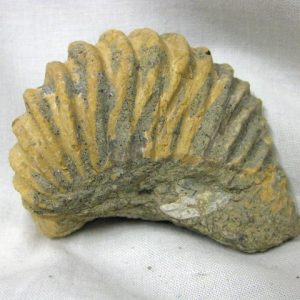
Spanish Pterotrigonia #9
$45.00 -

Spanish Pterotrigonia #7
$45.00 -

Spanish Pterotrigonia #6
$45.00 -
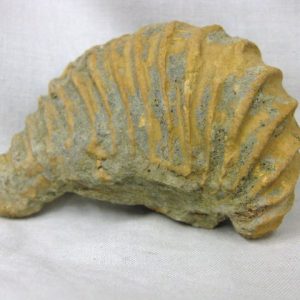
Spanish Pterotrigonia #5
$45.00 -

Spanish Pterotrigonia #4
$45.00 -

Spanish Pterotrigonia #3
$45.00 -

Spanish Pterotrigonia #2
$45.00 -

Spanish Pterotrigonia #1
$45.00 -

Florida Mercenaria Clam #5
$45.00 -
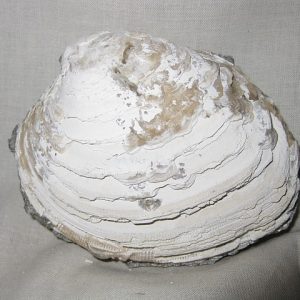
Florida Mercenaria Clam #2
$45.00 -

Florida Mercenaria Clam #1
$45.00 -
Sold out!

Chesapecten jeffersonius | #25
$25.00 -
Sold out!

Chesapecten jeffersonius | #24
$25.00 -
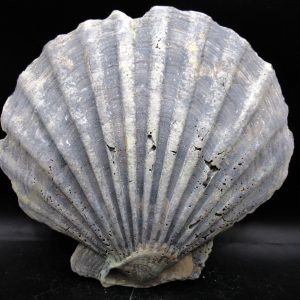
Chesapecten jeffersonius Pliocene Age, Virginia 6.41″ #30
$20.00 -
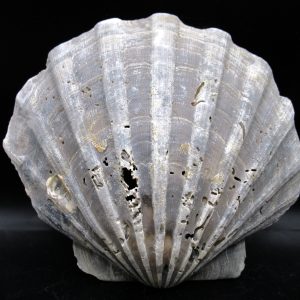
Chesapecten jeffersonius Pliocene Age, Virginia 6.29″ #29
$20.00 -
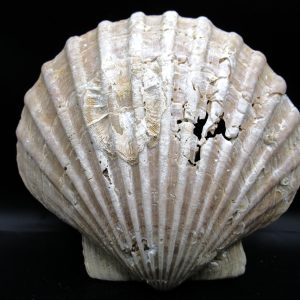
Chesapecten jeffersonius Pliocene Age, Virginia 6.34″ #28
$20.00 -
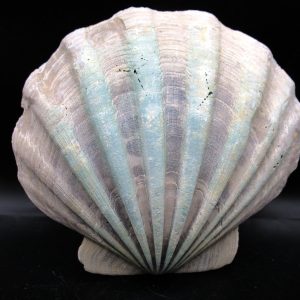
Chesapecten jeffersonius Pliocene Age, Virginia 6.15″ #27
$20.00 -
Sold out!

Chesapecten jeffersonius | #26
$20.00 -
Sold out!

Chesapecten jeffersonius | #23
$20.00 -

Chesapecten jeffersonius | #22
$20.00 -

Chesapecten jeffersonius | #21
$20.00 -

Chesapecten jeffersonius | #19
$20.00 -

Chesapecten jeffersonius | #12
$20.00 -

Chesapecten jeffersonius | #11
$20.00 -
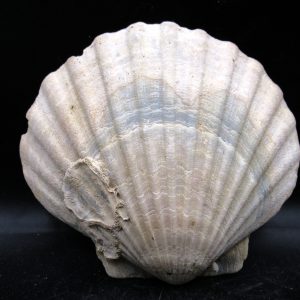
Chesapecten jeffersonius Pliocene Age, Virginia 5.02″ #37
$18.00 -
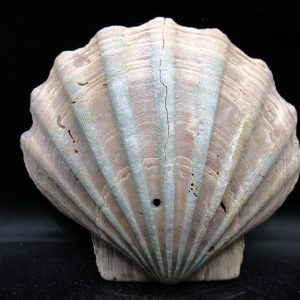
Chesapecten jeffersonius Pliocene Age, Virginia 5.24″ #36
$18.00 -
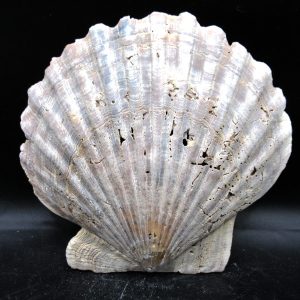
Chesapecten jeffersonius Pliocene Age, Virginia 5.28″ #35
$18.00 -
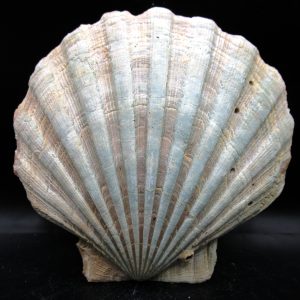
Chesapecten jeffersonius Pliocene Age, Virginia 5.72″ #34
$18.00
- Buy Fossils
- Fossils for Sale
- Large Selection
- Great Prices and Great Selection
- Authenticity Guaranteed
- Satisfaction Guaranteed
- Your TRUSTED SOURCE for over 25 years!
- Many more videos are available on our YouTube Channel.
Fossil Bivalves: Formation, Identification, and Their Importance in Paleontology
Introduction
Fossil bivalves—ancient relatives of modern clams, oysters, scallops, and mussels—are among the most abundant and scientifically valuable fossils on Earth. Their durable calcium-carbonate shells fossilize easily, and because they lived in nearly every aquatic environment for over 500 million years, bivalve fossils offer a reliable window into ancient oceans, seas, lakes, and coastal ecosystems.
This guide provides an expert, Google-EEAT compliant overview of fossil bivalves, including their biology, fossilization process, geological significance, and tips for collectors.
What Are Bivalves?

Bivalves are mollusks with two hinged shells (called valves). Modern examples include:
-
Clams
-
Oysters
-
Scallops
-
Mussels
-
Cockles
Key Biological Features
-
Two-part shell: Made of aragonite or calcite
-
Soft body: Typically leaves no fossil trace
-
Hinge with teeth: Used to identify species
-
Filter-feeding lifestyle: Leaves signature marks in sediment
-
Wide ecological range: Freshwater rivers to deep marine basins
Their simple and durable shell structure is why so many survive as fossils today.
How Fossil Bivalves Form
Because bivalves live on or within sediment, they have high fossilization potential. The core steps of fossilization include:
1. Rapid Burial
When a bivalve dies, sediment quickly covers the shells, protecting them from scavengers and decay.
2. Mineral Replacement
Over time, groundwater rich in minerals flows through the sediment. These minerals—often calcite, silica, or pyrite—replace the shell material or fill in its empty spaces.
3. Lithification
Sediments harden into rock while shells become preserved within limestone, shale, mudstone, or sandstone.
4. Exposure
Geological uplift, erosion, or human excavation reveals the fossil millions of years later.
Where Are Fossil Bivalves Found?
Bivalve fossils occur worldwide in rocks dating from the Cambrian Period to the present. Top fossil-bearing formations include:
-
Cretaceous chalks and limestones (Europe, North America)
-
Jurassic marine beds (UK, Germany, Morocco)
-
Devonian shales (USA, Morocco)
-
Eocene and Miocene coastal deposits (USA, Europe, Asia)
Collectors frequently find fossil bivalves in:
-
Road cuts and quarries
-
Beach cliffs
-
Riverbanks
-
Desert exposures of ancient sea beds
Common Types of Fossil Bivalves
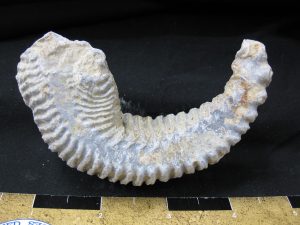
1. Oysters (Ostreidae)
-
Thick, irregular shells
-
Common in Cretaceous and Cenozoic sediments
-
Often found cemented to rocks or each other
2. Scallops (Pectinidae)
-
Distinctive fan-shaped shells
-
Often beautifully preserved with radiating ribs
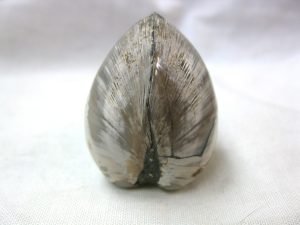
3. Clams (Veneridae & others)
-
Symmetrical shells
-
Some species lived deep in sediment, creating trace fossils
4. Inoceramids
-
Giant Cretaceous bivalves
-
Known for wrinkled, layered shells up to 2 meters wide
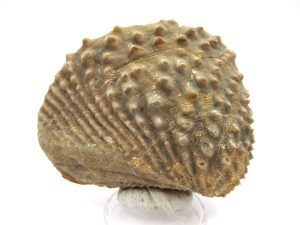
5. Rudists
-
Reef-building bivalves that replaced corals during the Late Cretaceous
Why Fossil Bivalves Matter to Science
Bivalve fossils are essential tools for paleontologists and geologists due to their abundance and sensitivity to environmental change.
Environmental Indicators
Shell thickness, growth lines, and isotopic signatures reveal:
-
Ancient water temperature
-
Salinity levels
-
Ocean productivity
-
Water depth
Biostratigraphy
Certain bivalves evolved rapidly, making them useful index fossils for dating rock layers.
Reconstruction of Ancient Ecosystems
Bivalve assemblages help scientists identify:
-
Reef environments
-
River deltas
-
Deep-sea basins
-
Coastal lagoons
How to Identify Fossil Bivalves
1. Look at Shell Symmetry
-
Equivalve: Both valves similar (most clams)
-
Inequivalve: Valves differ (oysters, some scallops)
2. Check Ornamentation
-
Ribs
-
Growth lines
-
Spines
-
Fluting
These features are species-specific.
3. Examine the Hinge
The hinge often contains teeth, which are diagnostic features used by paleontologists.
4. Consider the Sediment Type
-
Limestone = shallow marine
-
Shale = deeper or low-oxygen marine
-
Sandstone = beaches, deltas, rivers
Collecting and Preserving Fossil Bivalves
Tools
-
Rock hammer
-
Chisel
-
Soft brush
-
Protective goggles
Preservation Tips
-
Consolidate fragile fossils with Paraloid B-72
-
Avoid storing calcite fossils near acidic environments
-
Keep fossils dry to prevent pyrite decay
Fossil Bivalves in the Commercial Market
Fossil bivalves are popular among collectors, educators, and decorators.
Common Specimens for Sale
-
Cretaceous oysters and inoceramids
-
Devonian bivalves from Morocco and the U.S.
-
Eocene shells from Florida and Europe
Buy Fossils from Prehistoric Fossils with Confidence!