
Bivalve Fossils For Sale | Fossil Clams, Oysters & Scallops
Bivalve Fossils For Sale – Ancient Shells from Prehistoric Seas
Bivalve Fossils For Sale offer collectors and fossil enthusiasts an important record of ancient oceans, lakes, and rivers. Bivalves are mollusks with two shells, or valves, joined by a hinge. Today, this diverse group includes clams, oysters, mussels, and scallops. However, their ancient relatives lived hundreds of millions of years ago.
History of Bivalve Fossils
Bivalves first appeared during the Cambrian Period, more than 500 million years ago. Later, they became much more diverse, especially during the Mesozoic Era. Because many species produced hard shells, they had a good chance of entering the fossil record.
How Bivalve Fossils Form
After death, sediment sometimes buried bivalve shells quickly. Over time, minerals could fill empty spaces or replace parts of the original shell. As a result, bivalve fossils may preserve growth lines, ribs, hinges, and other fine details.
What Bivalve Fossils Tell Scientists
Moreover, paleontologists use fossil bivalves to study ancient environments. Some species preferred shallow seas, while others lived in deeper water, freshwater, or brackish habitats. Therefore, their fossils can help scientists interpret prehistoric ecosystems and changing environmental conditions.
Collecting Bivalve Fossils For Sale
Bivalve Fossils For Sale
In addition, certain bivalves help researchers compare rock layers of similar ages. Ultimately, Bivalve Fossils For Sale give collectors, educators, and scientists a fascinating look at the long history of mollusks and Earth’s changing environments.
Showing 61–120 of 136 resultsSorted by price: high to low
-

Indonesia Striarca Bivalve #12
$12.00 -

Indonesia Striarca Bivalve #11
$12.00 -

Indonesia Striarca Bivalve #10
$12.00 -

Indonesia Striarca Bivalve #9
$12.00 -

Indonesia Striarca Bivalve #8
$12.00 -

Indonesia Striarca Bivalve #7
$12.00 -

Indonesia Striarca Bivalve #6
$12.00 -

Indonesia Striarca Bivalve #5
$12.00 -

Indonesia Striarca Bivalve #4
$12.00 -

Indonesia Striarca Bivalve #3
$12.00 -
Sold out!

Madagascar Zipper Oyster #36
$10.00 -

Madagascar Zipper Oyster #35
$10.00 -

Madagascar Zipper Oyster #34
$10.00 -

Madagascar Zipper Oyster #33
$10.00 -
Sold out!

Madagascar Zipper Oyster #32
$10.00 -
Sold out!

Madagascar Zipper Oyster #31
$10.00 -
Sold out!

Madagascar Zipper Oyster #30
$10.00 -
Sold out!
Madagascar Zipper Oyster #29
$10.00 -
Sold out!

Madagascar Zipper Oyster #28
$10.00 -
Sold out!

Madagascar Zipper Oyster #27
$10.00 -

Large Madagascar Clam #24
$10.00 -
Sold out!

Large Madagascar Clam #23
$10.00 -

Large Madagascar Clam #22
$10.00 -

Large Madagascar Clam #21
$10.00 -

Large Madagascar Clam #20
$10.00 -

Large Madagascar Clam #19
$10.00 -

Large Madagascar Clam #18
$10.00 -

Large Madagascar Clam #17
$10.00 -

Large Madagascar Clam #16
$10.00 -

Large Madagascar Clam #15
$10.00 -

Large Madagascar Clam #14
$10.00 -

Large Madagascar Clam #13
$10.00 -

Large Madagascar Clam #12
$10.00 -

Large Madagascar Clam #11
$10.00 -
Sold out!

Large Madagascar Clam #9
$10.00 -

Large Madagascar Clam #8
$10.00 -

Large Madagascar Clam #7
$10.00 -

Large Madagascar Clam #6
$10.00 -

Large Madagascar Clam #4
$10.00 -

Large Madagascar Clam #1
$10.00 -

Madagascar Zipper Oyster #23
$10.00 -

Madagascar Zipper Oyster #22
$10.00 -

Madagascar Zipper Oyster #21
$10.00 -

Madagascar Zipper Oyster #20
$10.00 -
Sold out!

Madagascar Zipper Oyster #19
$10.00 -

Madagascar Zipper Oyster #18
$10.00 -

Madagascar Zipper Oyster #17
$10.00 -

Madagascar Zipper Oyster #15
$10.00 -
Sold out!

Madagascar Zipper Oyster #14
$10.00 -
Sold out!

Madagascar Zipper Oyster #13
$10.00 -

Madagascar Zipper Oyster #12
$10.00 -

Madagascar Zipper Oyster #11
$10.00 -
Sold out!

Madagascar Zipper Oyster #10
$10.00 -

Madagascar Zipper Oyster #9
$10.00 -

Madagascar Zipper Oyster #8
$10.00 -
Sold out!

Madagascar Zipper Oyster #7
$10.00 -

Madagascar Zipper Oyster #6
$10.00 -

Madagascar Zipper Oyster #5
$10.00 -
Sold out!

Madagascar Zipper Oyster #4
$10.00 -

Madagascar Zipper Oyster #3
$10.00
- Buy Fossils
- Fossils for Sale
- Large Selection
- Great Prices and Great Selection
- Authenticity Guaranteed
- Satisfaction Guaranteed
- Your TRUSTED SOURCE for over 25 years!
- Many more videos are available on our YouTube Channel.
Bivalve Fossils For Sale – Formation, Identification, and Importance in Paleontology
Bivalve Fossils For Sale give collectors, educators, and paleontology enthusiasts a direct look at ancient aquatic life. Fossil bivalves are the preserved remains of ancient relatives of modern clams, oysters, scallops, mussels, and cockles. Because many bivalves produced durable calcium-carbonate shells, they developed an extensive fossil record spanning more than 500 million years.
As a result, fossil bivalves provide valuable evidence about ancient oceans, shallow seas, lakes, coastal environments, and changing ecosystems. Their shells can also help paleontologists study environmental conditions, evolutionary changes, and the ages of sedimentary rock layers.
What Are Fossil Bivalves?
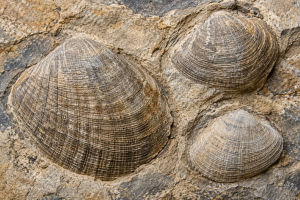
Bivalves belong to the mollusk class Bivalvia. They have two shells, called valves, connected by a hinge. Living bivalves include clams, oysters, scallops, mussels, and cockles.
Key Features of Bivalves
- Two-part shell: Usually composed mainly of aragonite, calcite, or both.
- Soft body: Soft tissues rarely fossilize under normal conditions.
- Hinge structures: Teeth and other hinge features can help identify fossil groups.
- Different feeding styles: Many bivalves filter-feed, although feeding strategies vary among groups.
- Wide ecological range: Bivalves live in freshwater and marine environments.
Because shells resist decay better than soft tissue, bivalves often have a strong fossil record. Consequently, paleontologists commonly find their remains in sedimentary rocks.
How Bivalve Fossils Form
Bivalves often live on, attached to, or buried within sediment. Therefore, many have a good chance of becoming buried after death. However, fossil preservation depends on local chemistry, burial conditions, shell composition, and later geological changes.
Rapid Burial
After a bivalve dies, sediment may cover the shell. Rapid burial can reduce damage caused by scavengers, waves, currents, and weathering. As a result, delicate shell features may have a greater chance of surviving.
Mineralization and Shell Preservation
Over time, mineral-rich groundwater can move through buried sediment. Minerals may fill internal spaces or replace some original shell material. In other cases, the original shell remains partly intact. Fossils may also survive as molds or casts after the shell dissolves.
Lithification
As sediment becomes compacted and cemented, it forms sedimentary rock. Fossil bivalves commonly occur in limestone, shale, mudstone, and sandstone. Therefore, the surrounding rock can provide important clues about the environment in which the animal lived or was buried.
Exposure of Bivalve Fossils
Eventually, erosion, uplift, quarrying, road construction, or excavation may expose fossil-bearing rock. At that point, fossils that remained hidden for millions of years can finally reach the surface.
Where Are Bivalve Fossils Found?
Bivalve Fossils For Sale may come from fossil deposits around the world. Bivalves have a fossil record extending back to the Cambrian Period, although they became much more abundant and diverse later in geologic history.
Important fossil-bearing deposits include Cretaceous limestones and marine sediments, Jurassic marine formations, Paleozoic sedimentary rocks, and younger Cenozoic coastal deposits.
Common Places Bivalve Fossils Are Discovered
- Quarries
- Road cuts
- Beach cliffs
- Riverbanks
- Desert exposures
- Natural rock outcrops
Many of these locations expose sediment that once formed on ancient seafloors, shorelines, rivers, or lakes.
Common Types of Bivalve Fossils For Sale
Bivalve Fossils For Sale
Fossil Oysters
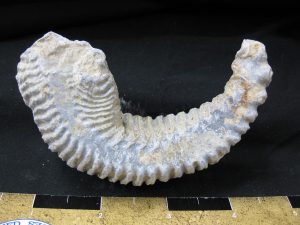 Fossil oysters often have thick, irregular shells. Many lived attached to firm surfaces, reefs, shells, or other hard material. Consequently, fossil oysters can sometimes occur in dense accumulations.
Fossil Scallops
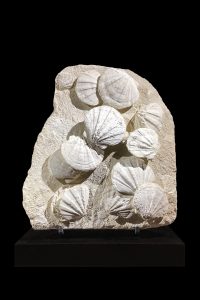
Scallops commonly have fan-shaped shells with strong radial ribs. Because their ornamentation can preserve clearly, fossil scallops often make attractive display and educational specimens.
Fossil Clams
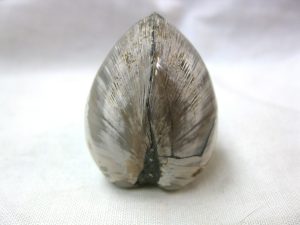
Many fossil clams have two similar valves and rounded or elongated shells. In addition, burrowing species sometimes leave trace fossils that record their movement through ancient sediment.
Inoceramid Bivalves
Inoceramids were an important group of marine bivalves, especially during the Cretaceous Period. Some species grew to very large sizes and developed thick or strongly ornamented shells. Their fossils occur in marine rocks in many parts of the world.
Rudist Bivalves
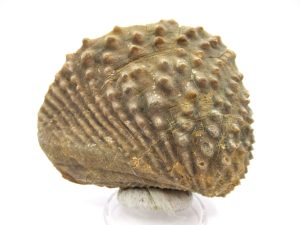
Rudists were highly specialized reef-forming bivalves that became especially important during the Cretaceous Period. Unlike typical clam-shaped bivalves, many developed cone-shaped or irregular shells. They formed major components of some ancient tropical reef communities.
Why Bivalve Fossils Matter to Paleontology
Bivalve fossils provide paleontologists and geologists with important evidence about Earth’s geological and biological history. Because they lived in many environments and often occur in large numbers, scientists can use them to study both local and regional changes through time.
Bivalve Fossils as Environmental Indicators
Shell form, growth patterns, species associations, and geochemical signatures can provide clues about ancient environmental conditions. For example, researchers may use bivalve shells to investigate past water temperature, salinity, habitat conditions, or seasonal growth.
Bivalves and Biostratigraphy
Some bivalve species existed during limited spans of geological time and had broad geographic distributions. Therefore, certain groups can help geologists correlate and date sedimentary rock layers. However, their usefulness as index fossils varies by species, region, and geological period.
Reconstructing Ancient Ecosystems
Bivalve communities can help scientists interpret ancient habitats. For example, different species associations may indicate shallow marine shelves, reefs, lagoons, offshore environments, river systems, or lakes.
How to Identify Bivalve Fossils
Examine Shell Symmetry
First, compare the two valves. In an equivalve bivalve, both valves are similar in shape and size. In an inequivalve species, the valves differ noticeably. Oysters and some scallops commonly show this type of asymmetry.
Study Shell Ornamentation
Next, examine ribs, growth lines, folds, spines, ridges, and other surface features. These characteristics can help narrow identification. However, accurate species-level identification often requires comparison with scientific references and information about locality and geological age.
Examine the Hinge
The hinge can contain teeth, sockets, ligament areas, and other diagnostic features. Therefore, paleontologists often rely heavily on hinge structure when identifying fossil bivalves.
Consider the Surrounding Rock
The rock matrix provides additional clues. Limestone commonly forms in marine settings, while shale may represent quiet-water environments. Sandstone can form in beaches, shallow marine zones, rivers, or deltas. Therefore, rock type should always be interpreted together with other geological evidence.
Collecting and Preserving Bivalve Fossils
Fossil bivalves range from common beginner specimens to scientifically important and highly collectible examples. Proper collecting and preservation help protect their natural features.
Basic Fossil Collecting Tools
- Geological hammer
- Chisel
- Soft brush
- Protective eyewear
- Wrapping material for fragile specimens
Preserving Fossil Bivalves
Keep fossils clean, dry, and protected from sudden temperature or humidity changes. Fragile specimens may require professional conservation methods. Paraloid B-72 is commonly used by museum preparators as a reversible conservation material when properly applied.
In addition, fossils containing pyrite require special care because unstable pyrite can oxidize and damage a specimen. Stable, dry storage conditions can help reduce this risk.
Bivalve Fossils For Sale to Collectors and Educators
Bivalve Fossils For Sale remain popular because they combine natural beauty, geological history, and educational value. Collectors may find fossil oysters, scallops, clams, inoceramids, and many other forms from different geological periods and locations.
Moreover, bivalve fossils work well in classrooms, natural history collections, museums, and home displays. Their recognizable shells make them especially useful for teaching fossilization, marine biology, evolution, and ancient environments.
Buy Genuine Bivalve Fossils with Confidence
Bivalve Fossils For Sale
Buy fossils from Prehistoric Fossils with confidence. Genuine fossil specimens allow collectors to own a real piece of Earth’s natural history while learning about organisms that lived millions of years ago.
Bivalve Fossils For Sale