
Trace Fossils for Sale
Trace Fossils for Sale – A trace fossil is defined as a footprint, trail, burrow or some other trace left behind by the animal. Trace fossils also include eggs, egg nests, gizzard stones and coprolite (otherwise known as Coprolite). The remains of the animal that left the trace fossils are actual fossils. We offer several types of trace fossils for sale including dinosaur tracks, tetrapod tracks and trilobite tracks. More Trace Fossils for Sale
Buy Fossils from Prehistoric Fossils with Confidence. Your TRUSTED SOURCE since 1997. Authenticity Guaranteed.
Showing all 37 results
-
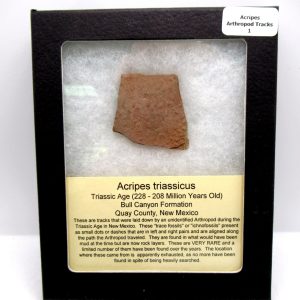
Acripes triassicus Arthropod Track Fossils for Sale 1
$40.00 -
Sold out!
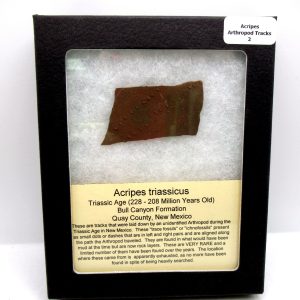
Acripes triassicus Arthropod Track Fossils for Sale 2
$40.00 -
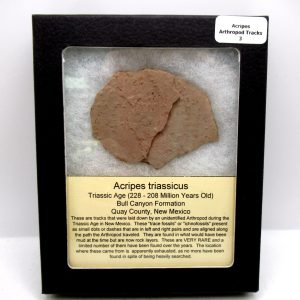
Acripes triassicus Arthropod Track Fossils for Sale 3
$40.00 -
Sold out!
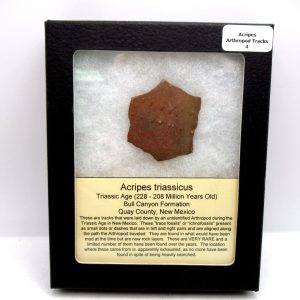
Acripes triassicus Arthropod Track Fossils for Sale 4
$40.00 -
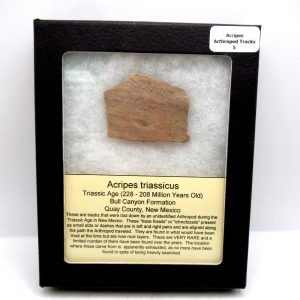
Acripes triassicus Arthropod Track Fossils for Sale 5
$40.00 -
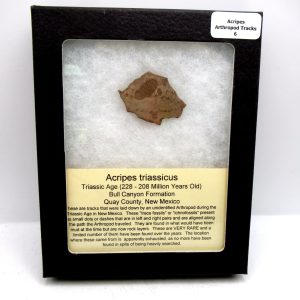
Acripes triassicus Arthropod Track Fossils for Sale 6
$35.00 -
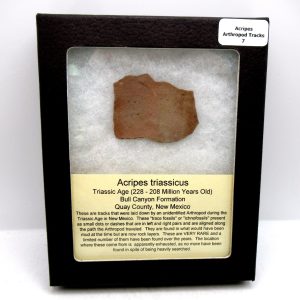
Acripes triassicus Arthropod Track Fossils for Sale 7
$40.00 -

Acripes triassicus Arthropod Track Fossils for Sale 8
$55.00 -
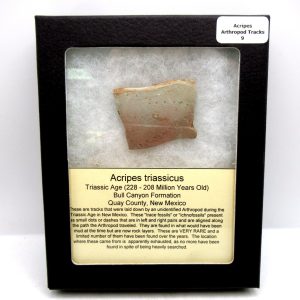
Acripes triassicus Arthropod Track Fossils for Sale 9
$50.00 -

Grallator Dinosaur Track France #14
$295.00 -
Sold out!

Grallator Dinosaur Track France #16
$295.00 -
Sold out!
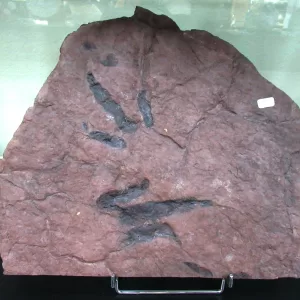
New Jersey Grallator Dinosaur Track #2
$950.00 -

Pseudobradypus Tetrapod Tracks #3
$55.00 -
Sold out!

Pseudobradypus Tetrapod Tracks #5
$175.00 -
Sold out!

Trilobite Tracks (Cruziana) #3
$45.00 -
Sold out!

Trilobite Tracks (Cruziana) #13
$30.00 -

Trilobite Tracks (Cruziana) #24
$45.00 -
Sold out!

Trilobite Tracks (Cruziana) #40
$45.00 -
Sold out!

Trilobite Tracks (Cruziana) #41
$75.00 -

Trilobite Tracks (Cruziana) #42
$65.00 -

Trilobite Tracks (Cruziana) #43
$55.00 -
Sold out!
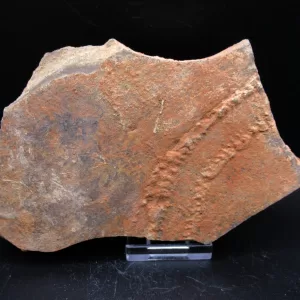
Trilobite Tracks (Cruziana) #29
$65.00 -
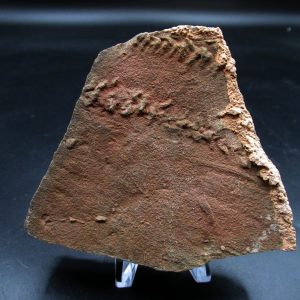
Trilobite Tracks (Cruziana) #44
$25.00 -
Sold out!
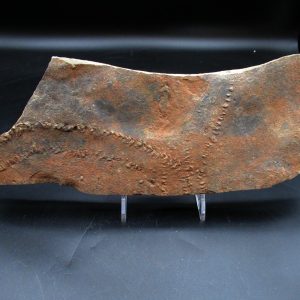
Trilobite Tracks (Cruziana) #45
$85.00 -
Sold out!
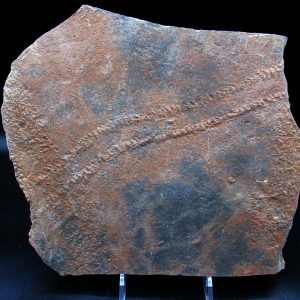
Trilobite Tracks (Cruziana) #46
$115.00 -
Sold out!
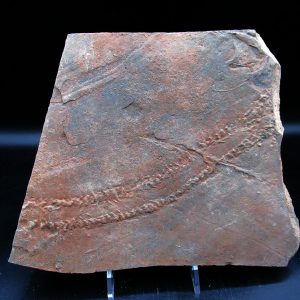
Trilobite Tracks (Cruziana) #47
$115.00 -
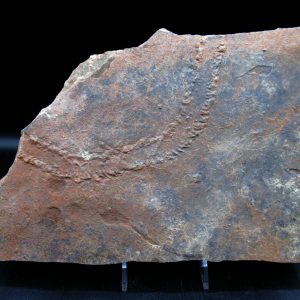
Trilobite Tracks (Cruziana) #48
$195.00 -
Sold out!
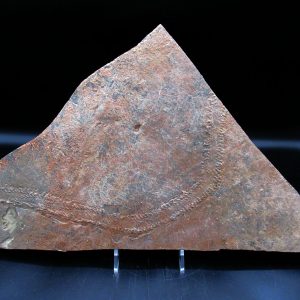
Trilobite Tracks (Cruziana) #49
$225.00 -
Sold out!
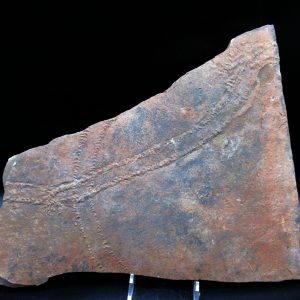
Trilobite Tracks (Cruziana) #50
$320.00 -
Sold out!
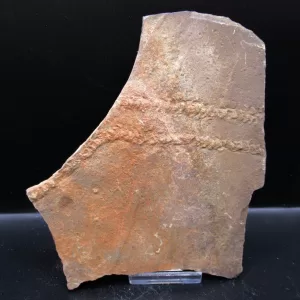
Trilobite Tracks (Cruziana) #30
$65.00 -
Sold out!
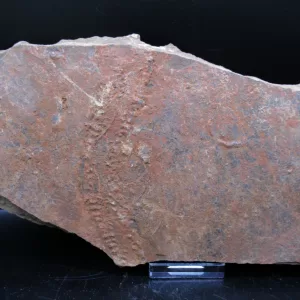
Trilobite Tracks (Cruziana) #33
$65.00 -
Sold out!
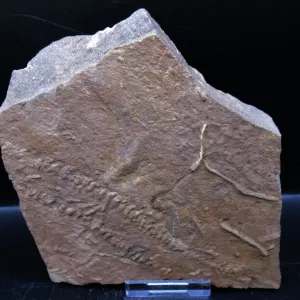
Trilobite Tracks (Cruziana) #35
$65.00 -
Sold out!
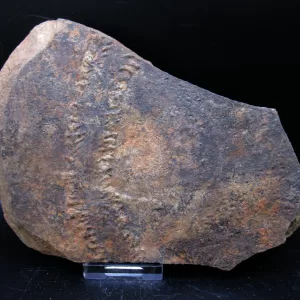
Trilobite Tracks (Cruziana) #36
$65.00 -
Sold out!
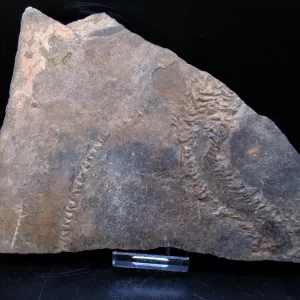
Trilobite Tracks (Cruziana) #39
$65.00 -

Trilobite Tracks (Cruziana) #6
$40.00 -

Trilobite Tracks (Cruziana) #7
$55.00 -

Trilobite Tracks (Cruziana) #8
$55.00
- Buy Fossils
- Fossils for Sale
- Large Selection
- Great Prices and Great Selection
- Authenticity Guaranteed
- Satisfaction Guaranteed
- Your TRUSTED SOURCE SINCE 1997!
- Many more videos are available on our YouTube Channel.
Trace Fossils (Ichnofossils): Scientific Evidence of Ancient Life Behavior
Trace fossils, also known as ichnofossils, represent the preserved evidence of biological activity rather than the physical remains of organisms. These fossils—including footprints, burrows, feeding marks, and coprolites—provide critical insight into the behavior, movement, and environmental interactions of ancient life.
What Are Trace Fossils?
Trace fossils (ichnofossils) are geological records of biological activity preserved in sedimentary rock. Unlike body fossils (bones, shells, teeth), trace fossils capture behavior, not anatomy.
Common Types of Trace Fossils
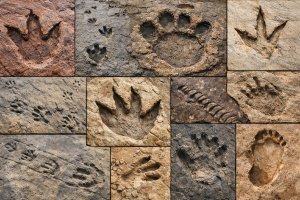
- Tracks and trackways (e.g., dinosaur footprints)
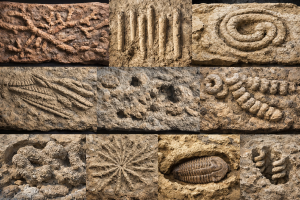
- Burrows and tunnels (invertebrates, worms, crustaceans)
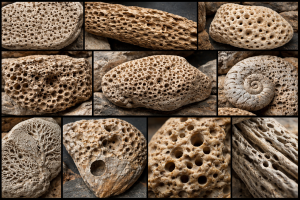
- Borings (marine organisms penetrating shells or rock)
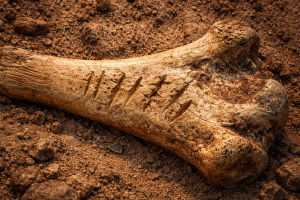
- Feeding traces (grazing marks, bite impressions)
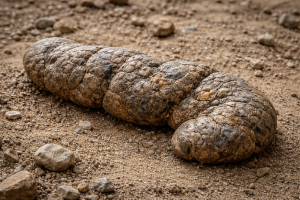
- Coprolites (fossilized feces)
These traces are studied under the scientific discipline of ichnology, a subfield of paleontology and sedimentology.
Scientific Importance of Trace Fossils
Behavioral Evidence
Trace fossils provide direct evidence of organism behavior, including:
- Locomotion patterns
- Feeding strategies
- Predator–prey interactions
- Social behavior (e.g., herding trackways)
This makes ichnofossils uniquely valuable where skeletal remains are absent or rare.
Paleoenvironmental Reconstruction
Because trace fossils form in situ, they are powerful indicators of ancient environments:
- Marine vs. terrestrial settings
- Oxygen availability in sediments
- Water depth and energy levels
- Substrate consistency (mud, sand, carbonate)
For example, dense burrow networks often indicate well-oxygenated shallow marine environments.
Trace Fossils vs. Body Fossils
| Feature | Trace Fossils | Body Fossils |
| Preserve behavior | ✅ Yes | ❌ No |
| Preserve anatomy | ❌ No | ✅ Yes |
| Often found in situ | ✅ Yes | ❌ Sometimes transported |
| Taxonomic precision | Low | High |
Because multiple species can produce similar traces, trace fossils are classified using ichnotaxa, independent of biological taxonomy.
Geological Distribution and Preservation
Trace fossils occur from the Ediacaran Period (~560 Ma) to the present. Their preservation depends on:
- Rapid burial
- Low erosion
- Suitable sediment type
- Early diagenetic mineralization
Exceptional trace fossil sites include:
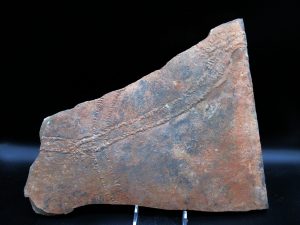
- Cambrian shallow marine deposits
- Mesozoic terrestrial tracksites
- Paleozoic coal swamp sediments
Trace Fossils in Evolutionary Studies
Trace fossils often precede body fossils in the geological record, providing early evidence of:
- Metazoan movement
- Bilateral symmetry
- Ecosystem engineering (bioturbation)
This makes them critical for understanding the Cambrian Explosion and early animal evolution.

Common Misconceptions About Trace Fossils
- “They are less important than bones.”
False. Many paleoecological insights come exclusively from trace fossils. - “They identify species.”
Not usually. They identify behavioral patterns, not specific organisms. - “They only occur on land.”
The majority are marine in origin.
Conclusion
Trace fossils are indispensable to paleontology, offering a dynamic record of ancient life that body fossils alone cannot provide. Through the study of ichnofossils, scientists reconstruct ecosystems, behaviors, and evolutionary milestones spanning hundreds of millions of years. Their scientific and educational value makes them a cornerstone of modern paleontological research.
Buy Fossils from Prehistoric Fossils with Confidence. Your TRUSTED SOURCE since 1997. Authenticity Guaranteed.