
Fossil Echinoids for Sale
Fossil Echinoids for Sale – Echinoids are marine animals belonging to the Phylum Echinodermata and the Class Echinoidea.
They have a hard shell (referred to as a test) covered with small knobs (tubercles) to which spines are attached in living echinoids.
The test and spines are the parts normally found as fossils.
Showing 1–50 of 278 results
-
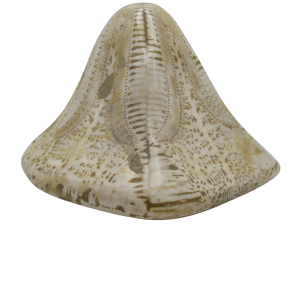
Clypeaster Miocene Age Echinoid from Morocco #1
$120.00 -

Clypeaster Miocene Age Echinoid from Morocco #10
$120.00 -

Clypeaster Miocene Age Echinoid from Morocco #11
$120.00 -
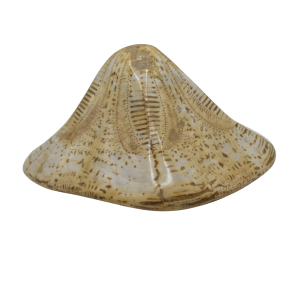
Clypeaster Miocene Age Echinoid from Morocco #12
$120.00 -
Sold out!

Clypeaster Miocene Age Echinoid from Morocco #13
$120.00 -

Clypeaster Miocene Age Echinoid from Morocco #14
$120.00 -
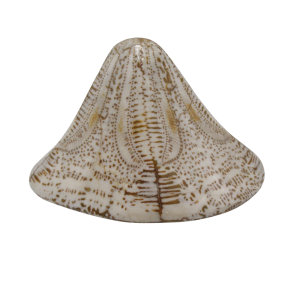
Clypeaster Miocene Age Echinoid from Morocco #15
$120.00 -
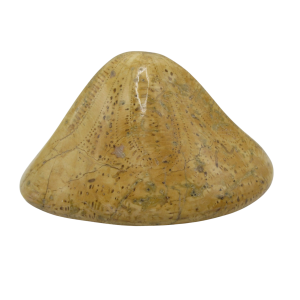
Clypeaster Miocene Age Echinoid from Morocco #16
$120.00 -

Clypeaster Miocene Age Echinoid from Morocco #17
$120.00 -
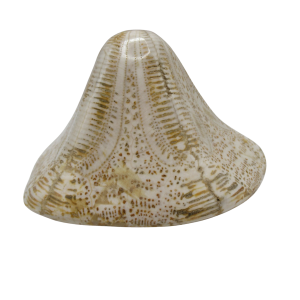
Clypeaster Miocene Age Echinoid from Morocco #18
$120.00 -
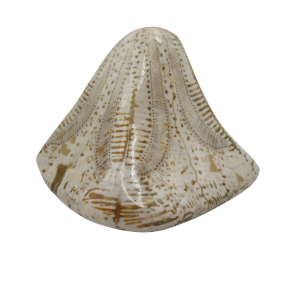
Clypeaster Miocene Age Echinoid from Morocco #19
$120.00 -

Clypeaster Miocene Age Echinoid from Morocco #2
$120.00 -
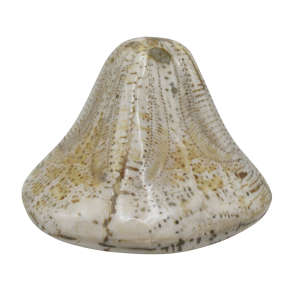
Clypeaster Miocene Age Echinoid from Morocco #20
$120.00 -
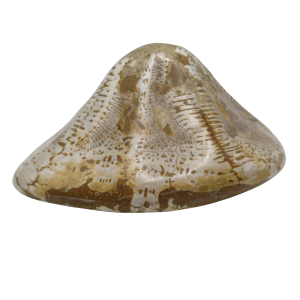
Clypeaster Miocene Age Echinoid from Morocco #3
$110.00 -

Clypeaster Miocene Age Echinoid from Morocco #4
$120.00 -
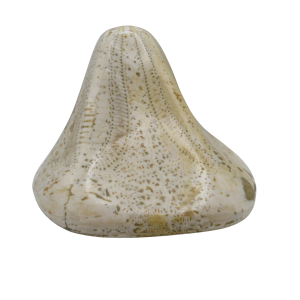
Clypeaster Miocene Age Echinoid from Morocco #5
$120.00 -
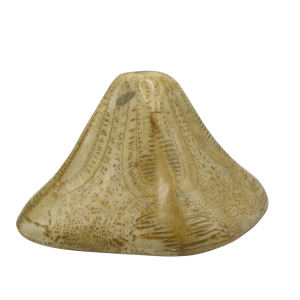
Clypeaster Miocene Age Echinoid from Morocco #6
$120.00 -
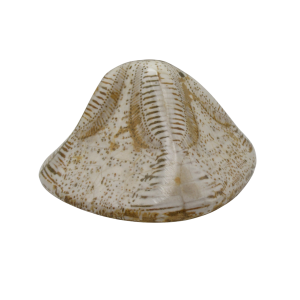
Clypeaster Miocene Age Echinoid from Morocco #7
$100.00 -
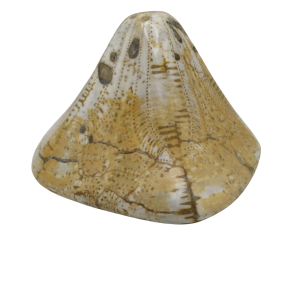
Clypeaster Miocene Age Echinoid from Morocco #8
$120.00 -

Clypeaster Miocene Age Echinoid from Morocco #9
$120.00 -
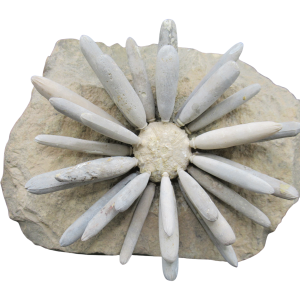
Jurassic Club Urchin – Asterocidaris bistriata from Morocco #19
$165.00 -
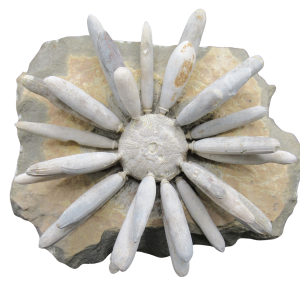
Jurassic Club Urchin – Asterocidaris bistriata from Morocco #20
$165.00 -
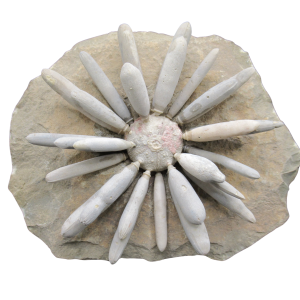
Jurassic Club Urchin – Asterocidaris bistriata from Morocco #21
$165.00 -
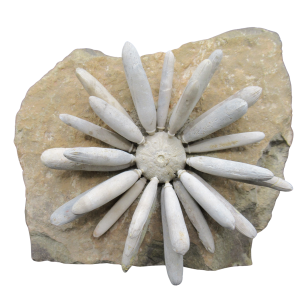
Jurassic Club Urchin – Asterocidaris bistriata from Morocco #22
$165.00 -
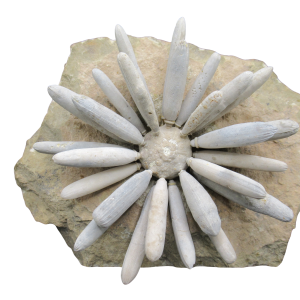
Jurassic Club Urchin – Asterocidaris bistriata from Morocco #23
$165.00 -
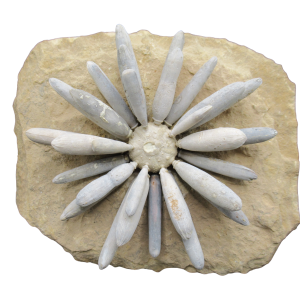
Jurassic Club Urchin – Asterocidaris bistriata from Morocco #24
$165.00 -
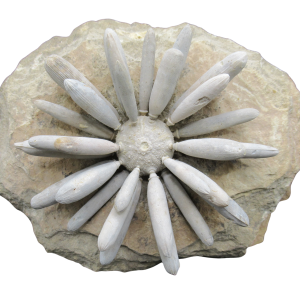
Jurassic Club Urchin – Asterocidaris bistriata from Morocco #25
$165.00 -
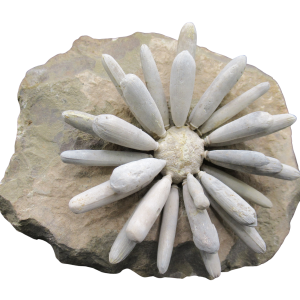
Jurassic Club Urchin – Asterocidaris bistriata from Morocco #26
$165.00 -
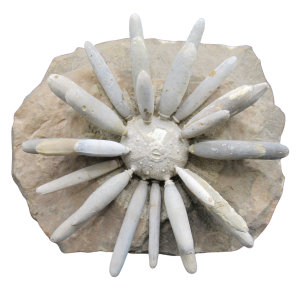
Jurassic Club Urchin – Asterocidaris bistriata from Morocco #27
$165.00 -
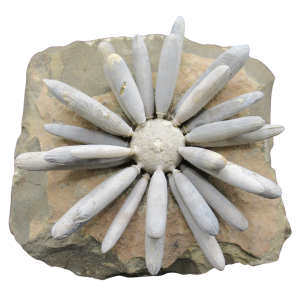
Jurassic Club Urchin – Asterocidaris bistriata from Morocco #28
$165.00 -
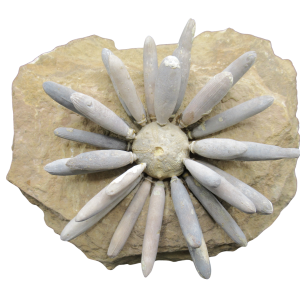
Jurassic Club Urchin – Asterocidaris bistriata from Morocco #29
$165.00 -
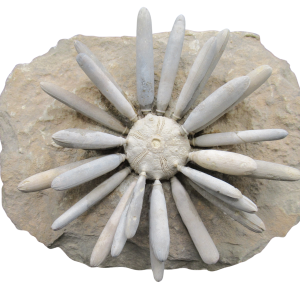
Jurassic Club Urchin – Asterocidaris bistriata from Morocco #30
$165.00 -
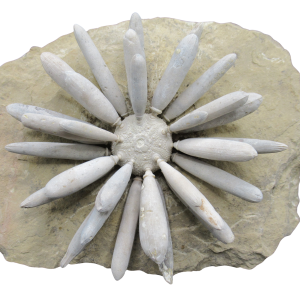
Jurassic Club Urchin – Asterocidaris bistriata from Morocco #31
$165.00 -
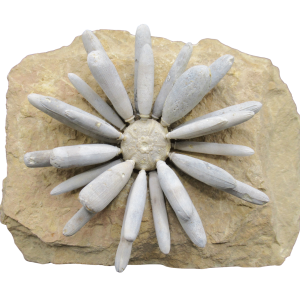
Jurassic Club Urchin – Asterocidaris bistriata from Morocco #32
$165.00 -
Sold out!

Jurassic Club Urchin | Asterocidaris #14
$200.00 -
Sold out!

Jurassic Club Urchin | Asterocidaris #15
$200.00 -
Sold out!

Jurassic Club Urchin | Asterocidaris #16
$200.00 -
Sold out!

Jurassic Club Urchin | Asterocidaris #17
$200.00 -

Jurassic Club Urchin | Cidaropsis #10
$175.00 -
Sold out!

Jurassic Club Urchin | Cidaropsis #11
$175.00 -

Jurassic Club Urchin | Cidaropsis #12
$175.00 -
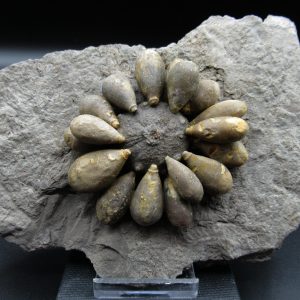
Jurassic Club Urchin | Cidaropsis #13
$175.00 -
Sold out!

Jurassic Club Urchin | Cidaropsis #7
$175.00 -
Sold out!

Jurassic Club Urchin | Cidaropsis #8
$175.00 -

Jurassic Club Urchin | Cidaropsis #9
$175.00 -

Jurassic Club Urchin | Firmacidaris #1
$175.00 -

Jurassic Club Urchin | Firmacidaris #2
$175.00 -

Jurassic Club Urchin | Firmacidaris #3
$175.00 -

Jurassic Club Urchin | Firmacidaris #4
$175.00 -

Jurassic Club Urchin | Firmacidaris #5
$175.00
- Buy Fossils
- Fossils for Sale
- Large Selection
- Great Prices and Great Selection
- Authenticity Guaranteed
- Satisfaction Guaranteed
- Your TRUSTED SOURCE for over 25 years!
- Many more videos are available on our YouTube Channel.
Ancient Sea Urchins Preserved in Stone
Introduction
Fossil echinoids—commonly known as fossil sea urchins—are among the most informative and visually striking relics of ancient marine ecosystems. Representing a diverse class within the phylum Echinodermata, these organisms have a fossil record extending back over 450 million years, spanning from the Ordovician to the modern day. Their durable calcium carbonate tests (shells) fossilize readily, providing exceptional insights into paleoecology, sedimentary environments, and evolutionary biology.
What Are Echinoids?
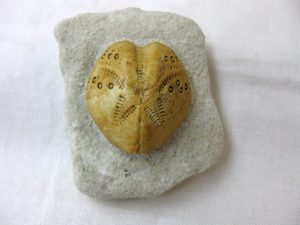
Biological Overview
Modern echinoids include sea urchins, sand dollars, and heart urchins. Their ancient counterparts share the same key anatomical features:
- A rigid test composed of interlocking calcite plates
- Pentameral symmetry (five-part radial symmetry)
- Tube feet used for locomotion and feeding
- Spines (when preserved) attached via movable ball-and-socket joints
Echinoids are divided into two major groups:
- Regular Echinoids
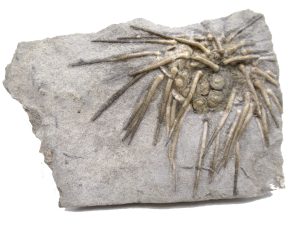
- Spherical or globular shape
- Radial symmetry
- Often covered in long spines
- Predominantly herbivorous
- Irregular Echinoids
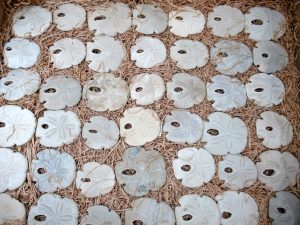
- Bilateral symmetry
- Adapted for burrowing
- Includes heart urchins (Spatangoida) and sand dollars (Clypeasteroida)
Evolution of Echinoids Through Geologic Time
Ordovician–Devonian (Early Evolution)
Early echinoids were rare and structurally simple. Fossils from this time are typically incomplete, making them highly valuable for research.
Carboniferous–Permian (Expansion & Diversification)
By the late Paleozoic, echinoids developed more complex plating patterns. Fossil occurrences increase significantly.
Mesozoic Era (Jurassic–Cretaceous): The Echinoid Boom
This is the era most associated with abundant and diverse fossil echinoids. Key evolutionary developments include:
- True irregular echinoids emerge
- Burrowing adaptations develop
- Large, highly ornamented species appear
Common Cretaceous genera include Micraster, Hemiaster, Galeaspis, and Holaster.
Cenozoic Era (Eocene–Recent)
Modern-style sand dollars and heart urchins dominate.
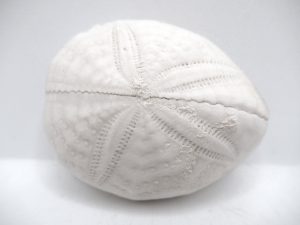
These fossils are often beautifully preserved, especially in:
- Morocco
- The US Gulf Coast
- North Africa
- Europe (UK, France, Italy)
How Echinoids Fossilize:
Most fossil echinoids are preserved as:
- Original calcite tests
- Recrystallized calcite
- Internal molds (when sediment infills the interior)
- External casts (when the external surface is preserved in sediment)
- Environmental Conditions
Ideal conditions for fossilization include:
- Rapid burial in fine sediment
- Low-oxygen environments
- Stable chemical conditions that prevent dissolution
Irregular echinoids, being burrowers, often have higher preservation potential because they die underground.
Scientific Importance of Fossil Echinoids
Paleoenvironmental Indicators
Echinoids are sensitive to substrate type, water depth, and oxygen levels. Their presence can indicate:
- Shallow marine carbonate platforms
- High-energy sandy environments
- Low-oxygen mud bottoms
Biostratigraphy
Some Cretaceous echinoids, especially Micraster species, are so evolutionarily fine-scaled that they act as index fossils, allowing precise dating of sediment layers.
Evolutionary Studies
Echinoids showcase:
- Convergent evolution
- Adaptive radiations
- Detailed morphological changes over time
Common Fossil Echinoid Genera and Their Characteristics
|
Genus |
Era / Age |
Type |
Key Features |
|
Micraster |
Cretaceous |
Irregular |
Iconic heart urchin; excellent index fossil |
|
Clypeaster |
Eocene–Miocene |
Irregular |
Classic sand dollar appearance |
|
Echinolampas |
Cretaceous–Miocene |
Irregular |
Thick, oval tests; common in Africa and Asia |
|
Hemiaster |
Cretaceous |
Irregular |
Deeply heart-shaped, pronounced petals |
|
Cidaris |
Jurassic–Recent |
Regular |
Usually preserved with distinctive spines |
Where Fossil Echinoids Are Found
Major global deposits include:
Morocco
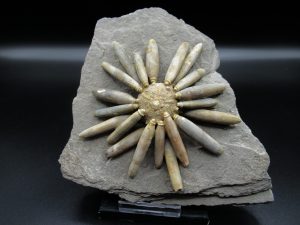
Renowned for Eocene and Cretaceous echinoids with exceptional preservation.
United Kingdom (Kent, Sussex, Dorset, Isle of Wight)
Famous for chalk-era Micraster and flint-preserved specimens.
United States (Texas, Florida, Mississippi)
Rich in Eocene and Miocene sand dollars and heart urchins.
Madagascar & India
Yield numerous diverse Cretaceous genera.
- Geological age
- Original spines (extremely rare)
- Scientific importance
Conclusion
Fossil echinoids offer a unique window into the evolution of marine life across hundreds of millions of years. Whether you are a researcher, collector, or enthusiast, understanding their biology, geology, and preservation enhances both scientific value and personal appreciation. With rigorous identification and ethical sourcing, these fossils remain among the most compelling specimens available for study and display.