
-
Tar pits, sometimes referred to as asphalt pits, are large asphalt deposits. They form in the presence of oil, which is created when decayed organic matter is subjected to pressure underground. If this crude oil seeps upward via fractures, conduits, or porous sedimentary rock layers, it may pool up at the surface.
Buy Fossils from Prehistoric Fossils with Confidence. Your TRUSTED SOURCE since 1997. Authenticity Guaranteed.
Showing all 12 results
-
Sold out!
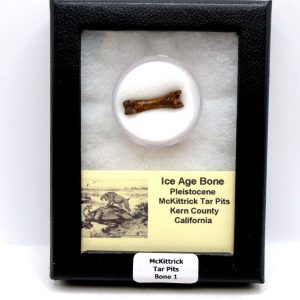
McKittrick Tar Pits Asphalt Lake Ice Age Bone #1
$35.00 -
McKittrick Tar Pits Asphalt Lake Ice Age Bone #10
$35.00 -
McKittrick Tar Pits Asphalt Lake Ice Age Bone #11
$35.00 -
McKittrick Tar Pits Asphalt Lake Ice Age Bone #12
$35.00 -
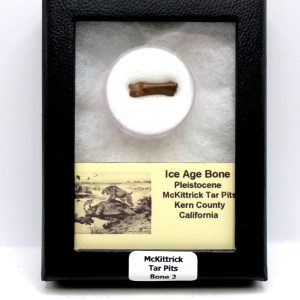
McKittrick Tar Pits Asphalt Lake Ice Age Bone #2
$35.00 -
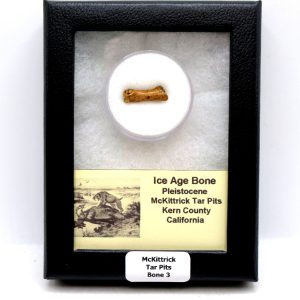
McKittrick Tar Pits Asphalt Lake Ice Age Bone #3
$35.00 -
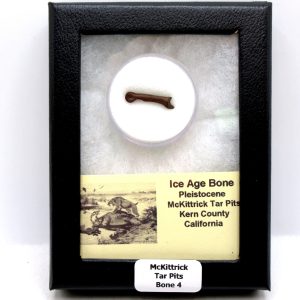
McKittrick Tar Pits Asphalt Lake Ice Age Bone #4
$35.00 -
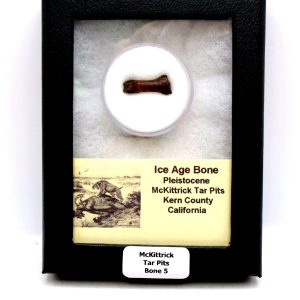
McKittrick Tar Pits Asphalt Lake Ice Age Bone #5
$35.00 -
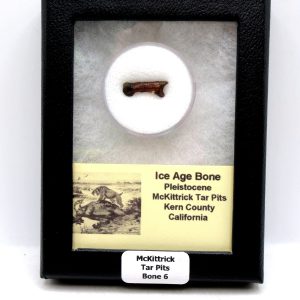
McKittrick Tar Pits Asphalt Lake Ice Age Bone #6
$35.00 -
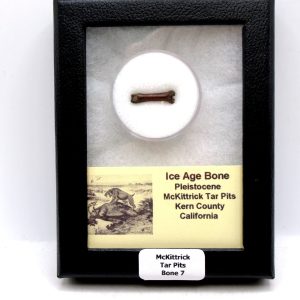
McKittrick Tar Pits Asphalt Lake Ice Age Bone #7
$35.00 -
Sold out!
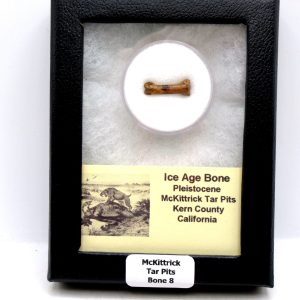
McKittrick Tar Pits Asphalt Lake Ice Age Bone #8
$35.00 -
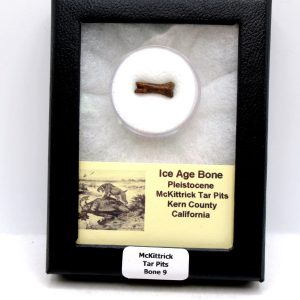
McKittrick Tar Pits Asphalt Lake Ice Age Bone #9
$35.00
- Buy Fossils
- Fossils for Sale
- Large Selection
- Great Prices and Great Selection
- Authenticity Guaranteed
- Satisfaction Guaranteed
- Your TRUSTED SOURCE SINCE 1997!
- Many more videos are available on our YouTube Channel.
Tar Pit Fossils: Scientific Insights Into Prehistoric Life Preserved in Natural Asphalt
Tar pit fossils represent one of the most scientifically valuable windows into Ice Age ecosystems. Preserved in natural asphalt deposits over tens of thousands of years, these fossils provide exceptional insights into prehistoric biodiversity, predator–prey dynamics, and environmental change.
- Introduction to Tar Pit Fossils
Tar pits—more accurately known as asphalt seeps—are natural deposits of petroleum that reach the Earth’s surface. Unlike traditional sedimentary fossil sites, tar pits act as biological traps, preserving bones with extraordinary detail.
The most famous example, the La Brea Tar Pits in Los Angeles, has yielded over 3.5 million fossils, making it one of the richest fossil sites in the world.

- How Tar Pit Fossils Form
2.1 The Asphalt Entrapment Process
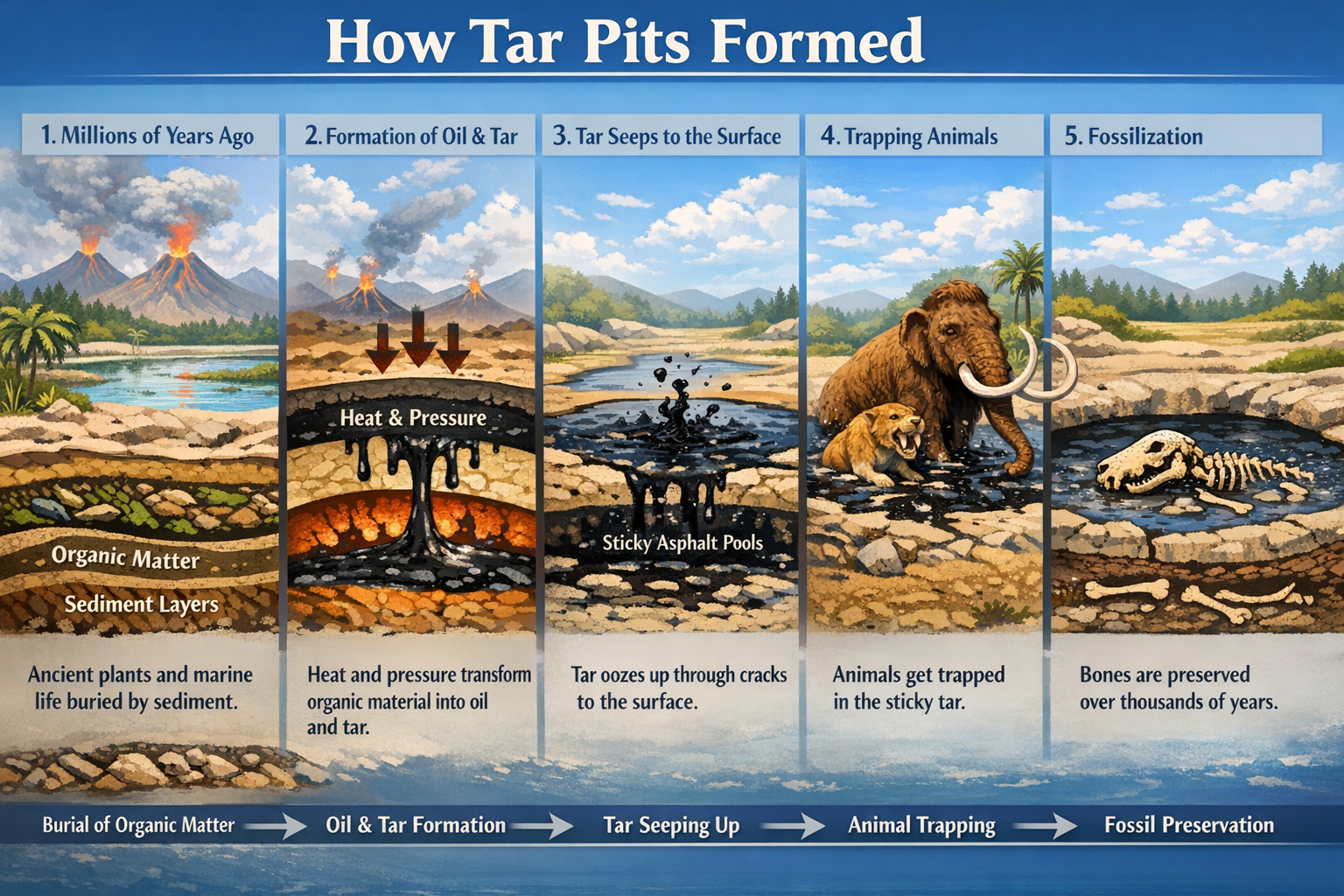
- Liquid asphalt seeps to the surface
- Animals mistake it for water or solid ground
- Entrapped animals attract predators and scavengers
- Repeated cycles create dense fossil assemblages
2.2 Preservation Advantages
- Asphalt inhibits oxygen exposure
- Bones resist crushing and weathering
- Collagen and microstructures often survive
Unlike permafrost or amber, tar pits preserve skeletal integrity without mineral replacement, allowing advanced isotopic and biochemical analysis.
- Notable Tar Pit Fossils and Discoveries
The only human remains ever discovered in the famous La Brea Tar Pits in Los Angeles are those of a young woman, often called the “La Brea Woman.” Her skull and partial skeleton were found in 1914, and she lived about 10,000 years ago. These remains represent the only human found at the site.

3.1 Predators of the Ice Age
Tar pit sites are uniquely predator-heavy, revealing behavioral ecology rarely seen elsewhere:

- Smilodon fatalis (saber-toothed cat)
- Canis dirus (dire wolf)
- American lion (Panthera atrox)
The abundance of carnivores supports hypotheses about social hunting and scavenging behavior during the Late Pleistocene.
3.2 Herbivores and Megafauna

- Columbian mammoths
- Ancient bison
- Ground sloths
These fossils provide critical data on megafaunal extinction timelines and climate stressors.
- Scientific Importance of Tar Pit Fossils
4.1 Paleoecology and Climate Research
Tar pit fossils allow scientists to reconstruct:

- Ice Age vegetation patterns
- Seasonal climate variation
- Species migration and extinction events
Stable isotope analysis of bones and teeth has revealed dietary shifts correlated with glacial cycles.
4.2 Modern Research Applications
- Ancient DNA recovery (limited but emerging)
- Pathology studies (arthritis, fractures, infections)
- Comparative anatomy with modern species
Conclusion
Tar pit fossils are among the most scientifically significant fossil types ever discovered. Their exceptional preservation, behavioral insights, and interdisciplinary research value make them indispensable to understanding Ice Age ecosystems and extinction dynamics.
As ongoing research continues to refine dating methods and biochemical analysis, tar pit fossils remain a cornerstone of paleontological science.
Buy Fossils from Prehistoric Fossils with Confidence. Your TRUSTED SOURCE since 1997. Authenticity Guaranteed.