
Fossilized Coral for Sale
Fossil Coral for Sale – Corals are marine invertebrates that form compact colonies identical individual polyps. Polyps are sac-like tiny animals that has a set of tentacles surrounding a central mouth opening.
The polyps excrete compounds that form an exoskeleton near their base. Over many generations these exoskeletons accumulate to form Corals.
Corals that are held together by calcium carbonate help to make up the physical structure of coral reefs
Showing 51–100 of 259 results
-

Tampa Bay Coral – Agatized Coral #18
$75.00 -
Sold out!

Tampa Bay Coral – Agatized Coral #19
$95.00 -
Sold out!

Tampa Bay Coral – Agatized Coral #2
$40.00 -
Sold out!

Tampa Bay Coral – Agatized Coral #20
$80.00 -

Tampa Bay Coral – Agatized Coral #21
$125.00 -
Sold out!

Tampa Bay Coral – Agatized Coral #22
$125.00 -

Tampa Bay Coral – Agatized Coral #3
$40.00 -

Tampa Bay Coral – Agatized Coral #4
$50.00 -
Sold out!

Tampa Bay Coral – Agatized Coral #5
$40.00 -
Sold out!

Tampa Bay Coral – Agatized Coral #6
$45.00 -

Tampa Bay Coral – Agatized Coral #7
$40.00 -

Tampa Bay Coral – Agatized Coral #8
$40.00 -

Tampa Bay Coral – Agatized Coral #9
$40.00 -

Thamnopora Devonian Arizona Coral #1
$25.00 -
Sold out!

Thamnopora | Devonian Coral from AZ #10
$40.00 -
Sold out!

Thamnopora | Devonian Coral from AZ #11
$40.00 -

Thamnopora | Devonian Coral from AZ #12
$40.00 -

Thamnopora | Devonian Coral from AZ #13
$40.00 -

Thamnopora | Devonian Coral from AZ #14
$40.00 -

Thamnopora | Devonian Coral from AZ #15
$40.00 -
Sold out!

Thamnopora | Devonian Coral from AZ #16
$40.00 -
Sold out!

Thamnopora | Devonian Coral from AZ #17
$40.00 -

Thamnopora | Devonian Coral from AZ #18
$40.00 -

Thamnopora | Devonian Coral from AZ #19
$40.00 -

Thamnopora | Devonian Coral from AZ #2
$40.00 -
Sold out!

Thamnopora | Devonian Coral from AZ #20
$40.00 -
Sold out!

Thamnopora | Devonian Coral from AZ #21
$40.00 -

Thamnopora | Devonian Coral from AZ #22
$40.00 -

Thamnopora | Devonian Coral from AZ #23
$40.00 -

Thamnopora | Devonian Coral from AZ #3
$40.00 -
Sold out!

Thamnopora | Devonian Coral from AZ #4
$40.00 -

Thamnopora | Devonian Coral from AZ #5
$40.00 -
Sold out!

Thamnopora | Devonian Coral from AZ #6
$40.00 -

Thamnopora | Devonian Coral from AZ #7
$40.00 -
Sold out!

Thamnopora | Devonian Coral from AZ #8
$40.00 -

Thamnopora | Devonian Coral from AZ #9
$40.00 -

Calceola sandalina Rugose Coral 33
$20.00 -

Calceola sandalina Rugose Coral 1
$10.00 -

Calceola sandalina Rugose Coral 10
$10.00 -

Calceola sandalina Rugose Coral 11
$10.00 -

Calceola sandalina Rugose Coral 12
$10.00 -

Calceola sandalina Rugose Coral 13
$10.00 -

Calceola sandalina Rugose Coral 14
$10.00 -

Calceola sandalina Rugose Coral 15
$10.00 -

Calceola sandalina Rugose Coral 16
$10.00 -

Calceola sandalina Rugose Coral 17
$10.00 -

Calceola sandalina Rugose Coral 18
$10.00 -

Calceola sandalina Rugose Coral 19
$10.00 -

Calceola sandalina Rugose Coral 2
$10.00 -

Calceola sandalina Rugose Coral 20
$10.00
- Buy Fossils
- Fossils for Sale
- Large Selection
- Great Prices and Great Selection
- Authenticity Guaranteed
- Satisfaction Guaranteed
- Your TRUSTED SOURCE for over 25 years!
- Many more videos are available on our YouTube Channel.
Fossil Coral: Formation, Identification, and Scientific Importance

Fossil coral is one of the most scientifically valuable—and visually striking—types of prehistoric marine fossils. These ancient remains provide crucial insights into Earth’s climate history, ocean chemistry, and reef evolution, while also holding strong appeal among collectors, educators, and researchers. Fossil coral refers to ancient coral skeletons that have undergone permineralization or agatization over millions of years. The original calcium carbonate (aragonite) structure is gradually replaced by minerals such as:
- Silica (chalcedony, agate, quartz)
- Calcite
- Pyrite (less common)
Most fossil coral specimens date to the Paleozoic (especially the Devonian period, ~419–359 million years ago) or Mesozoic, though some younger Pleistocene examples exist.
How Fossil Coral Forms: The Science
- Coral Growth in Ancient Seas
Prehistoric coral colonies lived in warm, shallow marine environments. Their calcium-rich skeletons accumulated into large reef structures.
- Burial by Sediment
After death, skeletal fragments were rapidly buried under sediment, protecting them from dissolution and biological recycling.
- Mineral Replacement
Groundwater rich in dissolved minerals infiltrated the coral skeletons. Over long timescales, minerals replaced the organic structures atom by atom, preserving microscopic details.
- Lithification and Exposure
Geologic uplift, erosion, and tectonic activity eventually brought fossil reefs to the surface where they can now be discovered.
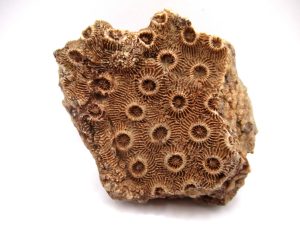
This slow, precise process explains why fossil coral displays high-resolution cellular patterns that mirror the original polyp structures.
Scientific Importance of Fossil Coral
Fossil coral is more than a collector’s piece—it is a scientific archive:
- Paleoclimate Reconstruction
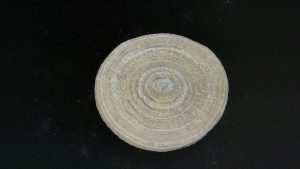
Coral growth rings record historic seawater temperatures and chemical conditions. When fossilized, these geochemical markers help reconstruct past climates.
- Marine Biodiversity Insights
Fossil coral reveals the evolution of reef ecosystems and extinction events, including the Late Devonian and end-Permian crises.
- Plate Tectonics Evidence
Ancient reef locations help geologists track past continental positions and sea-level changes.
Types of Fossil Coral
- Agatized Coral
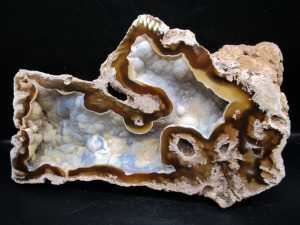
The most popular among collectors. Silica replacement creates vivid patterns and durability.
- Rugose (“Horn”) Coral
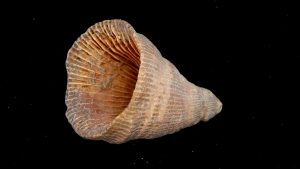
Solitary Paleozoic coral shaped like a horn; important index fossils.
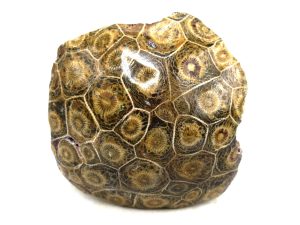
- Tabulate Coral
Colonial corals with honeycomb-like patterns (e.g., Favosites).
- Colonial Hexacorals
Modern-style corals preserved in various mineral forms.
Where Fossil Coral Is Found
Key fossil coral localities include:
- Florida (USA) – world-famous agatized coral
- Indonesia – colorful agatized coral varieties
- Morocco – Paleozoic rugose and tabulate corals
- Michigan (USA) – Petoskey stones (fossil hexacoral)
- Australia – Miocene and Pleistocene corals
Each locality produces distinct mineral colors, patterns, and preservation styles.
Buy Fossils from Prehistoric Fossils with Confidence