
Trilobite Fossils For Sale | Genuine Trilobites
Trilobite Fossils For Sale: Ancient Life from the Paleozoic Seas
Trilobite Fossils For Sale offer collectors, educators, and fossil enthusiasts a direct connection to some of the earliest complex animals in Earth’s oceans. Trilobites belonged to an extinct group of marine arthropods called Trilobita. They first appeared during the Early Cambrian Period, more than 520 million years ago. Moreover, they survived for roughly 270 million years before disappearing during the end-Permian mass extinction about 252 million years ago.
What Are Trilobite Fossils?
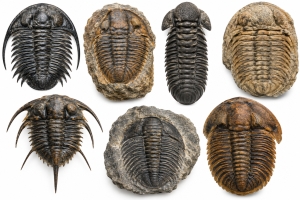
Trilobites had a hard outer shell called an exoskeleton. Therefore, their bodies often fossilized more readily than those of soft-bodied animals. Their name refers to the three lengthwise lobes that divide the body. In addition, most trilobites had three main body sections: the cephalon, or head; thorax; and pygidium, or tail section.
How Trilobites Lived in Ancient Seas
Although all trilobites lived in marine environments, they occupied many different habitats. For example, some species crawled across the seafloor, while others burrowed into sediment. Still others may have swum above the bottom. Likewise, their diets varied. Different species probably fed on organic debris, small animals, plankton, or other available food.
Why Complete Trilobite Fossils Can Be Less Common
Trilobites grew by molting their exoskeletons. Consequently, many trilobite fossils represent shed shells rather than complete animals. In addition, the exoskeleton could separate into several parts after death. Therefore, complete articulated specimens may be less common than isolated heads, tails, or body segments.
Scientific Importance of Trilobite Fossils
Today, scientists recognize thousands of trilobite species from Paleozoic rocks around the world. Furthermore, trilobites help paleontologists date and compare ancient rock layers. Because many species evolved rapidly and became widely distributed, certain trilobites serve as useful index fossils.
As a result, Trilobite Fossils For Sale can represent much more than attractive collector specimens. They preserve evidence of evolution, ancient marine ecosystems, and major changes in the history of life. Whether used for collecting, education, or display, genuine trilobite fossils provide a fascinating link to oceans that existed hundreds of millions of years ago.
Showing 51–100 of 180 results
-

Peronopsis Trilobite for Sale #11
$20.00 -

Peronopsis Trilobite for Sale #12
$20.00 -

Peronopsis Trilobite for Sale #13
$20.00 -

Peronopsis Trilobite for Sale #14
$20.00 -

Peronopsis Trilobite for Sale #15
$20.00 -

Peronopsis Trilobite for Sale #16
$20.00 -
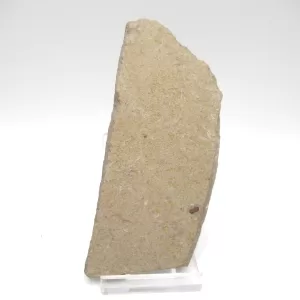
Peronopsis Trilobite for Sale #5
$20.00 -

Peronopsis Trilobite for Sale #7
$20.00 -

Peronopsis Trilobite for Sale #9
$20.00 -
Sold out!
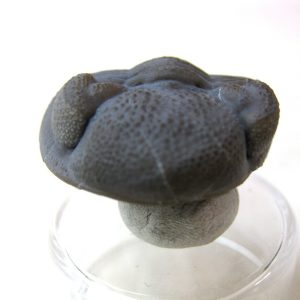
Phacops Rana Trilobite #2
$65.00 -

Onnia Trilobite Plate #1
$1,500.00 -
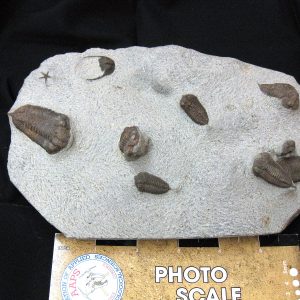
Ordovician Trilobite Plate #1
$525.00 -

Trilobite Tracks (Cruziana) #24
$45.00 -

Trilobite Tracks (Cruziana) #42
$65.00 -

Trilobite Tracks (Cruziana) #43
$55.00 -
Sold out!
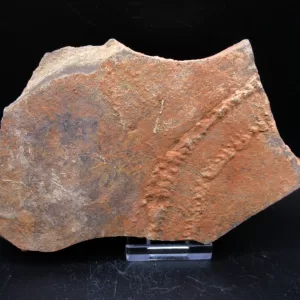
Trilobite Tracks (Cruziana) #29
$65.00 -
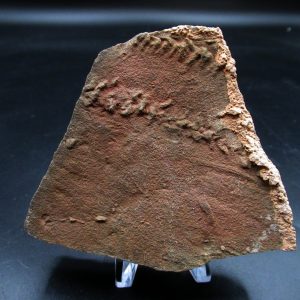
Trilobite Tracks (Cruziana) #44
$25.00 -
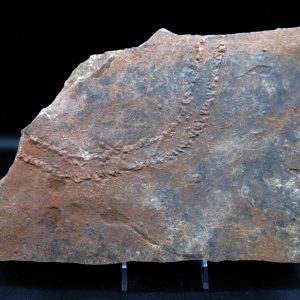
Trilobite Tracks (Cruziana) #48
$195.00 -
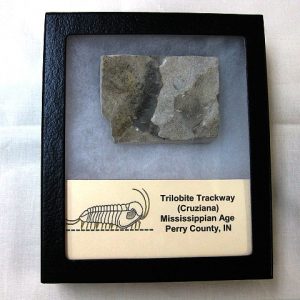
Trilobite Tracks (Cruziana) #6
$40.00 -
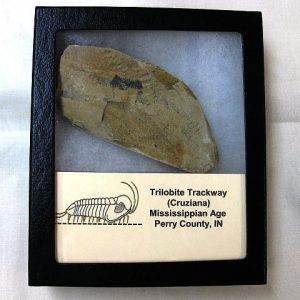
Trilobite Tracks (Cruziana) #7
$55.00 -
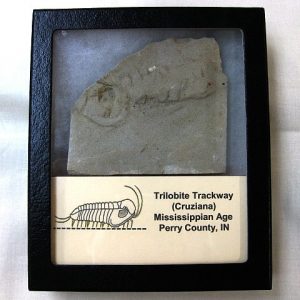
Trilobite Tracks (Cruziana) #8
$55.00 -
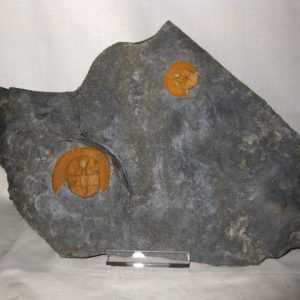
Nankinolithus Trilobite #1
$1,200.00 -
Sale!
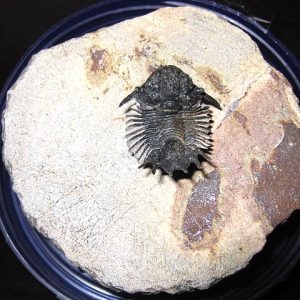
Lobopyge Trilobite #1
Original price was: $700.00.$560.00Current price is: $560.00. -

Morocco Ceratarges Trilobite #1
$900.00 -

Morocco Ceratonurus Trilobite #1
$1,200.00 -

Morocco Cornuproetus with Spines Trilobite #1
$500.00 -
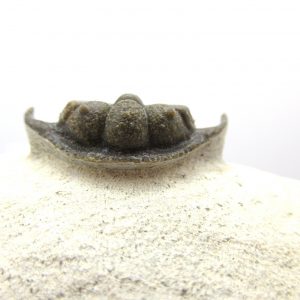
Morocco Cyphaspides Trilobite #1
$800.00 -

Morocco Devonian Calymene Trilobite #1
$300.00 -

Morocco Erbenochile Trilobite #1
$1,400.00 -

Morocco Foulonia Trilobite #1
$1,000.00 -

Morocco Harpides & Lanacus Trilobite #1
$1,100.00 -

Morocco Morocconites Trilobite #1
$300.00 -
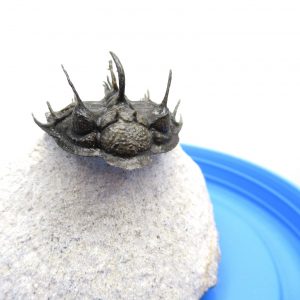
Morocco Trilobites for Sale | Comura #1
$1,000.00 -
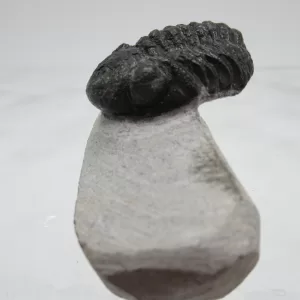
Morocco Trilobites for Sale | Gerastos 10
$25.00 -
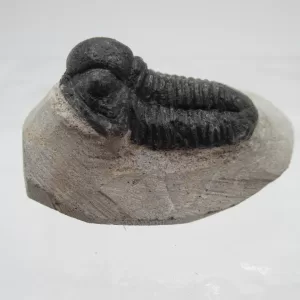
Morocco Trilobites for Sale | Gerastos 11
$25.00 -
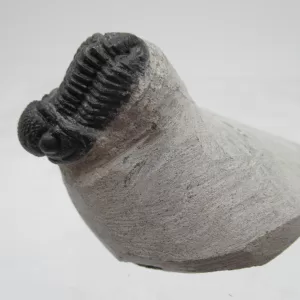
Morocco Trilobites for Sale | Gerastos 12
$25.00 -
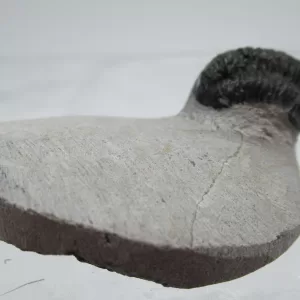
Morocco Trilobites for Sale | Gerastos 15
$25.00 -
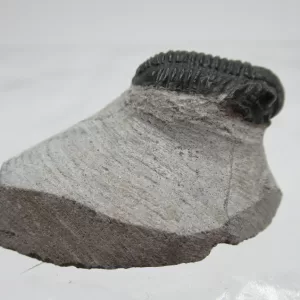
Morocco Trilobites for Sale | Gerastos 16
$25.00 -
Morocco Trilobites for Sale | Gerastos 17
$25.00 -
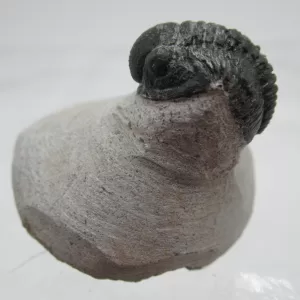
Morocco Trilobites for Sale | Gerastos 18
$25.00 -
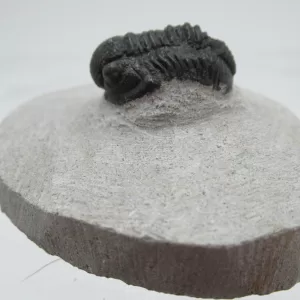
Morocco Trilobites for Sale | Gerastos 19
$25.00 -
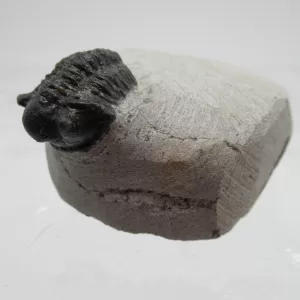
Morocco Trilobites for Sale | Gerastos 21
$25.00 -
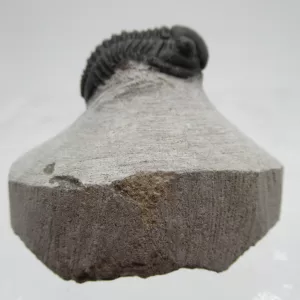
Morocco Trilobites for Sale | Gerastos 22
$25.00 -
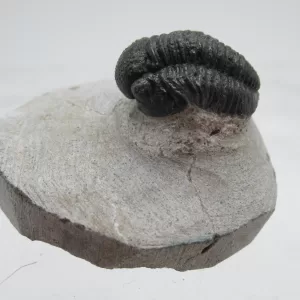
Morocco Trilobites for Sale | Gerastos 24
$25.00 -
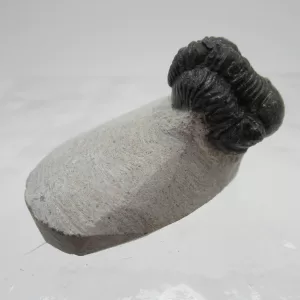
Morocco Trilobites for Sale | Gerastos 25
$25.00 -
Sold out!
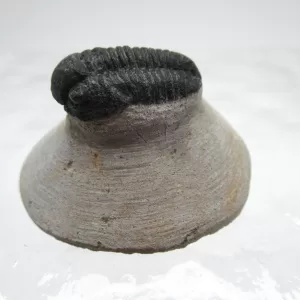
Morocco Trilobites for Sale | Gerastos 26
$25.00 -
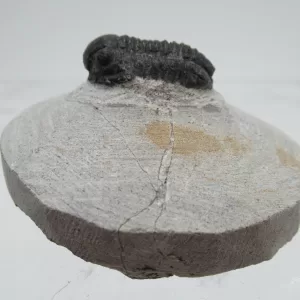
Morocco Trilobites for Sale | Gerastos 28
$25.00 -

Morocco Trilobites for Sale | Gerastos 29
$25.00 -

Morocco Trilobites for Sale | Gerastos 30
$25.00 -

Morocco Trilobites for Sale | Gerastos 31
$25.00
- Buy Fossils
- Fossils for Sale
- Large Selection
- Great Prices and Great Selection
- Authenticity Guaranteed
- Satisfaction Guaranteed
- Your TRUSTED SOURCE SINCE 1997!
- Many more videos are available on our YouTube Channel.
Trilobite Fossils For Sale: Scientific Insights into One of Earth’s Most Iconic Extinct Arthropods
Trilobite Fossils For Sale provide collectors, educators, and fossil enthusiasts with a direct connection to some of the earliest complex animals in Earth’s history. Trilobites were extinct marine arthropods that lived for more than 270 million years. Because they evolved into thousands of species, their fossils help scientists study evolution, ancient marine ecosystems, biostratigraphy, and major extinction events.
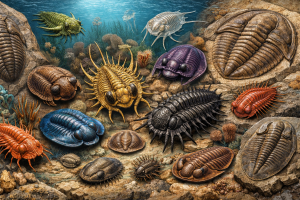
What Are Trilobite Fossils?
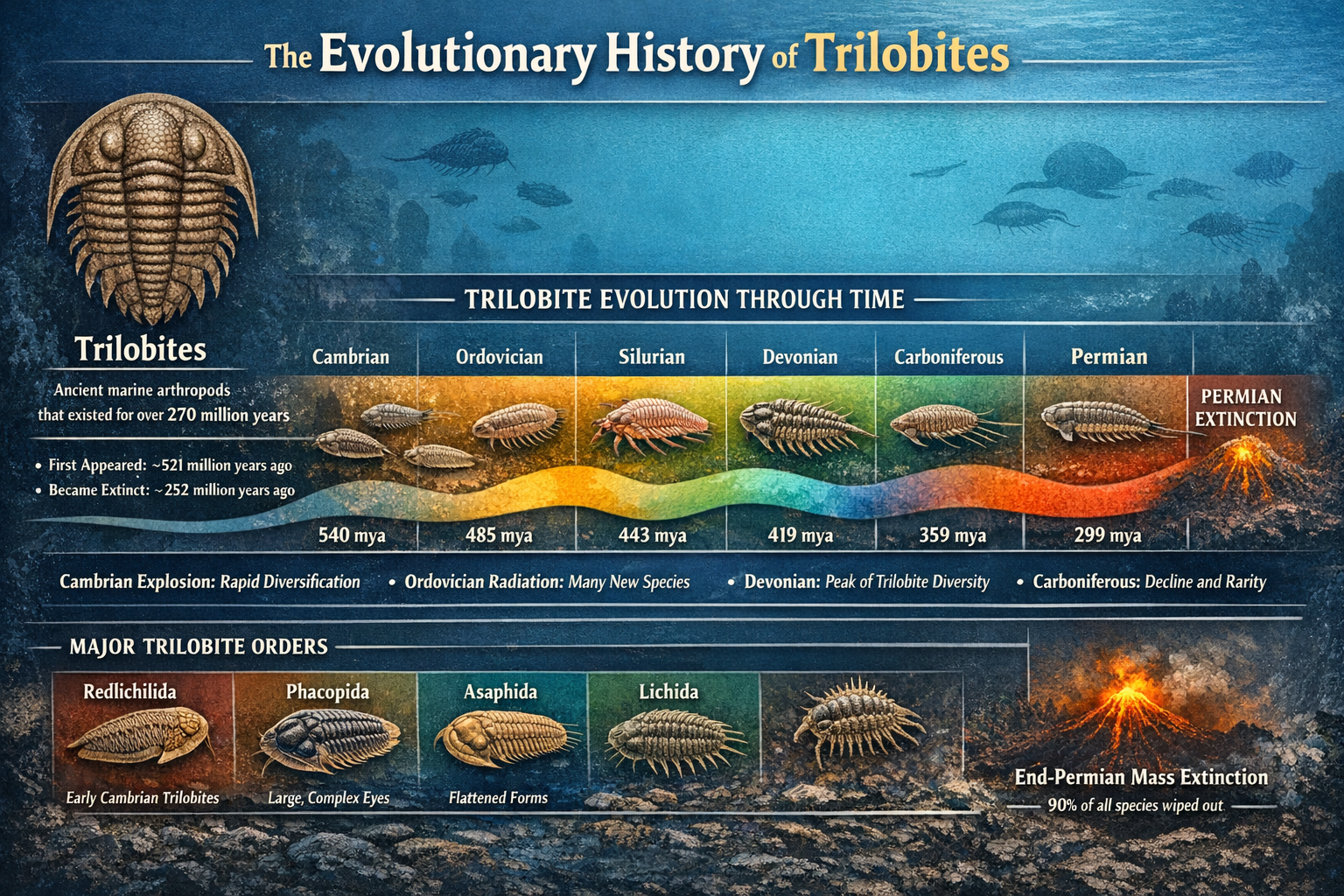
Trilobites belong to the extinct arthropod class Trilobita. They first appeared during the Early Cambrian Period, roughly 521 million years ago. Later, they became widespread throughout Paleozoic seas. Ultimately, trilobites disappeared during the end-Permian mass extinction about 252 million years ago.
The name trilobite refers to their distinctive three-lobed body form. One central axial lobe runs along the body, while two pleural lobes occur on either side. This structure gives many trilobite fossils their easily recognized appearance.
Key Characteristics of Trilobites
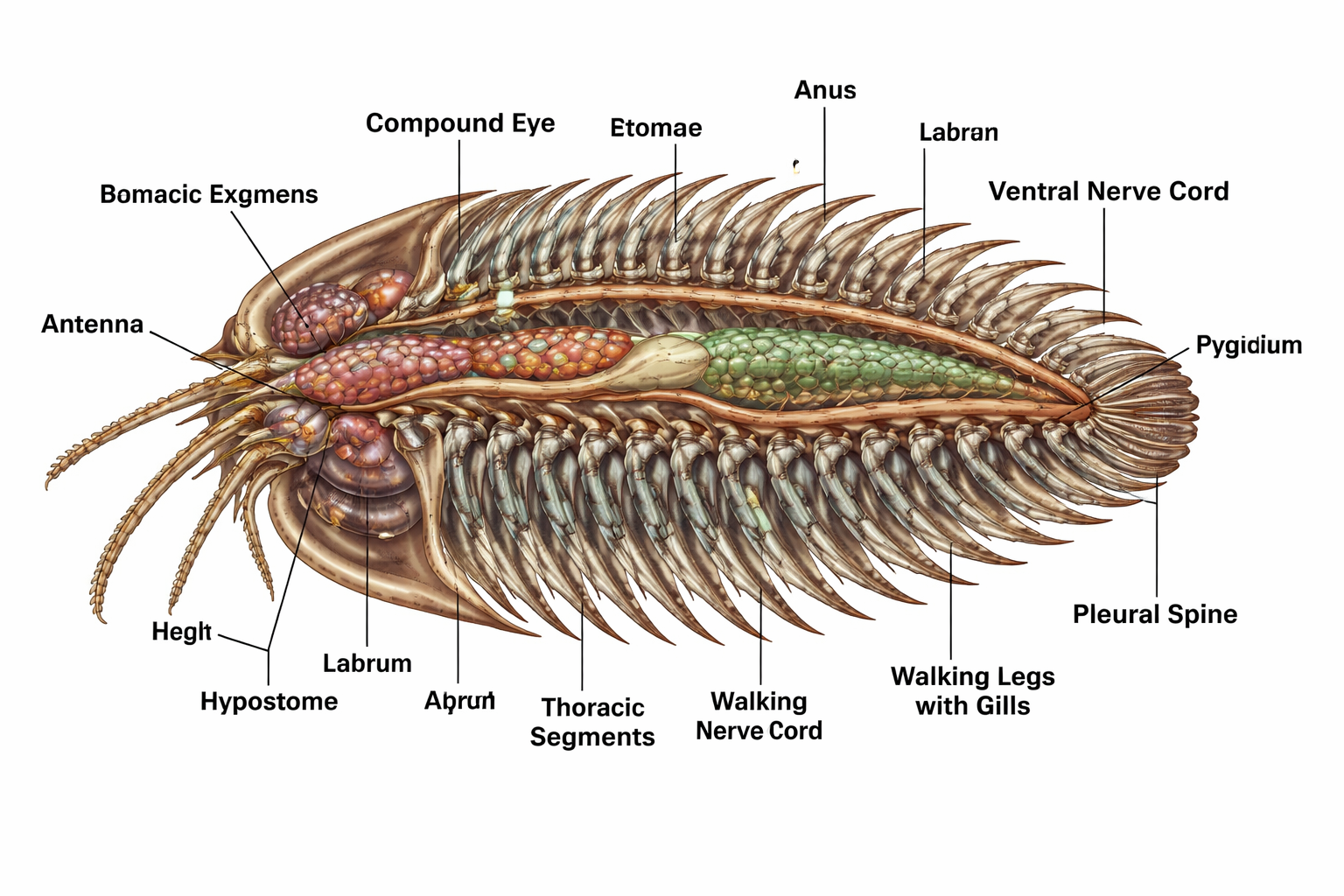
- Three-lobed body plan consisting of an axial lobe and two pleural lobes
- Segmented exoskeleton containing calcite and organic material
- Compound eyes in many species
- Regular molting similar to other arthropods
- Wide variation in body size, shape, and ornamentation
Most importantly, trilobites developed an extraordinary range of adaptations. As a result, their fossils preserve evidence of how ancient arthropods responded to different marine environments.
Trilobite Fossil Anatomy and Morphology
Scientists divide the trilobite body into three main regions, or tagmata: the cephalon, thorax, and pygidium. Together, these structures reveal important clues about movement, feeding, defense, and growth.
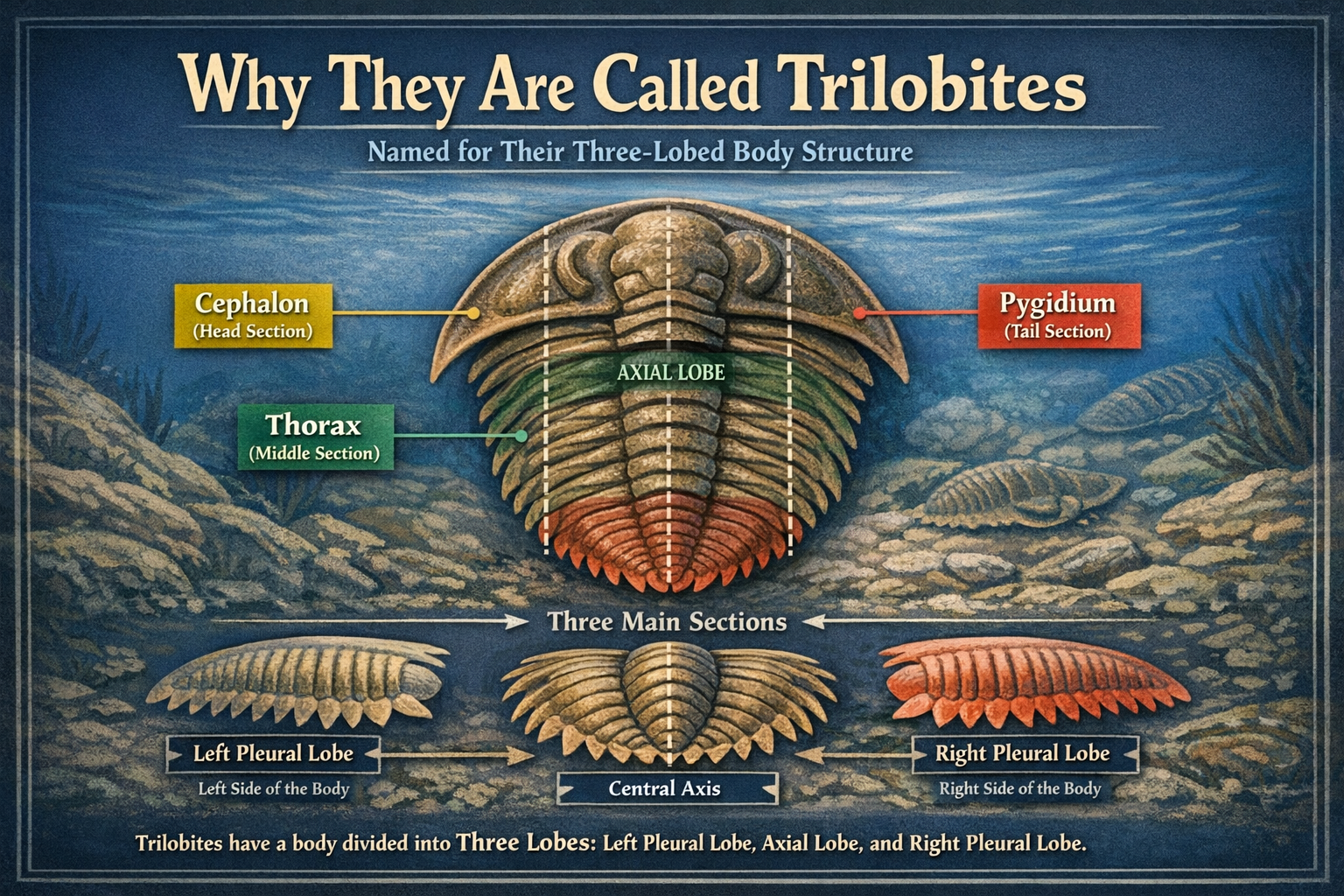
Cephalon or Head
The cephalon formed the front section of the trilobite. It commonly included the eyes, facial sutures, cheeks, and a raised central structure called the glabella. Internal organs associated with digestion were positioned beneath the glabella.
- Compound eyes occurred in many species
- The glabella formed the raised central portion of the head
- Facial sutures helped many trilobites shed their exoskeleton during molting
Thorax
The thorax consisted of a series of articulated segments. Therefore, many trilobites could flex their bodies and enroll into a compact defensive position. This behavior may have protected vulnerable underside structures from predators.
Pygidium or Tail
The pygidium formed the rear portion of the trilobite body. It consisted of fused segments, although its size and shape varied greatly among different groups. In some species, the pygidium remained small. In others, it became nearly as large as the cephalon.
Trilobite Eyes and Fossil Vision
Trilobite eyes are especially important to paleontologists. Many species possessed lenses made primarily from calcite. Because these structures can fossilize well, researchers can examine aspects of ancient visual systems rarely preserved in other fossil animals.
Trilobite Classification and Diversity
More than 20,000 trilobite species have been formally described. Consequently, trilobites rank among the most diverse fossil arthropods known from the Paleozoic Era. Scientists divide them into several major groups based on characteristics of the head, eyes, thorax, tail, and exoskeleton.
- Redlichiida – includes many early Cambrian trilobites
- Phacopida – includes forms known for highly developed eyes
- Asaphida – includes many broad, often smooth-bodied species
- Proetida – includes some of the final trilobites to survive before the end-Permian extinction
This remarkable diversity makes trilobite fossils for sale especially appealing to collectors. Different species can display elaborate spines, broad bodies, large eyes, tiny eyes, smooth shells, or highly ornamented exoskeletons.
Evolutionary History of Trilobites
Trilobites During the Cambrian Explosion
Trilobites became widespread during the Cambrian Period, when many major animal groups rapidly diversified in the oceans. Their abundant fossil record makes them one of the best-known groups associated with early Paleozoic marine ecosystems.
Paleozoic Adaptations
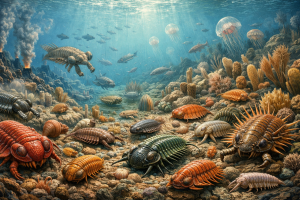
Over millions of years, trilobites evolved many specialized forms. For example, some species developed long spines that may have discouraged predators. Others developed broad or streamlined bodies suited to life on or within seafloor sediment.
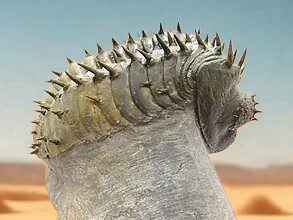
- Spines that may have provided defense
- Streamlined body forms associated with movement across sediment
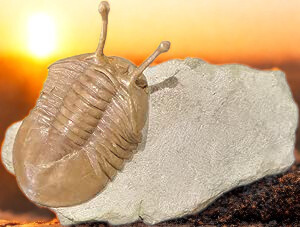
- Different eye positions adapted to particular environments
- Changes in body shape related to different ecological lifestyles
Trilobite Extinction
Trilobite diversity declined substantially after the Devonian Period. Nevertheless, some groups survived for tens of millions of additional years. Finally, the last trilobites disappeared during the Permian-Triassic mass extinction approximately 252 million years ago.
Trilobite Paleoecology and Behavior
Trilobites occupied many ecological roles in ancient seas. Some moved across the seafloor, while others likely searched sediment for food. Different species may have functioned as scavengers, predators, particle feeders, or sediment dwellers.
- Seafloor scavengers
- Particle or filter feeders
- Predatory forms
- Burrowing and sediment-dwelling forms
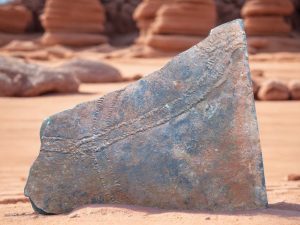
In addition, trace fossils provide evidence of trilobite activity. Fossils such as Cruziana preserve distinctive marks created by arthropods moving and feeding across or through soft sediment. Many examples have historically been associated with trilobite behavior.
Why Trilobite Fossils Matter to Science
Trilobites are among the most useful fossils in Paleozoic geology. Because many species evolved rapidly and existed for limited intervals, paleontologists can use certain trilobites as index fossils. Therefore, they help scientists compare and date sedimentary rock layers from different locations.
Trilobites also provide valuable information about ancient ecosystems. Their changing anatomy documents evolutionary responses to predators, water depth, seafloor conditions, and environmental change.
- Dating and correlating rock layers through biostratigraphy
- Reconstructing ancient marine environments
- Studying early arthropod evolution
- Investigating ancient predator-prey relationships
- Understanding patterns of extinction and recovery
Furthermore, trilobites molted throughout their lives. As a result, fossil deposits may contain both complete individuals and discarded exoskeletons. Researchers must therefore study each specimen carefully to determine whether it represents a complete carcass, a molt, or a partial fossil.
Important Trilobite Fossil Locations
Trilobite Fossils For Sale may originate from many well-known Paleozoic fossil regions around the world. Each locality can preserve different species, geological ages, and styles of fossilization.
- Morocco, Anti-Atlas Mountains – famous for diverse Cambrian through Devonian trilobites
- Utah and Nevada, USA – important Cambrian trilobite deposits
- Wales – historically important Paleozoic trilobite localities
- Bohemia, Czech Republic – classic Ordovician, Silurian, and Devonian trilobites
- Canada – several major Cambrian fossil deposits preserve trilobites and associated marine organisms
Collecting Trilobite Fossils
Trilobites remain popular with fossil collectors because they combine scientific value with striking natural form. Some specimens preserve complete articulated bodies, while others display isolated cephalons, pygidia, molts, or partial exoskeletons. In addition, certain species feature dramatic spines, large eyes, or highly sculptured shells.
When considering trilobite fossils for sale, collectors should review the scientific identification, geological age, locality, preservation, and degree of restoration. Reliable specimen information helps preserve both scientific and collecting value.
Authenticity and Fossil Preparation
Trilobite fossils often require careful preparation to remove surrounding rock. However, some commercial specimens may also contain repaired cracks, reconstructed areas, or restored spines. For that reason, accurate descriptions and trustworthy sellers remain important when building a fossil collection.
Trilobite Fossils For Sale from Prehistoric Fossils
Trilobite fossils preserve one of the richest records of early complex marine life. Their distinctive anatomy, enormous diversity, and long evolutionary history continue to provide valuable evidence about ancient oceans, arthropod evolution, adaptation, and mass extinction.
Whether displayed in a home collection, used as an educational specimen, or studied for their paleontological importance, trilobites remain among the most recognizable fossils in the world.
Buy Trilobite Fossils For Sale from Prehistoric Fossils with confidence. Your Trusted Source Since 1997. Authenticity Guaranteed.