
Mammal Fossils For Sale | Genuine Prehistoric Mammal Fossils
Mammal Fossils For Sale: Discovering the Ancient World of Mammals
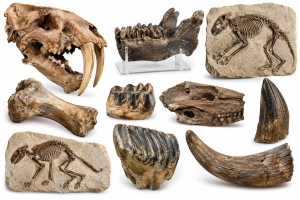
Mammal Fossils For Sale give collectors, educators, and students a direct connection to the evolutionary history of mammals. Fossil mammals provide an important record of how these animals changed and adapted through millions of years. Although mammals lived alongside dinosaurs during the Mesozoic Era, most early species remained relatively small. However, after the non-avian dinosaurs disappeared about 66 million years ago, mammals expanded into many new ecological roles.
Early Mammal Evolution
Early mammals included small insect-eating species and other animals that often resembled modern shrews. Over time, however, mammals developed an amazing range of body sizes and lifestyles. For example, some became large herbivores, while others evolved into powerful predators. Eventually, mammals also adapted to life in the oceans, and some groups developed powered flight.
Why Mammal Teeth Are Important Fossils
Fossil teeth are especially important because hard enamel often survives when other remains disappear. Moreover, tooth shape can reveal clues about an animal’s diet. Paleontologists also study fossil jaws, skulls, bones, and footprints to understand how extinct mammals moved, fed, and lived. Because of their durability and scientific value, teeth are among the most common types of Mammal Fossils For Sale.
Famous Mammals of the Cenozoic Era
Mammal Fossils For Sale
During the Cenozoic Era, many well-known mammals appeared. For instance, mammoths and mastodons lived across parts of North America and Eurasia. Saber-toothed cats became major predators, while ancient horses, camels, rhinoceroses, and other hoofed mammals diversified across changing environments.
Collecting Mammal Fossils
Today, fossil mammals help scientists reconstruct ancient ecosystems, climates, and evolutionary relationships. In addition, collectors value genuine specimens for their scientific, educational, and historical importance. Mammal Fossils For Sale may include teeth, jaws, bones, skull fragments, and other preserved remains from many prehistoric species.
From a tiny fossil tooth to a massive mammoth bone, each specimen preserves evidence of Earth’s changing environments and the remarkable evolutionary history of mammals. As a result, authentic mammal fossils can provide both educational value and a tangible connection to prehistoric life.
Mammal Fossils For Sale
Showing 601–650 of 850 results
-

Ice Age Horse Tooth Cross-Section #51
$10.00 -

Ice Age Horse Tooth Cross-Section #52
$10.00 -

Ice Age Horse Tooth Cross-Section #53
$10.00 -

Ice Age Horse Tooth Cross-Section #54
$10.00 -

Ice Age Horse Tooth Cross-Section #55
$10.00 -

Ice Age Horse Tooth Cross-Section #56
$10.00 -

Ice Age Horse Tooth Cross-Section #57
$10.00 -

Ice Age Horse Tooth Cross-Section #58
$10.00 -

Ice Age Horse Tooth Cross-Section #59
$10.00 -

Ice Age Horse Tooth Cross-Section #61
$10.00 -

Ice Age Horse Tooth Cross-Section #62
$10.00 -

Ice Age Horse Tooth Cross-Section #63
$10.00 -

Ice Age Horse Tooth Cross-Section #65
$10.00 -

Ice Age Horse Tooth Cross-Section #66
$10.00 -

Ice Age Horse Tooth Cross-Section #67
$10.00 -

Ice Age Horse Tooth Cross-Section #68
$10.00 -

Ice Age Horse Tooth Cross-Section #70
$10.00 -

Ice Age Horse Tooth Cross-Section #71
$10.00 -

Ice Age Horse Tooth Cross-Section #72
$10.00 -

Ice Age Horse Tooth Cross-Section #73
$10.00 -

Ice Age Horse Tooth Cross-Section #75
$10.00 -

Ice Age Horse Tooth Cross-Section #76
$10.00 -

Ice Age Horse Tooth Cross-Section #77
$10.00 -

Ice Age Horse Tooth Cross-Section #78
$10.00 -

Ice Age Horse Tooth Cross-Section #79
$10.00 -

Ice Age Horse Tooth Cross-Section #80
$10.00 -

Ice Age Horse Tooth Cross-Section #81
$10.00 -

Pleistocene Horse Tooth Cross-Section #49
$10.00 -
Sold out!

Safari Woolly Rhino
$10.99 -
Sold out!
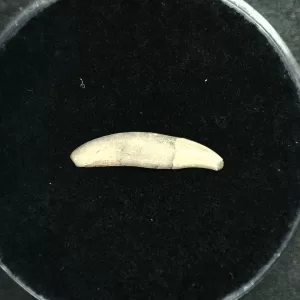
Lee Creek Dolphin Tooth #2
$35.00 -
Sold out!
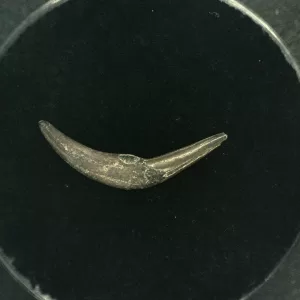
Lee Creek Dolphin Tooth #4
$35.00 -
Sold out!
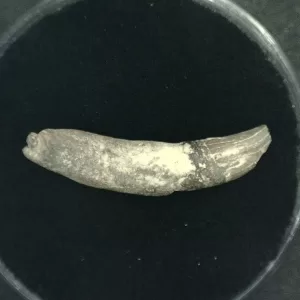
Lee Creek Seal Tooth #1
$35.00 -

Florida Ice Age Mammal Bone #1
$8.00 -

Florida Ice Age Mammal Bone #10
$8.00 -

Florida Ice Age Mammal Bone #11
$8.00 -

Florida Ice Age Mammal Bone #12
$8.00 -

Florida Ice Age Mammal Bone #13
$8.00 -

Florida Ice Age Mammal Bone #14
$8.00 -

Florida Ice Age Mammal Bone #15
$8.00 -

Florida Ice Age Mammal Bone #16
$8.00 -

Florida Ice Age Mammal Bone #17
$8.00 -

Florida Ice Age Mammal Bone #18
$8.00 -

Florida Ice Age Mammal Bone #19
$8.00 -

Florida Ice Age Mammal Bone #2
$8.00 -

Florida Ice Age Mammal Bone #21
$8.00 -

Florida Ice Age Mammal Bone #22
$8.00 -

Florida Ice Age Mammal Bone #23
$8.00 -

Florida Ice Age Mammal Bone #24
$8.00 -

Florida Ice Age Mammal Bone #25
$8.00 -

Florida Ice Age Mammal Bone #3
$8.00
- Buy Fossils
- Fossils for Sale
- Large Selection
- Great Prices and Great Selection
- Authenticity Guaranteed
- Satisfaction Guaranteed
- Your TRUSTED SOURCE SINCE 1997!
- Many more videos are available on our YouTube Channel.
Mammals Fossils For Sale: Evolution, Diversity & Scientific Insights
Mammals Fossils For Sale give collectors, educators, museums, and students a direct connection to more than 200 million years of mammalian evolution. Fossil mammals document major changes in anatomy, diet, climate adaptation, migration, and behavior. From tiny early mammaliaforms that lived alongside dinosaurs to the giant mammals of the Ice Age, these fossils help scientists reconstruct the history of life on Earth.
At Prehistoric Fossils, genuine fossil mammal specimens can also provide educational and collecting value. Each fossil represents a real part of Earth’s biological history, and accurate identification, locality information, and geological context greatly increase its scientific importance.
Why Fossil Mammals Matter
Mammals now occupy nearly every major environment, including oceans, forests, deserts, grasslands, and polar regions. However, their evolutionary history began with much smaller ancestors during the age of dinosaurs. Fossil mammals help paleontologists understand how these animals changed through time.
What Scientists Learn From Mammal Fossils
Scientists study mammal fossils to document evolutionary changes in jaws, teeth, limbs, brains, and sensory systems. In addition, researchers analyze fossils to reconstruct ancient climates, identify migration routes, and study changes in prehistoric ecosystems.
Because mammal teeth often preserve extremely well, they provide especially useful evidence. Tooth shape, enamel chemistry, wear patterns, and microscopic features can reveal diet, habitat, and environmental conditions.
Origins of Mammals: From Synapsids to Mammaliaforms
Synapsid Ancestry
Mammals evolved from the synapsid lineage. Synapsids have a single temporal opening in the skull behind each eye. During the Permian and Triassic periods, several synapsid groups developed increasingly mammal-like characteristics.
Advanced therapsids and cynodonts developed differentiated teeth, improved jaw mechanics, more upright limb positions, and other features that eventually contributed to the mammalian body plan.
Early Mammaliaforms
Early mammaliaforms such as Morganucodon demonstrate important stages in the transition toward true mammals. These small animals possessed highly specialized teeth and complex jaw structures that allowed efficient food processing.
Over time, bones that once formed part of the jaw became incorporated into the mammalian middle ear. This evolutionary transformation eventually produced the familiar three-bone middle ear consisting of the malleus, incus, and stapes.
Mammalian Expansion After the Dinosaur Extinction
Mammal Fossils For Sale
The Cretaceous-Paleogene extinction approximately 66 million years ago eliminated all non-avian dinosaurs and many other organisms. Mammals survived the event and soon expanded into many newly available ecological niches.
The Paleocene-Eocene Thermal Maximum
About 56 million years ago, Earth experienced a rapid warming episode known as the Paleocene-Eocene Thermal Maximum, or PETM. Mammalian fossils from this interval record important biological changes.
For example, some early horses became smaller during the warming event. Mammals also dispersed rapidly between continents, while early primates and hoofed mammals expanded into new habitats.
Diversification of Major Mammal Groups
During the Cenozoic Era, major mammal groups expanded dramatically. Primates developed specialized hands and increasingly sophisticated visual systems. Early cetaceans transitioned from land-dwelling ancestors to fully aquatic whales. Meanwhile, horses and many hoofed mammals evolved limbs suited for increasingly efficient movement across changing landscapes.
Carnivorous mammals also developed specialized teeth, including carnassials that function as powerful shearing surfaces for processing meat.
Key Mammalian Evolutionary Innovations
Teeth and Dietary Specialization
Mammalian teeth are among the most useful fossils for identification. Different diets produced distinctive tooth forms over millions of years.
High-crowned, or hypsodont, teeth became common among many grazing mammals living in abrasive grassland environments. Carnivorous mammals developed sharp cutting teeth, while omnivores often evolved rounded, multicusped molars capable of processing varied foods.
Limbs and Locomotion
Mammal fossils document remarkable changes in movement. Horses developed long limbs suited for efficient running. Bats evolved powered flight, while whales transformed weight-bearing limbs into structures adapted for life in water.
These anatomical changes show how natural selection shaped mammals for different environments and lifestyles.
Brain and Sensory Development
Scientists can study fossil skulls using natural or digital endocasts. These methods help researchers estimate the shape of the brain and examine structures associated with smell, hearing, balance, and other senses.
Modern CT scanning has greatly improved this research because scientists can study internal structures without damaging rare fossils.
Famous Fossil Mammals
Mammal Fossils For Sale
Smilodon fatalis
Smilodon fatalis, commonly called a saber-toothed cat, lived during the Pleistocene. Its long upper canine teeth and powerful forelimbs provide important evidence about predator-prey relationships in Ice Age ecosystems.
Mammuthus primigenius
The woolly mammoth, Mammuthus primigenius, remains one of the best-known prehistoric mammals. Scientists have studied mammoth bones, teeth, tusks, preserved hair, stomach contents, and ancient DNA.
Growth layers and chemical signals in mammoth tusks can also provide information about migration, diet, and environmental conditions.
Paraceratherium
Paraceratherium was a gigantic hornless rhinoceros relative that lived in Asia during the Oligocene. It ranks among the largest known terrestrial mammals and provides an impressive example of extreme body-size evolution.
Andrewsarchus
Andrewsarchus remains one of the more unusual large mammals known from the Eocene of Asia. Scientists primarily know it from a massive skull. Its exact evolutionary relationships have changed as researchers have reevaluated mammalian family trees.
Scientific Methods Used to Study Fossil Mammals
Radiometric Dating
Scientists use radiometric dating methods such as argon-argon and uranium-lead dating to determine the ages of suitable volcanic rocks associated with fossil-bearing sediments. These dates help establish reliable geological timelines.
Stable Isotope Analysis
Carbon and oxygen isotopes preserved in teeth and bones can help reconstruct diet, vegetation, water sources, and climate conditions. As a result, fossil mammals often serve as valuable environmental indicators.
CT Scanning and 3D Reconstruction
CT scanning allows researchers to examine internal anatomy, including inner ears, tooth roots, cranial cavities, and bone structure. Researchers can then create detailed digital models without cutting or damaging the original specimen.
Ancient DNA and Paleogenomics
In exceptionally well-preserved and relatively recent fossils, ancient DNA can reveal evolutionary relationships that anatomy alone cannot resolve. Mammoths, ancient horses, cave bears, and other Pleistocene mammals have contributed important genetic evidence.
Fossil Mammals as Climate Indicators
Fossil mammals help scientists reconstruct ancient environments because animals respond to changes in climate, vegetation, water availability, and habitat.
Tooth enamel isotopes can reveal shifts in vegetation and water sources. Changes in species composition may mark periods of warming, cooling, drying, or increasing grassland expansion. Researchers can also compare changes in body size and anatomy with environmental conditions.
Mammal Migration and Ancient Biogeography
The Great American Biotic Interchange
One of the best-known mammalian migration events occurred after North and South America became connected by the Isthmus of Panama. Mammals moved in both directions, dramatically changing animal communities on both continents.
Beringian Migrations
Beringia periodically connected Asia and North America during times of lower sea level. Mammoths, horses, bison, and many other animals crossed this broad region during different periods of the Cenozoic.
Afro-Eurasian Exchanges
Connections between Africa, Europe, and Asia also allowed major exchanges of mammals. These movements helped shape the distribution of elephants, carnivores, primates, hoofed mammals, and many other groups.
Modern Research and the Future of Mammalian Paleontology
New technology continues to transform the study of fossil mammals. Scientists increasingly use high-resolution CT imaging, synchrotron scanning, digital modeling, isotope geochemistry, ancient proteins, ancient DNA, and computer-assisted classification.
Furthermore, large fossil databases allow researchers to compare thousands of specimens across time and geography. These methods can reveal patterns of extinction, migration, evolution, and environmental change that were difficult to recognize in the past.
Mammals Fossils For Sale for Collectors and Education
Mammals Fossils For Sale can include fossil teeth, bones, jaws, tusk fragments, vertebrae, and other remains from many prehistoric species. Collectors should consider the specimen’s identification, locality, geological age, preservation, preparation, and provenance before purchasing.
Genuine mammal fossils can make excellent teaching specimens because they demonstrate real anatomical and evolutionary features. Moreover, well-documented fossils allow collectors to connect each specimen with a specific geological period, habitat, and prehistoric animal.
Buy Genuine Mammal Fossils With Confidence
Fossil mammals document one of the most remarkable evolutionary stories in Earth’s history. They reveal how small early mammaliaforms eventually gave rise to whales, bats, horses, elephants, primates, carnivores, and countless other forms.
For scientists, educators, students, and collectors, these fossils provide physical evidence of evolution, ancient environments, climate change, and biological adaptation.
Shop Mammals Fossils For Sale from Prehistoric Fossils with confidence. Authenticity Guaranteed!