
Bryozoa Fossils For Sale – Genuine Fossil Bryozoans
Bryozoa Fossils For Sale – Ancient Colonies from Prehistoric Seas
Bryozoa Fossils For Sale offer collectors a fascinating look at colonies of tiny aquatic animals that lived on ancient sea floors. Bryozoans, sometimes called “moss animals,” are not plants or corals. Instead, they belong to their own animal phylum, Bryozoa. Although each individual animal, called a zooid, was tiny, thousands of zooids could form a single colony.
What Are Bryozoa Fossils?
Importantly, definite bryozoan fossils date back to the Early Ordovician, roughly 480 million years ago. Since then, bryozoans have survived several major extinction events, and related species still live in oceans and freshwater environments today.
How Bryozoan Colonies Formed
Moreover, many ancient bryozoans produced hard calcium carbonate skeletons. Therefore, their colonies had a good chance of entering the fossil record. Colonies grew in many forms, including branching, mound-shaped, encrusting, and delicate net-like structures.
How Bryozoans Lived and Fed
Like modern bryozoans, ancient species used a crown of tentacles called a lophophore to filter tiny food particles from the water. As a result, they played an important role in prehistoric marine ecosystems.
Why Bryozoa Fossils Matter
Today, paleontologists study bryozoa fossils to better understand ancient oceans. For example, these fossils can provide clues about water depth, seafloor conditions, and past marine environments. In addition, their detailed colony patterns make bryozoans attractive fossils for collectors, educators, and natural history displays.
Bryozoa Fossils For Sale
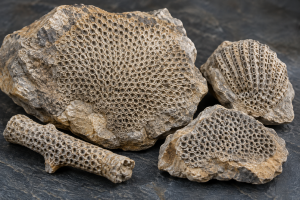
Showing 101–108 of 108 results
-

Evactinopora Bryozoa #7
$75.00 -

Evactinopora Bryozoa #8
$55.00 -

Evactinopora Bryozoa #9
$65.00 -
Sold out!

Archimedes Bryozoa – Kentucky #25
$25.00 -

Archimedes Bryozoa – Illinois #44
$18.00 -
Sold out!

Archimedes Bryozoa – Illinois #45
$18.00 -

Archimedes Bryozoa – Illinois #55
$20.00 -

Archimedes Bryozoa – Illinois #59
$25.00
- Buy Fossils
- Fossils for Sale
- Large Selection
- Great Prices and Great Selection
- Authenticity Guaranteed
- Satisfaction Guaranteed
- Your TRUSTED SOURCE for over 25 years!
- Many more videos are available on our YouTube Channel.
Bryozoa Fossils For Sale – Ancient Colonies from Prehistoric Seas
Bryozoa Fossils For Sale offer collectors a fascinating look at colonies of tiny aquatic animals that lived on ancient sea floors. These bryozoan fossils preserve colonies of tiny animals sometimes called “moss animals.” Bryozoans are not plants or corals. Instead, they belong to their own animal phylum, Bryozoa. Although each individual animal, called a zooid, was tiny, thousands of zooids could form a single colony.
Although they are less famous than trilobites or corals, bryozoans are extremely common in many Paleozoic marine rocks. Moreover, their detailed skeletal structures help paleontologists study ancient environments, ecosystems, and evolutionary change.
What Are Bryozoans?
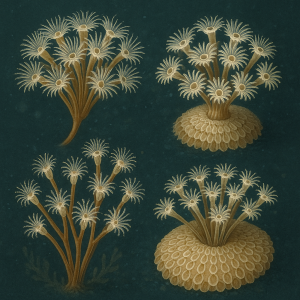
Bryozoans belong to the phylum Bryozoa. They form colonies made of many tiny individuals called zooids. Individual zooids commonly measure less than one millimeter. Together, however, thousands or even millions of zooids may build large colonies.
In addition, each feeding zooid uses a crown of tentacles called a lophophore to capture suspended food particles from the surrounding water. Many bryozoans produce durable calcium-carbonate skeletons. Therefore, these colonies often preserve well as fossils.
Key Characteristics of Bryozoa Fossils
- Colonial growth: Branching, encrusting, fan-shaped, massive, or net-like forms.
- Lophophore: A tentacle-bearing feeding structure used for suspension feeding.
- Skeletal composition: Many species produce calcium-carbonate skeletons that fossilize readily.
- Habitat: Most bryozoans live in marine environments and commonly attach to firm substrates.
Although fossil bryozoans sometimes resemble corals, the two groups are very different animals. For example, bryozoan colonies usually contain much smaller individual chambers. Their microscopic skeletal structures also help specialists distinguish them from fossil corals. Bryozoa Fossils For Sale
Geological History of Bryozoans
Bryozoans first appear clearly in the fossil record during the Early Ordovician Period. Afterward, they underwent major diversification and became important components of Paleozoic marine ecosystems.
Ordovician Bryozoans
During the Ordovician, bryozoans diversified into branching, encrusting, and other colony forms. They became important members of shallow marine communities and contributed skeletal material to carbonate sediments.
Silurian and Devonian Bryozoans
Later, bryozoans developed greater diversity in colony form and skeletal structure. They inhabited reefs, carbonate platforms, and continental shelf environments alongside corals, brachiopods, crinoids, and other marine organisms.
Carboniferous Bryozoans
During the Carboniferous Period, bryozoans were especially abundant in many marine limestone deposits. Fenestrate bryozoans developed distinctive net-like colonies and became particularly common in Mississippian rocks.
Permian Extinction and Later Bryozoans
The end-Permian mass extinction caused severe losses among bryozoan groups. However, the phylum survived. New groups later diversified during the Mesozoic and Cenozoic eras. Today, thousands of living bryozoan species continue to inhabit marine and freshwater environments worldwide.
Types of Fossil Bryozoans
Bryozoa Fossils For Sale
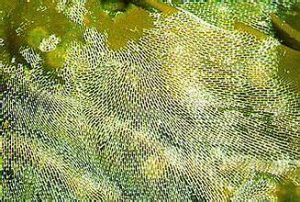
Understanding colony shape and microscopic skeletal features can help identify fossil bryozoans. Several groups occur commonly in the fossil record.
Trepostomata Bryozoans
Trepostomes were especially important during the Paleozoic Era. Their colonies may be branching, massive, or encrusting. In addition, their skeletons commonly contain closely packed tubular zooecia that become visible in broken surfaces or thin sections. They are particularly common in Ordovician and Silurian rocks.
Fenestrata Bryozoans
Fenestrate bryozoans developed delicate fan-shaped or net-like colonies containing regularly spaced openings. Because their skeletons were often thin and fragile, collectors commonly find broken colony fragments in Carboniferous and Permian marine rocks.
Cyclostomata Bryozoans
Cyclostome bryozoans have tubular zooids with rounded openings. Although the group originated much earlier, cyclostomes became especially important during the Mesozoic Era. Furthermore, many species formed encrusting colonies on shells, rocks, and other hard surfaces.
Cheilostomata Bryozoans
Cheilostome bryozoans became increasingly diverse during the Cretaceous and Cenozoic. Their zooids commonly have box-like chambers with specialized openings and structures. Today, cheilostomes represent the most diverse group of living bryozoans.
How to Identify Bryozoa Fossils
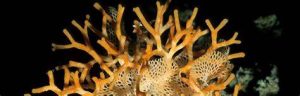
Identifying bryozoan fossils can be challenging because many diagnostic features are extremely small. However, collectors can begin by examining colony form, surface openings, and skeletal structure.
Colony Growth Form
- Encrusting sheets
- Erect branching structures
- Fan-shaped or net-like colonies
- Massive or mound-shaped colonies
Zooecial Openings
The tiny openings that housed individual zooids may appear circular, oval, polygonal, or elongated. Therefore, their arrangement and shape can provide important identification clues.
Internal Wall Structure
Thin sections and magnification may reveal diagnostic structures such as diaphragms, mesopores, and acanthostyles. As a result, paleontologists often rely on microscopic examination for accurate identification.
Surface Ornamentation
Bryozoan fossils may also display ridges, spines, raised areas, or structures called monticules. For collectors, a 10× or 20× hand lens can reveal details that remain difficult to see with the unaided eye.
Where Are Bryozoa Fossils Found?
Bryozoan fossils occur worldwide, especially in marine limestone, shale, and other sedimentary rocks. In North America, Ordovician and Carboniferous formations in states such as Ohio, Indiana, and Kentucky contain abundant bryozoans.
Elsewhere, important fossil bryozoan deposits occur in Europe, Australia, Russia, Estonia, and many other regions that contain ancient marine sedimentary rocks.
Common Bryozoa Fossil Rock Types
- Limestone
- Dolostone
- Calcareous shale
- Reef and carbonate deposits
Why Bryozoa Fossils Are Important
Reconstructing Ancient Environments
Bryozoan colony forms can provide clues about ancient water conditions. For example, colony shape may reflect water movement, sediment levels, substrate conditions, and other environmental factors. Paleontologists combine this evidence with associated fossils and sedimentary structures to reconstruct prehistoric marine habitats.
Bryozoans and Biostratigraphy
In addition, certain bryozoan species and assemblages help geologists compare and correlate sedimentary rock layers. Their evolutionary changes can provide useful biostratigraphic information, especially within Paleozoic sequences.
Evidence of Evolutionary Change
The extensive bryozoan fossil record documents hundreds of millions of years of evolution. Therefore, scientists can study changes in colony organization, skeletal structure, diversity, and ecological adaptations through geological time.
Scientific Value of Living Bryozoans
Modern bryozoans also help scientists better understand the fossil record. For instance, researchers study living colonies to investigate biomineralization, feeding, reproduction, environmental stress, and marine ecology. These observations provide valuable comparisons with extinct bryozoan communities.
Collecting Genuine Bryozoa Fossils
Bryozoa Fossils For Sale appeal to collectors because their colonies preserve intricate natural patterns and represent some of Earth’s longest-lasting marine animal lineages. Moreover, specimens may occur alongside brachiopods, crinoids, corals, trilobites, and other fossils, providing a broader view of prehistoric marine ecosystems.
At Prehistoric Fossils, our genuine fossil specimens are selected for collectors, educators, students, and natural history enthusiasts. Each bryozoan fossil offers tangible evidence of ancient marine communities that existed hundreds of millions of years ago. Bryozoa Fossils For Sale