
Fossil Amphibians for Sale
Amphibians are an ancient class of cold-blooded animals that first evolved in the Devonian period, approximately 370 million years ago.
The word “amphibian” means “both kinds of life,” so named for their natural ability to live on both land and water.
The class Amphibian is made up of tetrapods, temnospondyls, frogs, toads, newts, and salamanders.
We offer a large selection of genuine high quality amphibian fossils for sale.
Showing 1–50 of 376 results
-
Sold out!
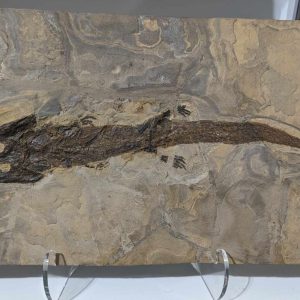
Actinodon Permian Ancient Amphibian #1
$2,000.00 -
Sold out!
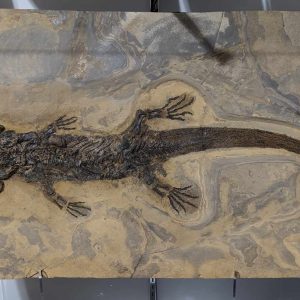
Sclerocephalus Permian Amphibian #1 33″+
$10,000.00 -
Sold out!

Cacops Amphibian Tooth #2
$20.00 -
Sold out!

Cacops Amphibian Tooth #3
$20.00 -

Cacops Amphibian Tooth #4
$20.00 -

Cacops Amphibian Tooth #5
$20.00 -
Sold out!

Cacops Amphibian Jaw #10
$25.00 -

Cacops Amphibian Jaw #11
$25.00 -

Cacops Amphibian Jaw #12
$25.00 -

Cacops Amphibian Jaw #7
$25.00 -

Cacops Amphibian Jaw #8
$25.00 -
Sold out!

Cacops Amphibian Jaw #9
$25.00 -
Sold out!

Cacops Amphibian Tooth #6
$20.00 -

Koskinonodon Metoposaurus Skull Plate #1
$35.00 -

Koskinonodon Metoposaurus Skull Plate #10
$35.00 -

Koskinonodon Metoposaurus Skull Plate #11
$35.00 -
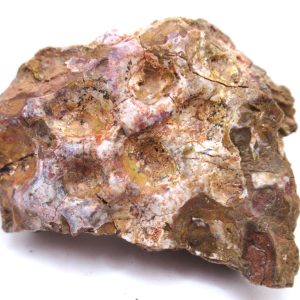
Koskinonodon Metoposaurus Skull Plate #12
$35.00 -
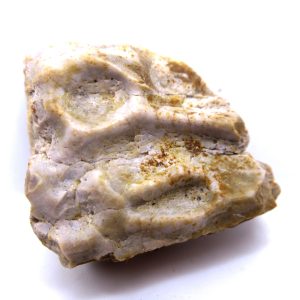
Koskinonodon Metoposaurus Skull Plate #13
$35.00 -
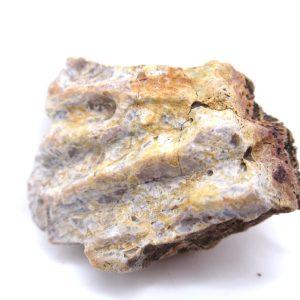
Koskinonodon Metoposaurus Skull Plate #14
$35.00 -
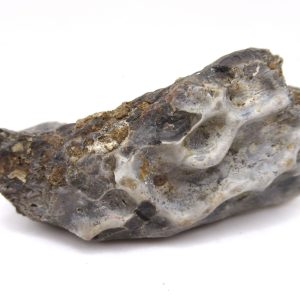
Koskinonodon Metoposaurus Skull Plate #15
$35.00 -
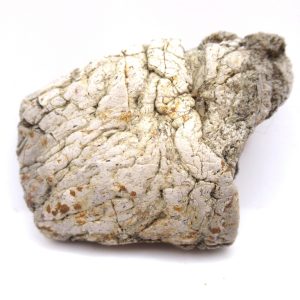
Koskinonodon Metoposaurus Skull Plate #16
$35.00 -
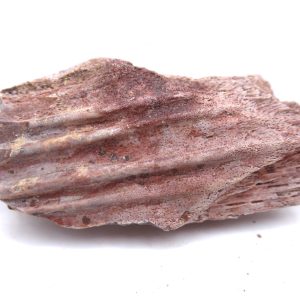
Koskinonodon Metoposaurus Skull Plate #17
$35.00 -
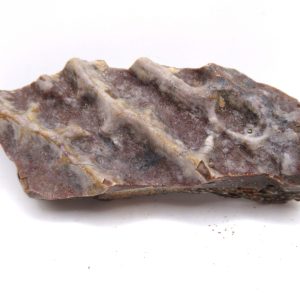
Koskinonodon Metoposaurus Skull Plate #18
$35.00 -
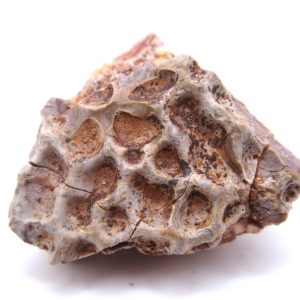
Koskinonodon Metoposaurus Skull Plate #19
$35.00 -

Koskinonodon Metoposaurus Skull Plate #2
$35.00 -

Koskinonodon Metoposaurus Skull Plate #20
$35.00 -

Koskinonodon Metoposaurus Skull Plate #21
$35.00 -

Koskinonodon Metoposaurus Skull Plate #22
$35.00 -

Koskinonodon Metoposaurus Skull Plate #23
$35.00 -

Koskinonodon Metoposaurus Skull Plate #24
$35.00 -

Koskinonodon Metoposaurus Skull Plate #25
$35.00 -

Koskinonodon Metoposaurus Skull Plate #26
$35.00 -

Koskinonodon Metoposaurus Skull Plate #27
$35.00 -

Koskinonodon Metoposaurus Skull Plate #28
$35.00 -
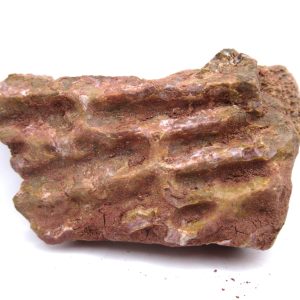
Koskinonodon Metoposaurus Skull Plate #29
$35.00 -

Koskinonodon Metoposaurus Skull Plate #3
$35.00 -
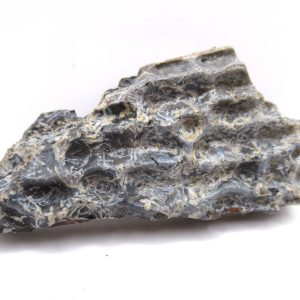
Koskinonodon Metoposaurus Skull Plate #30
$35.00 -
Sold out!
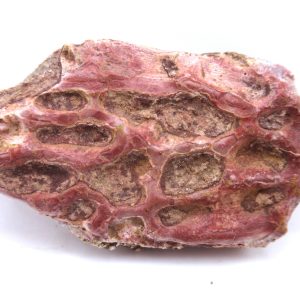
Koskinonodon Metoposaurus Skull Plate #31
$35.00 -
Sold out!
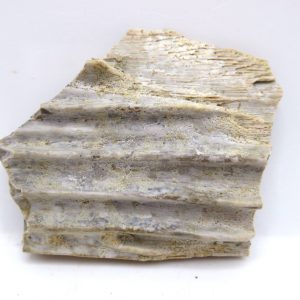
Koskinonodon Metoposaurus Skull Plate #32
$35.00 -
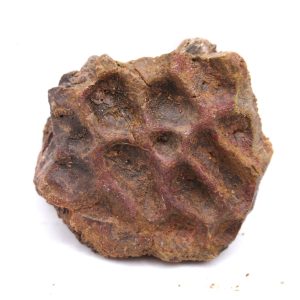
Koskinonodon Metoposaurus Skull Plate #33
$35.00 -
Sold out!
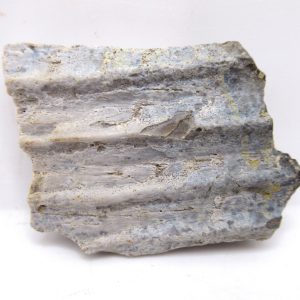
Koskinonodon Metoposaurus Skull Plate #34
$35.00 -
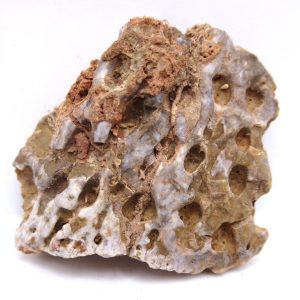
Koskinonodon Metoposaurus Skull Plate #35
$35.00 -
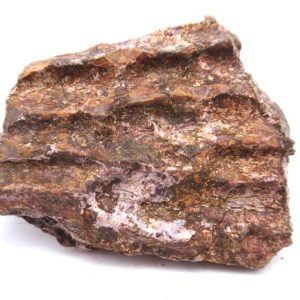
Koskinonodon Metoposaurus Skull Plate #36
$35.00 -
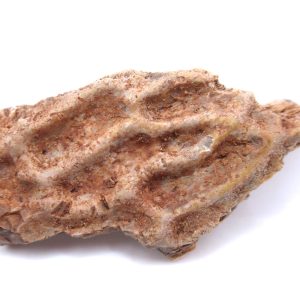
Koskinonodon Metoposaurus Skull Plate #37
$35.00 -
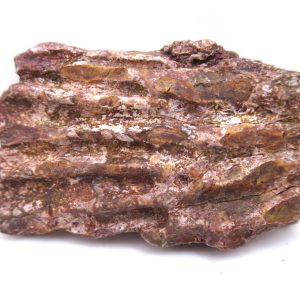
Koskinonodon Metoposaurus Skull Plate #38
$35.00 -

Koskinonodon Metoposaurus Skull Plate #39
$35.00 -

Koskinonodon Metoposaurus Skull Plate #4
$35.00 -
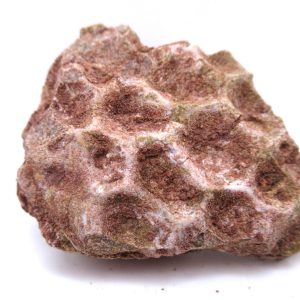
Koskinonodon Metoposaurus Skull Plate #40
$35.00 -

Koskinonodon Metoposaurus Skull Plate #41
$35.00 -

Koskinonodon Metoposaurus Skull Plate #42
$35.00
- Buy Fossils
- Fossils for Sale
- Large Selection
- Great Prices and Great Selection
- Authenticity Guaranteed
- Satisfaction Guaranteed
- Your TRUSTED SOURCE for over 25 years!
- Many more videos are available on our YouTube Channel.
Fossil Amphibians: Evolution, Diversity, and the Scientific Secrets They Reveal
Introduction
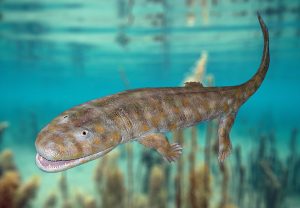
Fossil amphibians offer one of the most important windows into the evolutionary transition from water to land. Their remains—found in sediments dating back more than 370 million years—help scientists trace the origins of vertebrate limbs, lungs, and terrestrial ecosystems. From early tetrapods like Acanthostega to massive Paleozoic predators such as Eryops, fossil amphibians reveal how life adapted during key environmental shifts.
What Are Fossil Amphibians?
Amphibians are vertebrates belonging to the class Amphibia, including modern frogs, salamanders, and caecilians. Fossil amphibians include both direct ancestors of living species and numerous extinct lineages that dominated prehistoric swamps and rivers.
Key Features of Fossil Amphibians
- Semi-aquatic lifestyle: Most early forms retained aquatic traits such as lateral lines and gills.
- Developing limbs: Transitional species show the earliest examples of weight-bearing limbs.
- Lung evolution: Fossils preserve evidence of early air-breathing adaptations.
- Diverse sizes: From tiny Paleozoic microsaurs to giant temnospondyls over 4 meters long.
The Evolutionary Timeline of Amphibians
Devonian Period (419–359 Ma): The Origins of Tetrapods
The earliest fossil amphibian-like vertebrates appear in the late Devonian. These include:
- Tiktaalik – a “fishapod” with wrist-like bones and both aquatic and terrestrial traits
- Acanthostega – one of the earliest known tetrapods with fully formed digits
- Ichthyostega – an early limbed vertebrate capable of limited land movement
These taxa mark the evolutionary transition from lobe-finned fishes (Sarcopterygii) to true amphibians.
Carboniferous Period (359–299 Ma): Amphibian Diversification
During the warm, swampy Carboniferous, amphibians became dominant terrestrial predators.
Important groups include:
- Temnospondyls: Large, crocodile-like amphibians (e.g., Eryops, Mastodonsaurus)
- Lepospondyls: Smaller, diverse forms possibly ancestral to modern amphibians
- Microsaurs: Tiny, lizard-shaped amphibians specialized for varied habitats
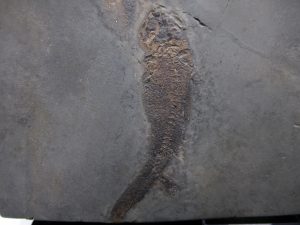
Permian Period (299–252 Ma): Decline and Competition
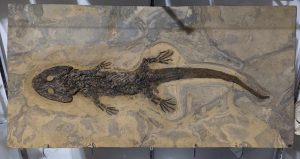
Amphibians faced increasing competition from early reptiles, while fluctuations in climate led to habitat loss. Many large amphibian lineages declined or went extinct near the Permian-Triassic boundary.
Mesozoic–Cenozoic: Modern Amphibians Emerge
Fossils show the earliest modern amphibian groups (Lissamphibia) appearing by the Triassic, eventually giving rise to:
- Anura (frogs)
- Caudata (salamanders)
- Gymnophiona (caecilians)
Major Fossil Amphibian Groups and Notable Species
Temnospondyls
One of the most species-rich amphibian clades, surviving nearly 200 million years.
Notable genera:
- Eryops – a robust, semi-terrestrial predator
- Mastodonsaurus – famous for its massive skull and fang-like teeth
- Metoposaurus – Late Triassic, often found in mass death assemblages
Lepospondyls
Smaller-bodied amphibians with unique vertebral structures.
Examples:
- Diplocaulus – known for its distinctive boomerang-shaped head
- Microbrachis – eel-like swimmer from Carboniferous Europe
Early Lissamphibians
Key fossils bridging the gap between ancient amphibians and modern frogs and salamanders include:
- Triadobatrachus – earliest known frog-like amphibian
- Karaurus – early salamander from the Jurassic
- Eocaecilia – early caecilian with vestigial limbs
How Fossil Amphibians Are Discovered and Studied
Field Methods
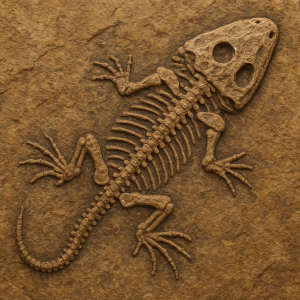
Paleontologists search for fossil amphibians in sedimentary rock formations such as:
- Carboniferous coal beds
- Deltaic floodplains
- Lacustrine (lakebed) deposits
- Fluvial (river) channels
Tools used include:
- Rock hammers and chisels
- Fine brushes for delicate skulls
- CT scanning to reveal internal bone structures
Scientific Techniques
Modern analyses include:
- Computed tomography (CT): Reveals internal skull bones and soft-tissue impressions
- Morphometrics: Quantifies shape differences between species
- Isotopic analysis: Provides climate and water chemistry data
- Phylogenetic modeling: Reconstructs evolutionary relationships
Why Fossil Amphibians Matter to Science
- Understanding the Water-to-Land Transition
They document how vertebrates evolved limbs, lungs, and sensory organs suited for land.
- Climate and Ecosystem Indicators
Amphibian fossils reflect environmental conditions such as humidity, water salinity, and temperature.
- Evolution of Modern Amphibians
Fossils help identify the origins of frogs, salamanders, and caecilians—groups with deep evolutionary roots.
- Biodiversity Through Mass Extinctions
Amphibians survived multiple extinction events, offering clues about resilience and adaptation.
SEO-Optimized FAQ (Schema Compatible)
What is the oldest known fossil amphibian?
Acanthostega and Ichthyostega (late Devonian) are among the earliest tetrapod-like amphibians.
Where are fossil amphibians commonly found?
They are often discovered in Carboniferous coal swamps, river deposits, and ancient lakebeds.
What is the largest fossil amphibian ever discovered?
Temnospondyls such as Prionosuchus may have reached lengths of 6–9 meters.
How do scientists study fossil amphibians?
They use field excavation, CT scanning, morphological analysis, isotopic studies, and phylogenetics.
Conclusion
Fossil amphibians are essential for understanding vertebrate evolution, climate history, and the origins of modern ecosystems. Their fossils provide critical evidence for how life adapted from aquatic to terrestrial environments and continue to refine scientific understanding of Earth’s prehistoric past.
Buy Fossils from Prehistoric Fossils with Confidence!