
Edrioasteroid Fossils For Sale | Genuine Edrioasteroidea Fossils
Edrioasteroid Fossils For Sale – Ancient Paleozoic Echinoderms
Edrioasteroid Fossils For Sale give collectors a fascinating look at an unusual group of extinct marine animals. Edrioasteroids belonged to the phylum Echinodermata, which also includes modern starfish, sea urchins, and crinoids. They first appeared during the early Paleozoic Era and survived until the Permian Period. Therefore, their fossil record covers hundreds of millions of years of marine history.
What Are Edrioasteroid Fossils?
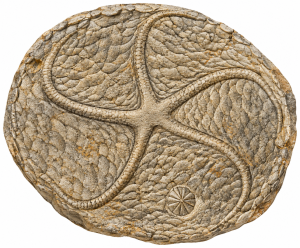
Unlike starfish, edrioasteroids usually had small, rounded or disk-shaped bodies. Five curved food grooves extended across the upper surface in a pattern linked to the five-part symmetry common among echinoderms. Moreover, these grooves helped move tiny food particles toward the mouth. Because of their unusual body form, edrioasteroid fossils are easily recognized when well preserved.
How Edrioasteroids Lived
Most edrioasteroids lived attached to firm surfaces on the sea floor. For example, some species attached themselves to shells, hardgrounds, or other stable objects. Others grew directly on carbonate surfaces. Consequently, paleontologists can sometimes study an edrioasteroid in the same place where it lived.
Edrioasteroids fed on tiny suspended food particles. However, unlike crinoids, they did not raise long feeding arms high into the water. Instead, their feeding structures remained close to the body.
Collecting Edrioasteroid Fossils
Collectors searching for Edrioasteroid Fossils For Sale often value complete specimens because their delicate skeletal plates could separate after death. Therefore, well-preserved fossils may show remarkable details, including individual plates and curved feeding grooves.
Additionally, scientists study edrioasteroid fossils to better understand early echinoderm evolution and Paleozoic marine ecosystems. Their unusual form, distinctive symmetry, and relative rarity make Edrioasteroid Fossils For Sale appealing additions to fossil collections, educational displays, and natural history exhibits.
No Results Found
The page you requested could not be found. Try refining your search, or use the navigation above to locate the post.
Edrioasteroid Fossils For Sale – Collecting Ancient Paleozoic Echinoderms
Edrioasteroid Fossils For Sale offer collectors a fascinating look at an unusual group of extinct marine animals. Edrioasteroids belonged to the phylum Echinodermata, which also includes crinoids, starfish, brittle stars, and sea urchins. However, unlike many familiar echinoderms, edrioasteroids usually lived attached to hard surfaces on the seafloor. Their unusual body form, long fossil history, and uncommon preservation make them especially interesting to fossil collectors.
What Are Edrioasteroid Fossils?
Edrioasteroids were small, disk-shaped to dome-shaped echinoderms. They first appeared during the Cambrian Period and survived into the Permian. Therefore, the group existed for hundreds of millions of years before becoming extinct.
Most species had a flattened or slightly raised body called a theca. In addition, five curved feeding areas, known as ambulacra, extended across the upper surface. These structures often formed an attractive star-like pattern. A mouth sat near the center, while many small calcite plates formed much of the body covering.
Where Did Edrioasteroids Live?
Edrioasteroids lived in marine environments throughout much of the Paleozoic Era. Moreover, many species attached themselves to shells, rocks, firm seafloor surfaces, and other hard objects. Some specimens even occur attached directly to other fossils.
Because edrioasteroids remained fixed in place, rapid burial could sometimes preserve them in their natural position. However, their bodies contained many small skeletal plates. After death, those plates could separate quickly. Therefore, complete and articulated edrioasteroid fossils are much less common than scattered plates or partial remains.
Collecting Edrioasteroid Fossils
Collectors often search for Edrioasteroid Fossils For Sale that show a complete body outline, clear ambulacra, strong plate detail, and good contrast with the surrounding matrix. Furthermore, specimens preserved on natural rock matrix can provide valuable clues about the animal’s original habitat and mode of attachment.
Some Paleozoic limestone formations produce especially desirable examples. For instance, Ordovician rocks in the Cincinnati region of Ohio, Kentucky, and Indiana have produced well-known edrioasteroid fossils. Other species occur in Paleozoic deposits across North America and in several other parts of the world.
How to Evaluate an Edrioasteroid Fossil
When considering Edrioasteroid Fossils For Sale, first examine the overall completeness of the specimen. Next, look for a clear outer margin and visible five-part ambulacral pattern. Also, check the surface for original plate detail rather than heavy restoration.
Complete examples generally attract more collector interest than isolated fragments. However, partial specimens can still have scientific and educational value when they preserve important anatomical features.
Preparation, Restoration, and Authenticity
Edrioasteroids often require careful fossil preparation. Since their skeletal plates can be extremely small and delicate, aggressive cleaning may damage important features. Therefore, skilled preparators commonly work slowly and use magnification when exposing the fossil.
Collectors should also watch for repairs, reconstruction, and restoration. Minor repairs are common in many fossil groups and do not always reduce display value. However, major restoration should be clearly disclosed. Consequently, purchasing from experienced and knowledgeable fossil dealers can help collectors make informed choices.
Why Collect Edrioasteroid Fossils?
Edrioasteroid Fossils For Sale combine rarity, visual appeal, and scientific importance. Unlike common crinoid stem fragments or many brachiopods, complete edrioasteroids often required unusual burial conditions for preservation. As a result, well-preserved examples can become standout specimens in collections focused on echinoderms, Ordovician fossils, or Paleozoic marine life.
Most importantly, edrioasteroids provide evidence of an ancient branch of echinoderm evolution. Their attached lifestyle, plated bodies, and five-part feeding structures show how diverse prehistoric seafloor communities once were. Therefore, collecting edrioasteroid fossils offers more than an attractive display specimen. It also provides a direct connection to marine ecosystems that existed hundreds of millions of years ago.