
Dragonfly Fossil For Sale
Dragonfly Fossil For Sale – Long before the dinosaurs roamed the Earth, dragonflies took to the air. Griffenflies (Meganisoptera), the gigantic precursors to modern dragonflies had wingspans of over two feet and dotted the skies during the Carboniferous period. (over 300 million years ago.) We have a HUGE SELECTION of quality, genuine dragonfly fossils for sale
Showing all 11 resultsSorted by price: high to low
-

Jurassic Solnhofen Dragonfly #29
$1,500.00 -
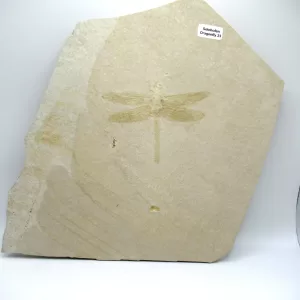
Jurassic Solnhofen Dragonfly #23
$1,500.00 -
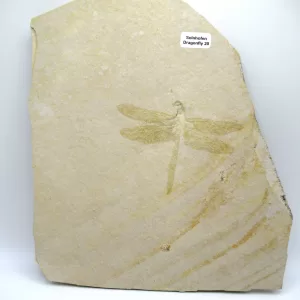
Jurassic Solnhofen Dragonfly #20
$1,250.00 -

Genuine Jurassic Solnhofen Dragonfly #18
$1,200.00 -
Sold out!
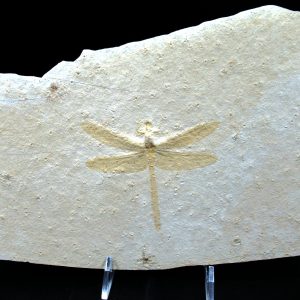
Jurassic Solnhofen Dragonfly from Germany #31
$1,050.00 -

Jurassic Solnhofen Dragonfly #28
$1,050.00 -

Jurassic Solnhofen Dragonfly #27
$1,050.00 -

Genuine Jurassic Solnhofen Dragonfly #17
$950.00 -

Genuine Jurassic Solnhofen Dragonfly #8
$720.00 -

Genuine Jurassic Solnhofen Dragonfly #7
$720.00 -
Jurassic Solnhofen Insect Fossil for Sale from Germany #44
$50.00
- Buy Fossils
- Fossils for Sale
- Large Selection
- Great Prices and Great Selection
- Authenticity Guaranteed
- Satisfaction Guaranteed
- Your TRUSTED SOURCE for over 25 years!
- Many more videos are available on our YouTube Channel.
Fossil Dragonflies: Ancient Giants of the Prehistoric Skies
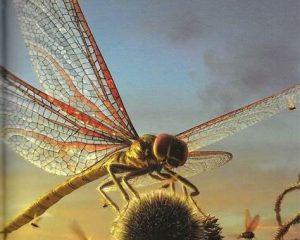
Introduction: The Prehistoric Titans of the Air
Long before the first dinosaurs walked the Earth, massive dragonfly-like insects ruled the skies. These ancient species—some with wingspans exceeding 70 centimeters (28 inches)—represent some of the largest flying insects to ever exist. Fossil dragonflies offer an extraordinary glimpse into Paleozoic ecosystems, climate conditions, and the evolutionary pathways of modern Odonata (dragonflies and damselflies).
This guide explores the evolution, anatomy, geological history, and scientific significance of fossil dragonflies.
What Are Fossil Dragonflies?
Fossil dragonflies are preserved remains or impressions of extinct species belonging to ancient insect lineages. Many prehistoric “dragonflies” were not true dragonflies, but rather belonged to the order Meganisoptera (formerly Protodonata).
Key Characteristics
- Enormous wingspans, often 2–3x larger than modern dragonflies
- Robust bodies with long, veined wings
- Strong predatory behavior inferred from jaw structure
- Exceptional flight capability
True Dragonflies vs. Meganisoptera
|
Feature |
Modern Dragonflies (Odonata) |
Prehistoric Giants (Meganisoptera) |
|
Era |
Jurassic–Present |
Carboniferous–Permian |
|
Wingspan |
5–12 cm |
Up to 70 cm |
|
Tail |
Flexible, sometimes curled |
Straight, stiffer |
|
Ecology |
Aquatic larvae, aerial adults |
Believed similar, but less certain |
The Most Famous Fossil Dragonfly: Meganeura
Meganeura monyi: The Giant of the Carboniferous
Discovered in the late 19th century from Carboniferous deposits in France, Meganeura remains one of the most iconic fossil insects.
Fast Facts
- Wingspan: Up to 70 cm (28 in)
- Age: ~300 million years
- Lifestyle: Apex aerial predator
- Diet: Smaller insects, possibly amphibians
Meganeura thrived when atmospheric oxygen levels were unusually high—up to 35% compared to today’s 21%. This enriched atmosphere may have enabled insects to grow to enormous sizes.
Why Were Prehistoric Dragonflies So Large?
- Elevated Oxygen Levels (Hyperoxia)
During the late Carboniferous, oxygen spikes allowed insects—whose respiration depends on diffusion through tracheae—to grow much larger than modern forms.
- Lack of Aerial Vertebrate Predators
Before birds, bats, and pterosaurs evolved, meganeurids dominated the skies with little competition.
- Favorable Climate and Dense Vegetation
Warm, swampy ecosystems supported abundant food sources and stable habitats for their development.
Where Are Fossil Dragonflies Found?
Fossil dragonflies occur worldwide, often in fine-grained sedimentary formations that preserve delicate wing venation.
Top Fossil Sites
- Commentry Basin, France – home of Meganeura
- Mazon Creek, Illinois, USA
- Solnhofen Limestone, Germany – exceptional Jurassic preservation
- China’s Liaoning Province – diverse insect assemblages
- Australia’s Queensland deposits
Collectors and paleontologists prize these fossils for their beauty and scientific importance.
Anatomy of Prehistoric Dragonflies
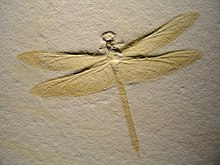
- Wings
- Highly veined, lattice-like patterns
- Rigid structure enabling fast, agile flight
- Forewings and hindwings nearly identical
- Eyes
- Enormous compound eyes
- Likely provided near-360° vision
- Mandibles
- Large, serrated jaws
- Indicates predatory behaviors similar to modern hawkers
- Thorax
- Packed with powerful flight muscles
- Adapted for sustained flight and aerial hunting
Evolutionary Significance
Studying fossil dragonflies offers key insights into ancient biodiversity and atmospheric chemistry.
What We Learn
- How insect gigantism evolved
- How early ecosystems functioned
- How flight developed across insects
- Oxygen’s evolutionary influence
Because insect soft tissue is rarely preserved, wing venation (unique to each species) is crucial for classification.
Modern Dragonflies: Living Relatives of Ancient Giants

While Meganisoptera went extinct around 250 million years ago, modern dragonflies retain many ancestral traits.
Shared Features
- Aerial predation
- Paired transparent wings
- Aquatic juveniles
What’s Different?
Modern species are far smaller, live in more complex ecosystems, and appear more specialized.
Fossil Dragonflies in Paleontology and Collecting
Why Collectors Love Them
- Beautiful preservation
- Unique wing patterns
- High scientific value
- Rarity
Tips for Ethical Collecting
- Buy fossils from reputable fossil dealers such as www.prehistoricfossils.com
- Verify locality and formation
- Avoid illegally exported specimens
Primary Keywords
- Fossil dragonfly
- Meganeura fossil
- Prehistoric dragonfly
- Giant dragonfly fossil
- Meganisoptera
Secondary Keywords
- Carboniferous insects
- Ancient flying insects
- Dragonfly evolution
- Fossil insect for sale
- Paleozoic fossils
Long-Tail SEO Phrases
- “Where to find fossil dragonflies”
- “How big were prehistoric dragonflies?”
- “Meganeura fossil identification guide”
- “Why were ancient insects so large?”
- “Authentic fossil dragonflies for collectors”
Conclusion
Fossil dragonflies represent some of the most fascinating creatures of Earth’s deep past. Their impressive size, advanced flight capabilities, and dominance in early ecosystems make them invaluable to paleontologists and collectors alike. Whether you’re studying evolution, expanding a fossil collection, or creating educational content, these prehistoric giants continue to captivate our imagination.