
Mammoth Teeth Fossils For Sale | Genuine Mammoth Molars
Mammoth Teeth Fossils For Sale: Genuine Ice Age Mammoth Fossils
Mammoth Teeth Fossils For Sale offer collectors, educators, and natural history enthusiasts a direct connection to the Ice Age. Mammoths were large members of the elephant family that lived across parts of North America, Europe, Asia, and Africa. Several mammoth species existed over millions of years. However, the famous woolly mammoth, Mammuthus primigenius, became especially well adapted to the cold environments of the Pleistocene Ice Age.
Why Mammoth Teeth Fossils Are Important
Mammoths had massive bodies, long curved tusks, and highly specialized teeth. In particular, their molars contained rows of strong enamel plates designed to grind tough grasses and other coarse plants. As one tooth wore down, another molar moved forward to replace it. Therefore, Mammoth Teeth Fossils For Sale can also help people understand mammoth diet, growth, and adaptation.
How Mammoth Fossils Are Preserved
Today, collectors commonly encounter fossil mammoth teeth, tusk fragments, bones, and other remains. Rivers, gravel deposits, permafrost, and ancient sediments can preserve these fossils. Moreover, exceptionally preserved mammoths from Siberian permafrost sometimes retain hair, skin, and other soft tissue.
What Mammoth Teeth Reveal About the Ice Age
Mammoth fossils help scientists reconstruct ancient environments. For example, researchers study teeth, bones, and preserved tissues to learn about diet, migration, climate, and population changes. In addition, chemical evidence preserved within mammoth teeth can record clues about where an individual animal traveled during its lifetime.
Collecting Mammoth Teeth Fossils
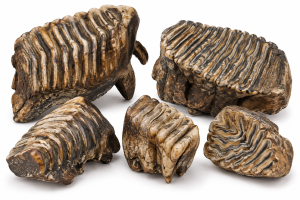
Mammoth Teeth Fossils For Sale remain popular because each specimen preserves part of an animal that lived thousands of years ago. Genuine mammoth molars often show distinctive enamel ridges and heavy wear caused by years of grinding vegetation. Because of their size, structure, and scientific value, mammoth teeth make impressive display fossils for collections, classrooms, museums, and natural history exhibits.
The Last Woolly Mammoths
Most mammoths disappeared near the end of the Pleistocene. However, small populations survived much longer on isolated islands. The last known woolly mammoths lived on Wrangel Island in the Arctic Ocean until roughly 4,000 years ago. Consequently, mammoth fossils provide an important record of Ice Age life and remain fascinating specimens for scientists, museums, educators, and fossil collectors.
Showing all 12 results
-

Woolly Mammoth | Tooth Slice #41
$100.00 -

Woolly Mammoth | Tooth Slice #46
$145.00 -

Woolly Mammoth | Tooth Slice #47
$145.00 -

Woolly Mammoth | Tooth Slice #48
$145.00 -
Sold out!

Woolly Mammoth | Tooth Slice #49
$145.00 -

Woolly Mammoth Collection #4
$325.00 -

Woolly Mammoth Collection #5
$325.00 -

Woolly Mammoth Collection #6
$325.00 -
Sold out!

Woolly Mammoth Tooth #13
$695.00 -

Woolly Mammoth Tooth #14
$695.00 -
Sold out!
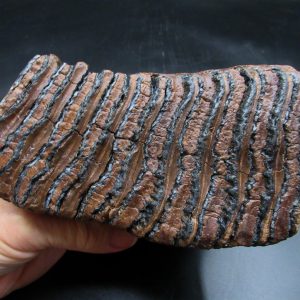
Woolly Mammoth Tooth #24
$575.00 -
Sold out!
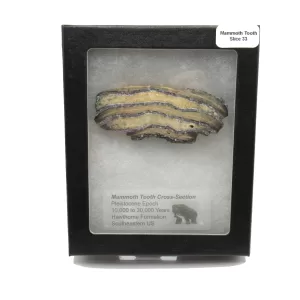
Woolly Mammoth Tooth Cross-Section #33
$55.00
Mammoth Tooth Fossils For Sale: Collecting Genuine Ice Age Fossils
Mammoth Tooth Fossils For Sale give collectors, educators, and natural history enthusiasts a direct connection to the Ice Age. These large and distinctive teeth belonged to mammoths that once lived across Europe, Asia, and North America. Because mammoths depended heavily on grasses and other coarse vegetation, their molars developed a specialized grinding structure. Today, genuine mammoth teeth remain highly desirable because they combine scientific value, visual appeal, and prehistoric history.
Understanding Mammoth Tooth Fossils
Mammoths belonged to the elephant family, Elephantidae. Several mammoth species lived during the Pleistocene Epoch, which lasted from about 2.58 million to 11,700 years ago. However, the mammoth lineage began earlier during the Pliocene. Therefore, mammoth fossils can represent different species, ages, and geographic regions.
Like modern elephants, mammoths replaced their molars throughout life. Instead of using many small cheek teeth at once, mammoths relied on large molars that gradually moved forward as older teeth wore down. Consequently, an individual mammoth could develop six sets of cheek teeth during its lifetime.
Why Mammoth Molars Have a Distinctive Appearance
Mammoth molars contain numerous enamel plates separated by dentine and cementum. Together, these materials formed a strong grinding surface. As a result, mammoths could process tough grasses and other abrasive plants efficiently.
Furthermore, tooth structure can help paleontologists identify mammoth species. Woolly mammoths, Mammuthus primigenius, generally developed more numerous and closely spaced enamel plates than some earlier mammoths. Scientists also examine plate count, enamel thickness, tooth size, wear patterns, and overall shape when studying a specimen.
Where Mammoth Tooth Fossils Are Found
Mammoth remains occur across much of the Northern Hemisphere. In North America, collectors often encounter fossils from species such as the Columbian mammoth, Mammuthus columbi. Meanwhile, woolly mammoth remains occur mainly in northern parts of Eurasia and North America.
In addition, rivers, gravel deposits, coastal sediments, permafrost, and former Ice Age landscapes can expose mammoth teeth. Some specimens preserve complete crowns and roots. Others survive as partial molars or individual enamel plates. Even fragments may display the characteristic ridged structure that helps identify mammoth teeth.
What to Look for When Buying Mammoth Tooth Fossils
When considering Mammoth Tooth Fossils For Sale, first examine the overall condition of each specimen. A complete tooth with strong enamel plates, visible roots, and limited restoration often attracts greater collector interest. However, attractive partial teeth can also make excellent display and educational fossils.
Next, consider provenance and locality information. Reliable details about where a fossil originated can improve its scientific, historical, and collector value. Moreover, buyers should ask whether a specimen contains repairs, stabilizers, reconstruction, or restored sections.
Proper Care and Display
Mammoth teeth can develop cracks if environmental conditions change too quickly. Therefore, collectors should avoid excessive humidity, direct sunlight, and rapid temperature changes. Stable indoor conditions usually provide the best long-term protection.
Additionally, large mammoth teeth may be surprisingly heavy. A sturdy display stand can help support the fossil safely while allowing the enamel plates and natural structure to remain visible.
Building a Mammoth Fossil Collection
Collectors often choose mammoth teeth as centerpiece fossils because every specimen has a unique pattern, color, size, and degree of wear. In addition, a collection may include complete molars, worn teeth, partial teeth, isolated enamel plates, or fossils from different mammoth species and geographic regions.
Most importantly, purchase fossils from reputable dealers who clearly describe identification, locality, repairs, and restoration when known. Accurate documentation helps preserve the history of a specimen and supports informed collecting.
Why Collect Mammoth Teeth?
Collecting mammoth tooth fossils offers more than an impressive display. Each tooth preserves evidence of an animal that adapted to changing Ice Age environments. Furthermore, mammoth molars provide valuable information about diet, age, evolution, and prehistoric ecosystems.
For collectors seeking authentic natural history specimens, Mammoth Tooth Fossils For Sale can provide an excellent combination of scientific interest, educational value, and visual impact. A well-documented mammoth tooth is not simply a fossil. It is a preserved piece of Ice Age history.