

Description
Cretaceous Fish Teeth Fossils For Sale
- Unidentified Fish Tooth
- Cretaceous Age
- Hell Creek Formation
- Garfield County, Montana
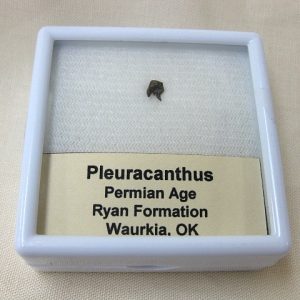
- This small Fish Tooth measures .20″ long. It will come in a 1.25″ Gem Jar with ID Label. Authenticity Guaranteed!
- Buy Fossils – MORE Fish Fossils For Sale
Cretaceous Fish Teeth Fossils For Sale – Genuine Prehistoric Fish Teeth
Cretaceous Fish Teeth Fossils For Sale offer collectors a fascinating look at prehistoric fish that lived during the Age of Dinosaurs. These genuine fossils come from ancient marine and freshwater environments. Furthermore, they reveal how fish hunted, fed, and survived millions of years ago.
The Cretaceous Period lasted from approximately 145 to 66 million years ago. During this time, oceans and rivers supported many kinds of fish. Some had sharp teeth for catching prey, while others developed rounded teeth for crushing hard-shelled animals.
At Prehistoric Fossils, we offer authentic prehistoric specimens for collectors, educators, and fossil enthusiasts.
Discover Cretaceous Fish Teeth
Cretaceous fish teeth vary greatly in size, shape, and function. As a result, each specimen provides clues about the feeding habits of ancient aquatic predators.
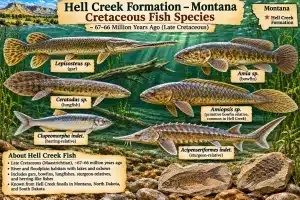
Some notable Cretaceous fish include:
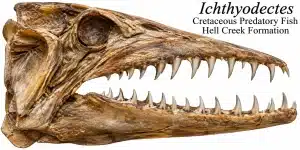
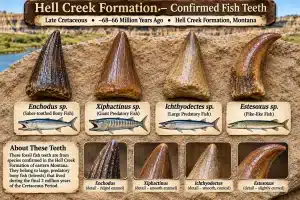
- Enchodus: Known for its long, fang-like teeth, this predatory fish lived in Cretaceous seas.
- Xiphactinus: A large predatory bony fish with sharp, conical teeth designed to grip prey.
- Ptychodus: An extinct cartilaginous fish, generally classified as a shark, with broad crushing teeth used to feed on hard-shelled prey.
- Lepidotes and related semionotiform fishes: Certain Cretaceous species possessed rounded crushing teeth suited for processing hard food.
Additionally, tooth shape and surface details can help paleontologists identify different fish groups.
How Did Prehistoric Fish Use Their Teeth?
Ancient fish developed specialized teeth based on their diets. For example, pointed teeth helped predators capture slippery prey. In contrast, broad crushing teeth helped other species break shells and hard-bodied organisms.
Moreover, many fish replaced teeth throughout their lives. Consequently, isolated fossil teeth are relatively common in some Cretaceous deposits.
Where Are Cretaceous Fish Teeth Found?
Scientists discover fossil fish teeth in sedimentary rock formations worldwide. Important fossil-bearing deposits occur in North America, Europe, Africa, and other regions.
For example, the Western Interior Seaway once covered much of central North America. This shallow sea supported abundant marine life, including sharks, bony fish, ammonites, and marine reptiles.
Likewise, Cretaceous deposits in Morocco preserve numerous fish teeth and other aquatic vertebrate remains.
Why Collect Fossil Fish Teeth?
Genuine fossil fish teeth are excellent additions to natural history collections. They also provide an affordable introduction to vertebrate paleontology.
Collectors appreciate these specimens because they offer:
- Genuine fossils from the Age of Dinosaurs.
- Interesting tooth shapes and feeding adaptations.
- Educational examples of prehistoric aquatic ecosystems.
- Unique specimens for display, study, and collecting.
Furthermore, each tooth represents a real animal that lived millions of years before humans appeared.
Buy Genuine Cretaceous Fish Teeth Fossils
When purchasing prehistoric fish teeth, authenticity and accurate identification are important. Therefore, collectors should choose a trusted fossil dealer who provides clear specimen information.
At Prehistoric Fossils, we have supplied genuine fossils and natural history specimens since 1997. We take pride in offering authentic fossils for beginning collectors and experienced enthusiasts alike.
Explore our available Cretaceous fish teeth and discover remarkable evidence of prehistoric aquatic life.
100% Genuine Fossils | Authenticity Guaranteed | Trusted Source Since 1997