Description
Michigan Crinoid Fossils For Sale
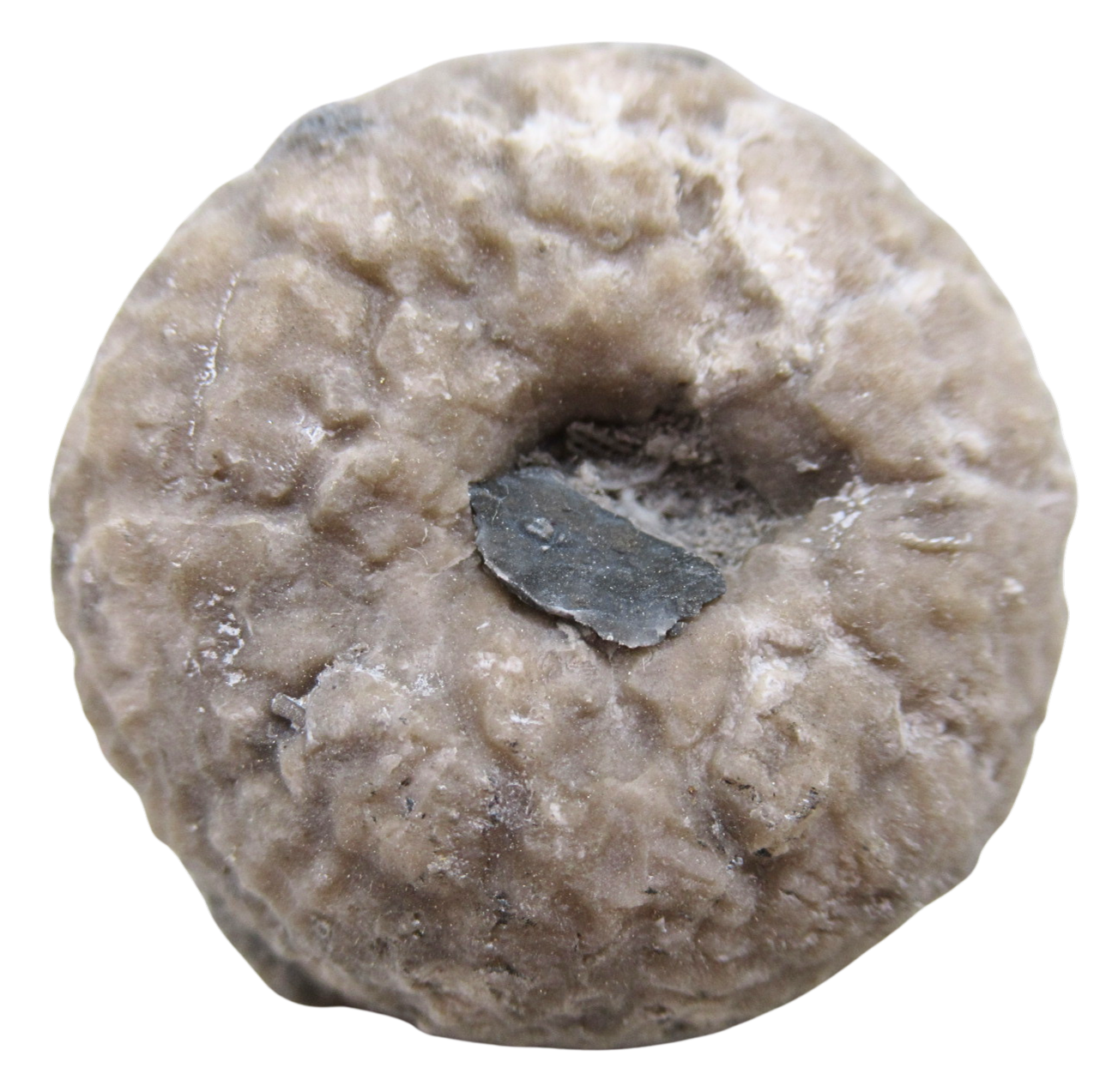
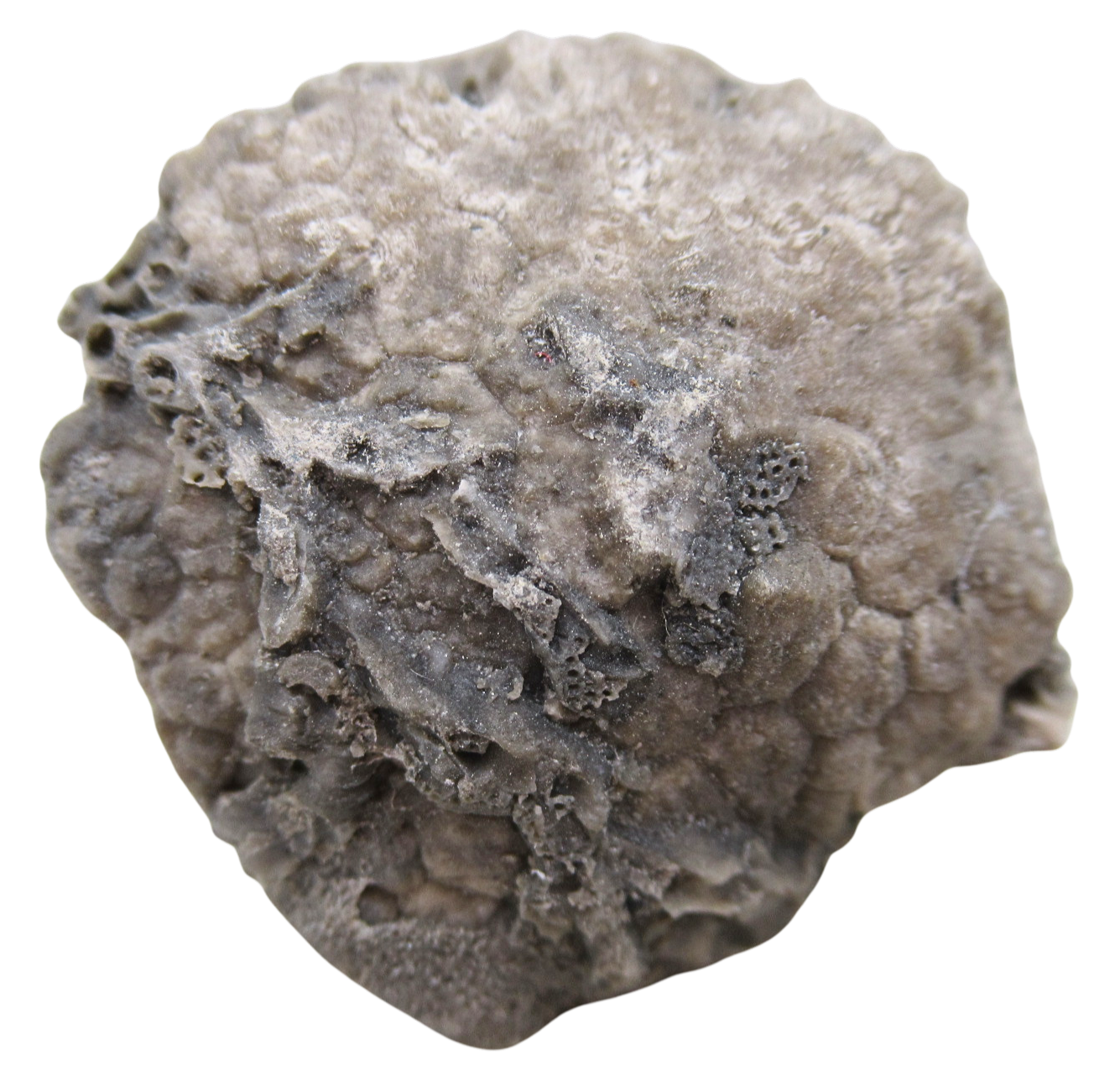
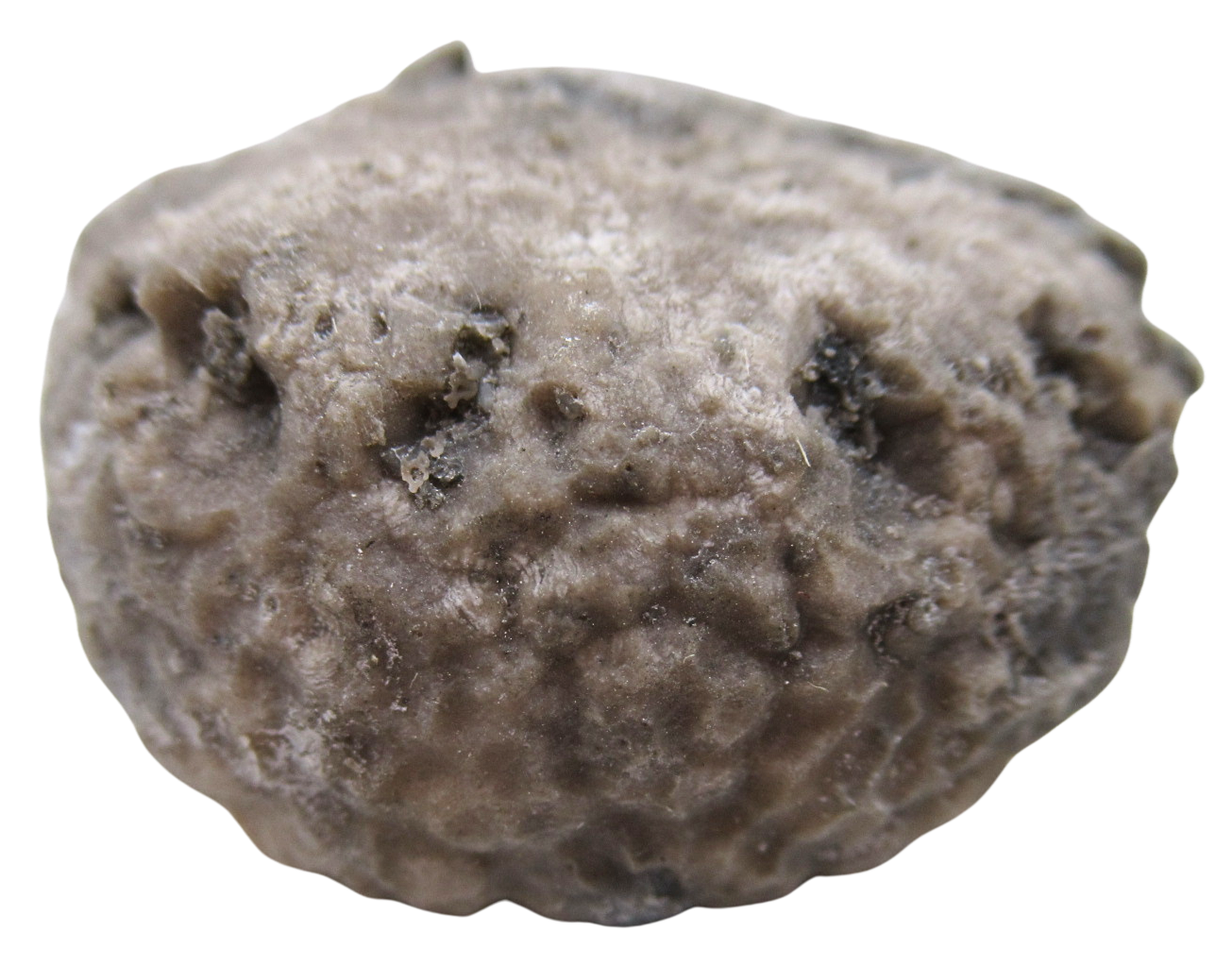
- Dolatocrinus sp. (?)
- Devonian Age
- Thunder Bay Limestone
- Alpena, Michigan
- This Crinoid Calyx (Also called a crinoid cup) measures 1.16″ wide x .66″ tall. This specimen will come with an ID Label. In addition, Authenticity is Guaranteed!
- Buy Fossils – MORE Crinoid Fossils For Sale
Michigan Crinoid Fossils For Sale – Genuine Prehistoric Sea Lily Fossils
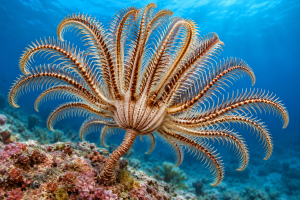
Michigan Crinoid Fossils For Sale offer collectors a fascinating look at ancient marine life. These prehistoric animals lived in shallow seas millions of years before dinosaurs appeared. Although crinoids looked like underwater plants, they were marine animals related to starfish and sea urchins.
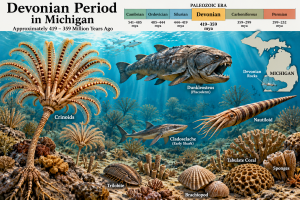
Michigan contains a rich fossil record from the Paleozoic Era. In particular, Devonian rocks preserve crinoid remains dating back roughly 419 to 359 million years. During this period, warm seas covered much of present-day Michigan. As a result, marine animals thrived in these ancient waters.
Today, Michigan crinoid fossils help scientists understand prehistoric oceans and the animals that inhabited them.
Michigan Crinoid Fossils and Their Ancient History
Crinoids belong to a group of marine animals called echinoderms. Their bodies often featured long stems, cup-shaped structures, and branching arms. Furthermore, their unusual appearance earned them the common name “sea lilies.”
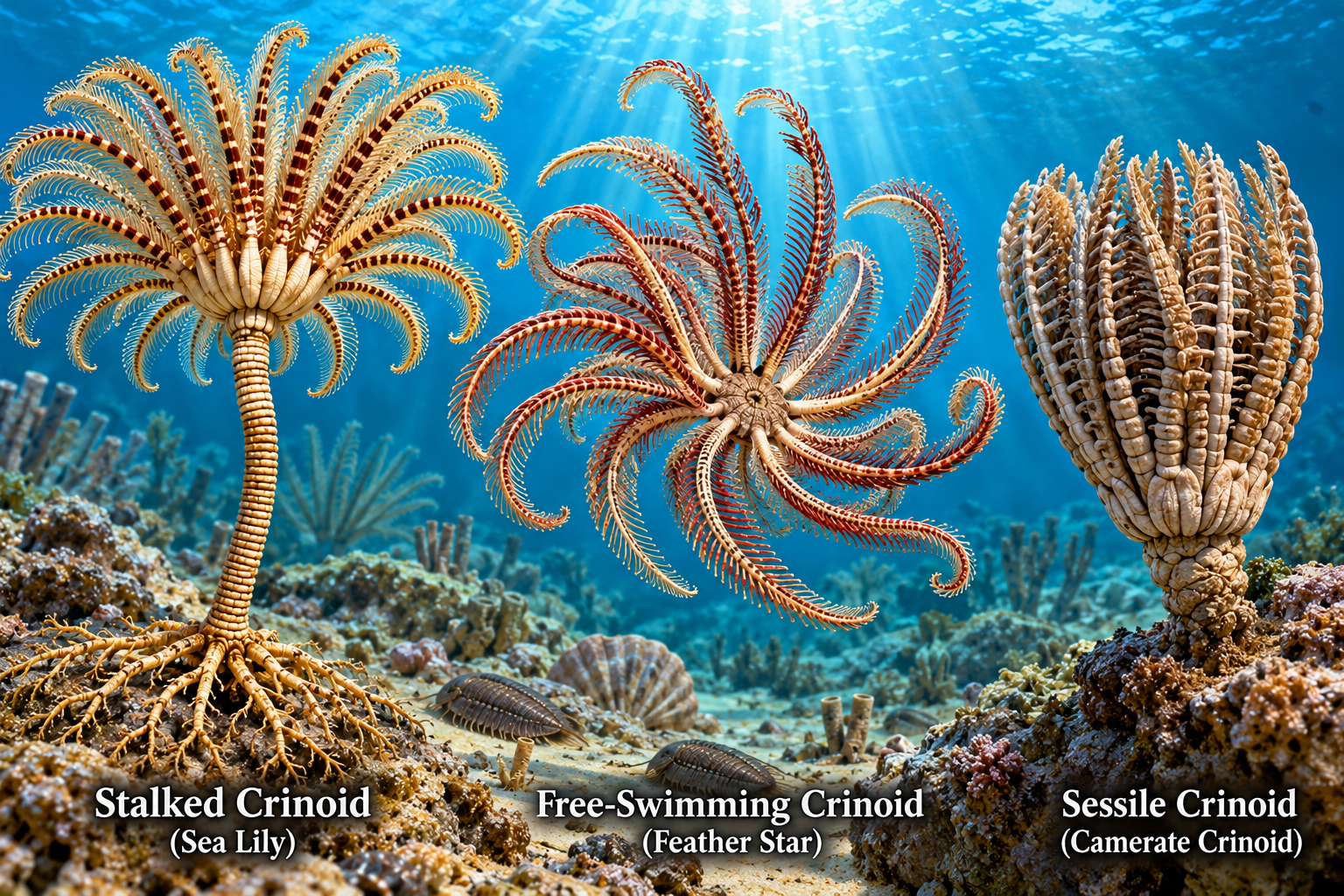
Most stalked crinoids attached themselves to the seafloor. Meanwhile, their feathery arms collected tiny food particles from moving seawater.
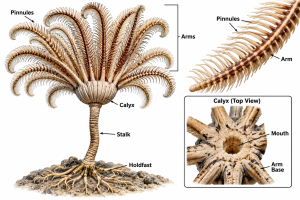
A typical stalked crinoid had three main parts:
- Stem: Supported the animal above the seafloor.
- Calyx: Contained the main body organs.
- Arms: Captured food particles from seawater.
Interestingly, crinoids did not have roots like plants. Instead, they used specialized structures to anchor themselves. Although many ancient species had stems, some living crinoids can swim freely as adults.
Where Are Michigan Crinoid Fossils Found?
Michigan contains several geological formations that preserve ancient marine fossils. For example, Devonian limestone deposits near Alpena contain crinoid remains alongside corals, brachiopods, and other sea creatures.
Additionally, fossil-bearing rocks occur throughout parts of Michigan’s Lower Peninsula. Some formations preserve individual stem segments, while others contain more complete skeletal remains.
The Alpena Limestone and other Devonian rock units provide important evidence of Michigan’s ancient marine ecosystems. However, fossil preservation varies between locations. Therefore, documenting the geological source helps establish a specimen’s scientific value.
How Michigan Crinoids Became Fossils
After a crinoid died, its skeletal parts often separated and scattered across the seafloor. Consequently, individual stem segments became more common fossils than complete animals.
Over time, sediment buried these remains. Minerals and natural cement then helped preserve the hard skeletal structures within sedimentary rock.
Crinoid skeletons consist mainly of calcite, a form of calcium carbonate. Because of this mineral structure, their remains can survive for hundreds of millions of years.
Today, collectors often recognize fossil crinoid stems by their circular, bead-like segments.
Why Collect Genuine Michigan Crinoid Fossils?
Michigan crinoids provide valuable information about ancient ocean life. For example, their fossils help researchers study marine habitats, animal evolution, and changing sea conditions.
Furthermore, crinoids lived alongside many other prehistoric creatures. Their remains reveal the diversity of Paleozoic marine communities.
Collectors appreciate these fossils for their natural beauty, detailed structures, and geological history. In addition, well-preserved specimens make excellent educational displays.
Genuine Michigan crinoid fossils offer an interesting way to explore prehistoric marine life. Some specimens contain isolated stem segments, while rarer examples preserve connected skeletal structures.
However, complete crinoids are generally less common because their skeletons often separated after death.
At Prehistoric Fossils, we have offered genuine fossils and natural history collectibles since 1997. Whether you are a beginning collector or an experienced fossil enthusiast, Michigan crinoids provide a remarkable connection to Earth’s ancient oceans.
Explore our Michigan Crinoid Fossils For Sale and discover genuine prehistoric sea lily fossils for your collection.