
Worm Fossils For Sale | Genuine Fossil Worms
Worm Fossils For Sale – Evidence of Ancient Soft-Bodied Life
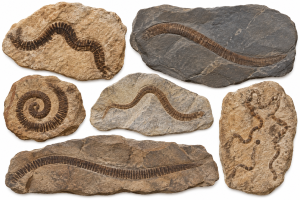
Worm Fossils For Sale provide collectors, educators, and fossil enthusiasts with an unusual look at some of the simplest animals that lived in ancient seas. Because most worms have soft bodies, they rarely fossilize as complete animals. However, exceptional fossil deposits sometimes preserve their bodies, while their burrows and trails more commonly survive as trace fossils.
Worm-like animals have existed for more than 500 million years. In fact, fossils and trace fossils from Cambrian rocks show that worm-shaped animals already occupied many marine habitats. They crawled across the seafloor, burrowed through sediment, and searched for food. As a result, their activity helped disturb and mix ancient seafloor sediments.
How Do Worm Fossils Form?
Most worms decay quickly after death. Therefore, complete fossil worms require unusual conditions. Rapid burial, low oxygen levels, and fine sediment can slow decay and improve the chance of preservation. Famous fossil deposits, including the Burgess Shale of Canada, preserve several kinds of soft-bodied, worm-like animals.
More often, however, Worm Fossils For Sale may represent trace fossils rather than preserved body fossils. These traces can include tunnels, feeding trails, resting marks, and other structures created as animals moved through sediment. Although scientists cannot always identify the exact animal that produced a trace, its shape can still reveal important clues about behavior.
Why Are Fossil Worms Important?
Worm Fossils For Sale can help illustrate how ancient animals interacted with their environments. For example, fossil burrows may show whether animals lived above or below the seafloor. Moreover, these traces reveal how early animals moved through and changed marine sediments.
Consequently, fossil worms provide valuable evidence about animal behavior, ancient environments, and the development of increasingly complex marine ecosystems through geologic time. For collectors, genuine Worm Fossils For Sale also offer an interesting record of ancient soft-bodied life that is often difficult to preserve in the fossil record.
- Buy Fossils
- Fossils for Sale
- Large Selection
- Great Prices and Great Selection
- Authenticity Guaranteed
- Satisfaction Guaranteed
- Your TRUSTED SOURCE SINCE 1997!
- Many more videos are available on our YouTube Channel.
Worm Fossils For Sale – Fossil Worms, Preservation, and Scientific Importance
Worm Fossils For Sale offer collectors, educators, and fossil enthusiasts a rare look at some of the earliest evidence of complex animal life on Earth. Because most worms have soft bodies and lack mineralized skeletons, they rarely fossilize. However, exceptional fossil deposits and abundant trace fossils have preserved important evidence of ancient worm-like organisms, their behavior, and their role in prehistoric ecosystems.
Fossil worms help paleontologists study early animal evolution, ancient seafloor environments, sediment mixing, and changes in marine ecosystems. Therefore, genuine Worm Fossils For Sale and documented worm trace fossils can provide both scientific and educational value.
What Are Fossil Worms?
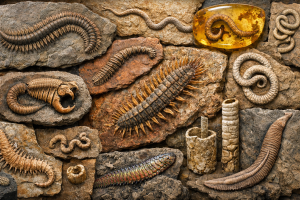
Fossil worms include preserved remains and traces of ancient vermiform, or worm-shaped, animals. Several groups occur in the fossil record, including annelids, priapulids, and other extinct worm-like organisms.
- Annelida – segmented worms, including polychaetes
- Priapulida – marine burrowing worms
- Nematomorpha – horsehair worms and related forms
- Extinct Cambrian worm-like animals – early forms known from exceptional fossil deposits
Most worms lack hard shells, bones, or teeth. As a result, complete body fossils are uncommon. Instead, many examples known to science come from exceptional deposits called Lagerstätten or from trace fossils such as burrows and feeding structures.
Worm Fossils For Sale and Their Geological History
Early Evidence of Worm-Like Animals
Evidence of worm-like animals extends back into the Ediacaran Period. Some burrows dating to more than 550 million years ago may record the movement of early bilaterian animals through soft marine sediment.
By the Cambrian Period, approximately 541 to 485 million years ago, worm-like animals had become much more diverse. Moreover, exceptional fossil sites preserve their soft tissues in remarkable detail.
Important Cambrian Fossil Deposits
Several world-famous fossil deposits contain exceptionally preserved worms and worm-like animals. These include the Burgess Shale of Canada, the Chengjiang Biota of China, and Sirius Passet in Greenland.
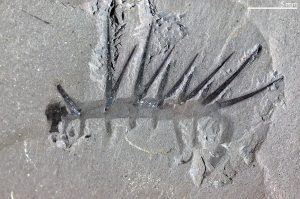 Burgess Shale, Canada: This famous Cambrian deposit preserves numerous soft-bodied animals, including worm-like organisms that would rarely fossilize under normal conditions.
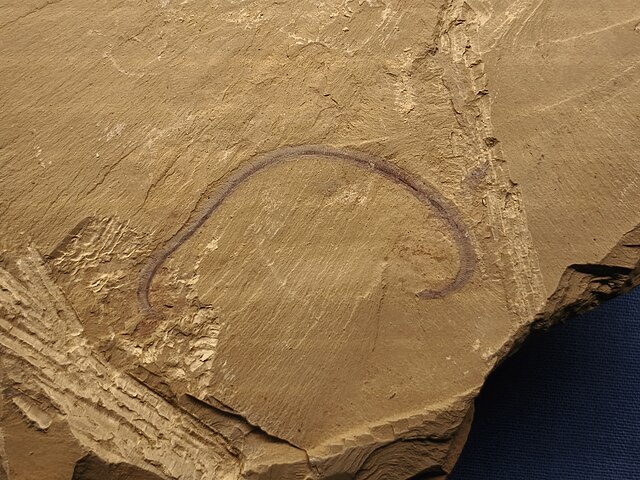 Chengjiang Biota, China: The Chengjiang fossils preserve an extraordinary range of early Cambrian animals, including several soft-bodied worm-like groups.
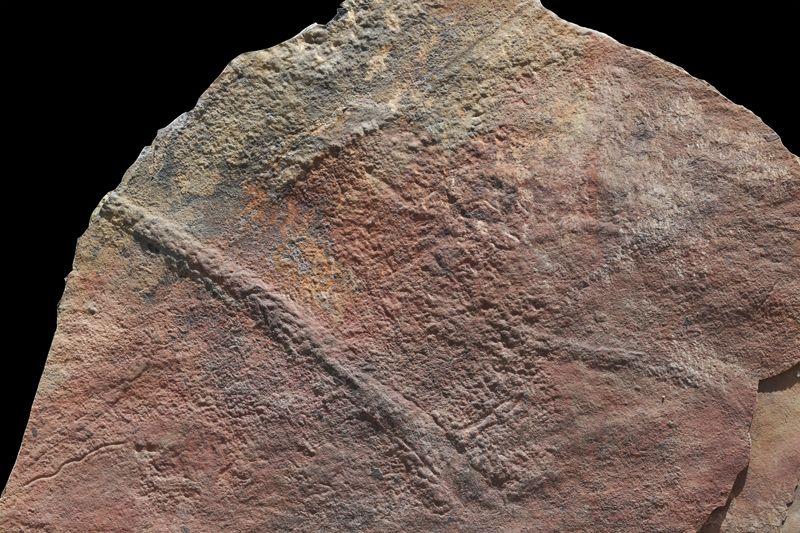 Sirius Passet, Greenland: This Early Cambrian fossil deposit also preserves unusual soft-bodied organisms and contributes important evidence about early animal evolution.
These sites date to the Cambrian diversification of animal life. Consequently, they provide valuable evidence for understanding how early marine ecosystems developed.
How Fossil Worms Are Preserved
Rare Worm Body Fossils
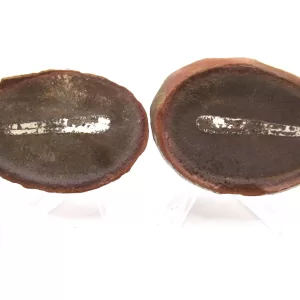
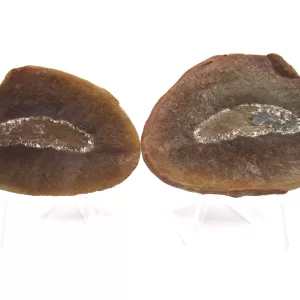
Although uncommon, genuine worm body fossils can preserve surprisingly fine anatomical details. Under exceptional conditions, soft tissues may survive as carbon films, mineral replacements, or mineral-coated remains.
Common preservation styles include:
- Carbonaceous compressions
- Phosphatized tissues
- Pyritized remains
- Fine impressions in sedimentary rock
Some fossil polychaetes preserve body segmentation, bristles called chaetae, and even parts of the digestive system. Therefore, these fossils can reveal anatomical information that ordinary trace fossils cannot.
Worm Trace Fossils
Trace fossils provide much of the fossil evidence attributed to worm-like animals. Instead of preserving the animal itself, these fossils preserve its activity.
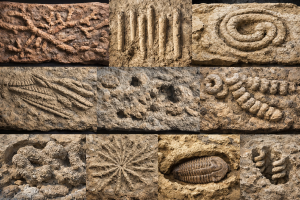 Common worm-related trace fossils include:
- Burrows such as Planolites
- Vertical tubes such as Skolithos
- Feeding traces
- Crawling traces
- Resting structures
However, paleontologists usually identify these structures by their form and behavior rather than assigning them directly to a specific worm species. Similar traces may sometimes be produced by different organisms.
Scientific Importance of Worm Fossils
Evidence of Early Animal Evolution
Fossil worms help scientists study the early evolution of bilateral animals. Their bodies and traces may provide evidence for segmentation, locomotion, burrowing, feeding behavior, and more complex interactions with marine sediment.
Furthermore, worm-like organisms occupied important ecological roles during the early history of animal life. Their fossils help researchers investigate how marine food webs and seafloor communities became increasingly complex.
Bioturbation and Ancient Seafloors
Burrowing animals dramatically changed marine sediments through a process called bioturbation. As worms and other organisms moved through the seafloor, they mixed sediment and altered its physical and chemical structure.
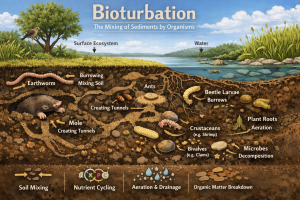 Bioturbation could:
- Mix oxygen into shallow sediment
- Alter nutrient cycling
- Disrupt microbial mats
- Create new habitats below the sediment surface
- Influence marine ecosystem development
Therefore, the expansion of burrowing behavior represents an important ecological change in Earth history.
Notable Fossil Worms
| Taxon | Geological Age | Scientific Importance |
|---|---|---|
| Ottoia | Cambrian | Well-known priapulid-like worm from the Burgess Shale |
| Canadia | Cambrian | Polychaete annelid preserving bristles and body structures |
| Selkirkia | Cambrian | Priapulid-like worm that lived inside a protective tube |
Historically, several Ediacaran organisms were described as worm-like. However, scientists continue to debate the evolutionary relationships of many unusual Ediacaran fossils. For that reason, careful identification remains essential when discussing ancient worm fossils.
Collecting Worm Fossils For Sale
Are Genuine Fossil Worms Rare?
Authentic body Worm Fossils For Sale can be uncommon because soft-bodied animals normally decay before fossilization occurs. Exceptional preservation requires unusual environmental conditions. Therefore, many scientifically important worm body fossils reside in museum and university collections.
In contrast, trace fossils associated with worm-like organisms occur much more frequently. Collectors may encounter fossil burrows, feeding traces, and sediment structures produced by ancient marine invertebrates.
What Collectors Should Look For
When considering Worm Fossils For Sale, collectors should examine the specimen’s geological information and documentation. Reliable locality and formation data can greatly improve both scientific and educational value.
Important factors include:
- Clear locality information
- Geological formation when known
- Accurate identification
- Minimal artificial restoration
- Honest disclosure of repairs or enhancement
- Reliable provenance
Additionally, collectors should remember that many burrows cannot be linked to a specific worm species. Consequently, scientifically responsible descriptions should avoid claiming a precise animal identification unless evidence supports it.
Why Fossil Worms Matter
Fossil worms provide important evidence about the development of animal life and the transformation of ancient seafloors. Although complete body fossils remain rare, trace fossils preserve abundant evidence of movement, feeding, and burrowing behavior.
Moreover, these fossils reveal how small soft-bodied animals helped reshape marine environments through bioturbation. Their activity changed sediment structure, influenced nutrient cycling, and created new ecological opportunities for other organisms.
As a result, both museum specimens and properly documented Worm Fossils For Sale can help tell an important story about evolution, paleontology, and Earth’s deep history.
Buy Genuine Worm Fossils With Confidence
Buy fossils from Prehistoric Fossils with confidence. Your Trusted Source Since 1997. Authenticity Guaranteed.