
Trilobite Track Fossils For Sale | Genuine Cruziana Trace Fossils
Trilobite Track Fossils For Sale – Ancient Evidence of Trilobite Behavior
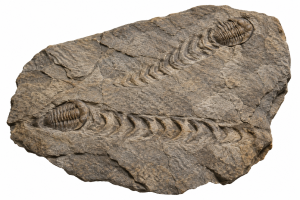
Trilobite Track Fossils For Sale offer collectors a fascinating look at how trilobites moved, rested, and searched for food across ancient seafloors. Trilobites were extinct marine arthropods that first appeared during the Cambrian Period more than 500 million years ago. Although their hard exoskeletons often became body fossils, trilobites also left tracks, trails, burrows, and other signs of activity. Scientists call these remains trace fossils, or ichnofossils.
How Did Trilobites Make Track Fossils?
Trilobites had many jointed legs beneath their bodies. As they moved across soft mud or sand, their legs could leave repeated marks in the sediment. In addition, some trilobites disturbed the seafloor while feeding or burrowing. When sediment quickly covered these impressions, the tracks had a better chance of surviving.
Over time, minerals hardened the sediment into rock. Therefore, Trilobite Track Fossils For Sale can preserve evidence of animal movement that occurred hundreds of millions of years ago.
Common Types of Trilobite Trace Fossils
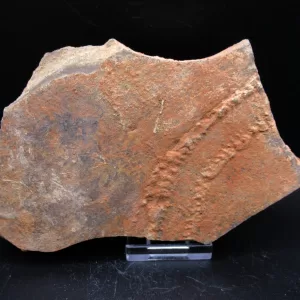
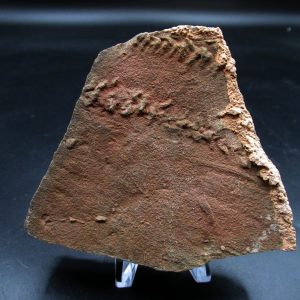
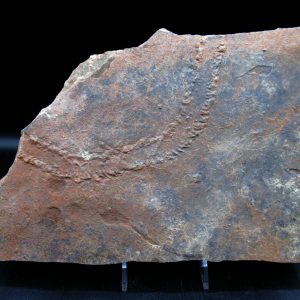
One of the best-known trace fossils associated with trilobites is Cruziana. These trails often show paired grooves and scratch marks. They may record walking, feeding, or shallow burrowing behavior. Another common form, Rusophycus, usually appears as a shorter, bilobed impression. Paleontologists often interpret these traces as resting or shallow digging marks made by trilobite-like arthropods.
Why Are Trilobite Track Fossils Important?
Scientists cannot always identify the exact animal that produced a trace fossil. For this reason, trace fossils receive their own scientific names based on their shape and structure rather than the animal itself.
Most importantly, Trilobite Track Fossils For Sale preserve evidence of behavior that body fossils cannot show directly. Consequently, these fossils help paleontologists study movement, feeding habits, resting behavior, and life on ancient Paleozoic seafloors.
Showing all 9 results
-

Trilobite Tracks (Cruziana) #24
$45.00 -

Trilobite Tracks (Cruziana) #42
$65.00 -

Trilobite Tracks (Cruziana) #43
$55.00 -
Sold out!
Trilobite Tracks (Cruziana) #29
$65.00 -
Trilobite Tracks (Cruziana) #44
$25.00 -
Trilobite Tracks (Cruziana) #48
$195.00 -

Trilobite Tracks (Cruziana) #6
$40.00 -

Trilobite Tracks (Cruziana) #7
$55.00 -

Trilobite Tracks (Cruziana) #8
$55.00
Trilobite Track Fossils For Sale – Collecting Genuine Trilobite Trace Fossils
Trilobite Track Fossils For Sale give collectors a remarkable way to study the behavior of ancient marine arthropods. Unlike body fossils, which preserve parts of the animal itself, trace fossils record activity. Therefore, trilobite tracks can reveal how these animals moved, rested, fed, and interacted with soft sediment on prehistoric seafloors.
Trilobites first appeared during the Cambrian Period, more than 500 million years ago, and survived until the end of the Permian Period about 252 million years ago. During that vast span of time, trilobites lived in marine environments around the world. As a result, their trace fossils can occur in many Paleozoic sedimentary rocks.
What Are Trilobite Track Fossils?
Trilobite Track Fossils For Sale usually represent preserved impressions, grooves, resting marks, or trails made as trilobites and similar arthropods moved across or through sediment. Their legs, bodies, and feeding movements disturbed soft mud or sand. Later, fresh sediment covered those impressions. Under favorable conditions, the traces survived as the sediment hardened into rock.
Because trace fossils record behavior rather than anatomy, they can provide evidence that body fossils alone cannot show. For example, a trackway may indicate direction of movement, while a resting trace may show how an animal positioned itself on the seafloor.
Common Types of Trilobite Trace Fossils
One of the best-known trace fossils associated with trilobites is Cruziana. These fossils commonly appear as elongated, often bilobed trails with repeated scratch marks. Paleontologists frequently interpret many Cruziana specimens as feeding or locomotion traces produced by trilobites or other arthropods.
Another common form is Rusophycus. These traces are generally shorter and may appear as bilobed impressions. Scientists often interpret them as resting, feeding, or shallow burrowing structures.
In addition, Diplichnites consists of paired rows of footprints or leg impressions. Some examples have been linked to walking trilobites and other arthropods. However, paleontologists classify trace fossils mainly by their shape and structure. Therefore, collectors should avoid assuming that every Cruziana, Rusophycus, or Diplichnites specimen came from a trilobite.
Why Collect Trilobite Track Fossils?
Trilobite Track Fossils For Sale can add scientific and educational value to a fossil collection because they preserve behavior. A complete trilobite body fossil shows anatomy, while a trace fossil may show how the animal moved or interacted with sediment. Consequently, the two types of fossils can complement one another.
Moreover, some slabs preserve long trails, repeated scratch patterns, or several overlapping traces. These specimens can make impressive display pieces while also illustrating activity on an ancient seafloor.
How to Choose Genuine Trilobite Track Fossils
When examining Trilobite Track Fossils For Sale, look for clear ridges, grooves, repeated scratch marks, paired impressions, or consistent track patterns. In addition, consider the specimen’s geological formation, age, and collection locality. Reliable locality and geological information greatly improve the educational and scientific value of a fossil.
Collectors should also distinguish genuine trace fossils from natural sedimentary structures. Water currents, drying cracks, mineral growth, and other geological processes can sometimes produce unusual patterns. Therefore, purchasing from an experienced and knowledgeable fossil dealer can help reduce uncertainty.
Scientific Value of Trilobite Track Fossils
Trilobite tracks provide valuable evidence about ancient ecosystems. Scientists can study track orientation, scratch patterns, sediment disturbance, and associated fossils to better understand how arthropods used the seafloor. Additionally, trace fossils may occur in rocks where body fossils remain rare or absent.
For this reason, paleontologists study trace fossils as an important part of ichnology, the scientific study of fossilized biological activity. However, scientists remain cautious when connecting a particular trace to a specific animal unless strong evidence supports that interpretation.
Collecting Trilobite Track Fossils Responsibly
Ultimately, Trilobite Track Fossils For Sale preserve brief moments of ancient animal behavior. They may record walking, feeding, resting, or burrowing across a prehistoric seafloor hundreds of millions of years ago.
Therefore, genuine trilobite trace fossils can make excellent additions to educational displays and fossil collections. When paired with trilobite body fossils and accurate locality information, these traces help tell a broader story about both the anatomy and behavior of some of Earth’s most successful ancient marine arthropods.